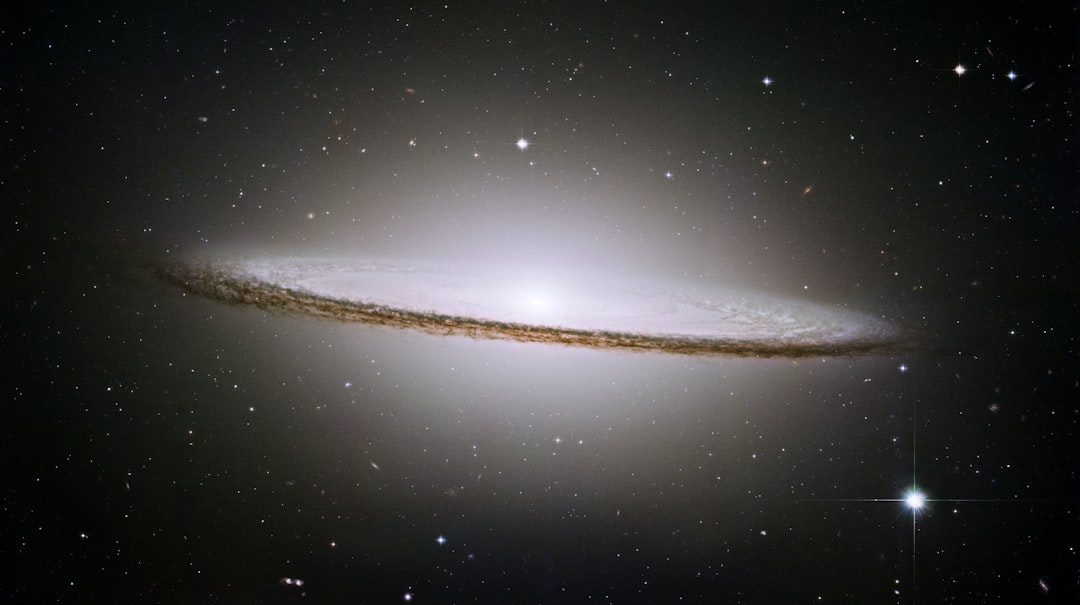
The universe is a vast and enigmatic expanse, teeming with celestial bodies of all shapes and sizes. Among the most perplexing are Ultra Diffuse Galaxies (UDGs), a class of galaxies that challenge our understanding of galaxy formation and evolution. These cosmic islands, fainter and larger than typical galaxies, have left astronomers scratching their heads, prompting a deep dive into their origins and characteristics. This article aims to unveil the mystery surrounding these elusive objects, separating scientific fact from speculation and shedding light on the ongoing quest to decipher their secrets.
Ultra Diffuse Galaxies (UDGs) represent a population of astronomical objects that have only recently captured the attention of the scientific community. Discovered initially through deep sky surveys like the Sloan Digital Sky Survey (SDSS), their peculiar characteristics immediately set them apart from more familiar galactic structures. These galaxies are characterized by their extremely low surface brightness, meaning their light is spread out over a vast area, making them incredibly difficult to detect. Imagine trying to spot a single candle flame in a dimly lit stadium – that, in a cosmic sense, is the challenge presented by UDGs.
Defining the Undefined: What Makes a Galaxy “Ultra Diffuse”?
The term “ultra diffuse” itself hints at the primary characteristic distinguishing these galaxies: their extreme diffuseness. Quantitatively, UDGs are defined as galaxies with a half-light radius (the radius within which half of the galaxy’s light is emitted) of at least 1.5 kiloparsecs (kpc) and a stellar mass typically less than $10^9$ solar masses. However, some definitions also incorporate a limiting effective surface brightness of around 26 magnitudes per square arcsecond. This low surface brightness is the key observational challenge; it implies that the stars within UDGs are much more spread out compared to galaxies of similar stellar mass. They appear as ghostly whispers of light against the cosmic backdrop, rather than the well-defined structures we typically associate with galaxies.
Early Discoveries and Cataloging Efforts
The discovery of UDGs can be traced back to the early 2000s, with the advent of more sensitive astronomical instruments and sophisticated data analysis techniques. The unique observational signature of these galaxies led to their identification in various celestial surveys. Since their initial detection, astronomers have been working to compile catalogues of these galaxies to better understand their spatial distribution and frequency in the universe. This cataloging effort is crucial for building statistical samples necessary to test different theoretical models of their formation.
The “Falling Stones” Analogy: Why They Are Hard to Find
The difficulty in observing UDGs can be likened to trying to catch falling stones in a dark forest. While the stones are there, their faintness and scattered nature make them incredibly elusive. They don’t announce their presence with a bright glow. This has led to the hypothesis that UDGs might be more common than currently observed, with many potential candidates yet to be discovered due to the limitations of current observational technology. Future missions and advancements in instrumentation are expected to significantly increase the number of known UDGs.
Ultra diffuse galaxies (UDGs) have recently gained attention in the field of astrophysics due to their intriguing properties and the mysteries surrounding their formation. A related article that delves deeper into the characteristics and implications of these enigmatic galaxies can be found at My Cosmic Ventures. This resource provides valuable insights into the ongoing research and discoveries related to UDGs, shedding light on their role in the broader context of galaxy formation and evolution.
The Enigma of Their Formation: Competing Theories
The very existence of UDGs poses a significant challenge to standard galaxy formation models. These models, largely based on hierarchical clustering within a dark matter framework, predict that galaxies should form in a way that results in more compact and denser stellar distributions, especially for galaxies with lower stellar masses. The ultra-diffuse nature of UDGs suggests that either they formed through an entirely different process or that some known evolutionary mechanisms have acted upon them in an unusual way to spread out their stellar populations. This has opened the door to a diverse range of theoretical explanations, each with its own set of implications.
The “Puffing Up” Hypothesis: Tidal Interactions and Feedback
One prominent theory suggests that UDGs are the result of normal dwarf galaxies that have been “puffed up” by external forces, primarily tidal interactions with more massive galaxies. As a dwarf galaxy orbits a larger galaxy, it experiences gravitational tides that can stretch and distort its structure. If these tidal forces are strong enough, they can strip away gas and stars, but also, in some scenarios, can lead to a radial expansion of the stellar disk, making it more diffuse. Related to this is the role of supernova feedback. When massive stars explode as supernovae, they release vast amounts of energy and momentum into the surrounding interstellar medium. In low-mass galaxies, this feedback can be particularly effective in expelling gas, which in turn can cause the remaining stellar component to expand.
The “Lost Progenitors” Scenario: Star Formation in Diffuse Environments
Another hypothesis posits that UDGs are simply galaxies that formed their stars in exceptionally diffuse environments, leading to a naturally spread-out stellar distribution from the outset. In this scenario, these galaxies might have formed without undergoing the vigorous mergers or interactions that are thought to compact more massive galaxies. The low density of their birthplaces would have allowed for prolonged and quiescent star formation over large regions. This would mean that UDGs are not so much “puffed up” as they are intrinsically diffuse, a direct consequence of their formation environment.
The “Dark Matter Deficit” Contention: Are UDGs Different at Their Core?
A more radical idea explores the possibility that UDGs might possess significantly less dark matter than expected for their stellar mass. Dark matter provides the gravitational scaffolding for galaxies, and its distribution influences their structure. If UDGs are deficient in dark matter, then their stellar components would be less gravitationally bound, leading to a more diffuse appearance. This theory, if proven true, would necessitate a re-evaluation of our understanding of dark matter halos and their formation in low-mass systems. However, observational evidence for a widespread dark matter deficit in UDGs remains an active area of research and debate.
The “Reionization Puzzle” Connection: Early Universe Influences
Some theories connect the formation of UDGs to the epoch of reionization, a crucial period in the early universe when the first stars and galaxies began to emit ultraviolet radiation, reionizing the neutral hydrogen gas. It is proposed that during this turbulent epoch, early shallow potential wells of low-mass galaxies could have been “overheated” by the intense radiation, preventing them from efficiently forming or retaining stars, leading to their diffuse nature.
Testing the Theories: Observational Evidence and Numerical Simulations
Distinguishing between these competing theories is a major goal of current astronomical research. Astronomers are employing a multi-pronged approach, combining detailed observations with advanced numerical simulations. Observations aim to measure the kinematics (internal motions) of stars and gas within UDGs, their chemical compositions, and their satellite galaxy populations. These properties can provide clues about their formation history. Numerical simulations, on the other hand, model the complex gravitational and astrophysical processes involved in galaxy formation, allowing researchers to generate synthetic UDGs and compare them to real observations.
Unraveling Their Kinematics: The Motion Within the Ghostly Spheres
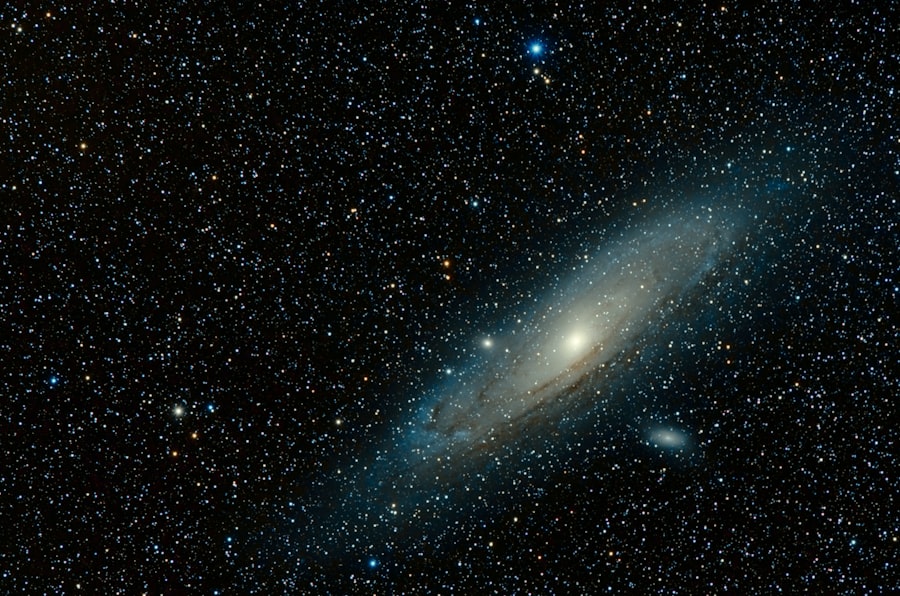
Understanding the internal dynamics of UDGs is paramount to deciphering their formation pathways. The way stars and gas move within these galaxies can reveal whether they are rotating disks, spheroidal systems, or something entirely different. Comparing these observed kinematics to predictions from theoretical models provides crucial tests for different formation scenarios. This is akin to listening to the heartbeat and breathing of a patient to diagnose an illness.
Stellar Velocity Dispersions: The Internal Jitter
Measuring the velocity dispersion of stars within a UDG – the spread of their speeds around the galaxy’s average motion – provides insight into the gravitational forces at play. A higher velocity dispersion suggests a more massive and tightly bound system. For UDGs, the observed velocity dispersions are often surprisingly low, consistent with their low stellar mass but also potentially indicative of a less massive dark matter halo or a more diffuse stellar distribution.
Gas Dynamics: Tracing the Fuel for Stars
The kinematics of cold gas within UDGs, if present, can offer further clues. If UDGs are indeed tidally disrupted or “puffed up” galaxies, they might still retain some evidence of rotation or tidal streams in their gas component. Conversely, a lack of organized gas motion could suggest a more quiescent, spheroidal formation history. However, the low density of UDGs often makes it challenging to detect their gas.
Radial Gradients: The Interior versus the Exterior
Astronomers also examine radial gradients in properties like metallicity (the abundance of elements heavier than hydrogen and helium) and age. In typical galaxies, metallicity generally increases towards the center. Deviations from these expected gradients in UDGs could point to unusual accretion histories or star formation processes.
Their Cosmic Neighborhood: Are They Isolated or Sociable?
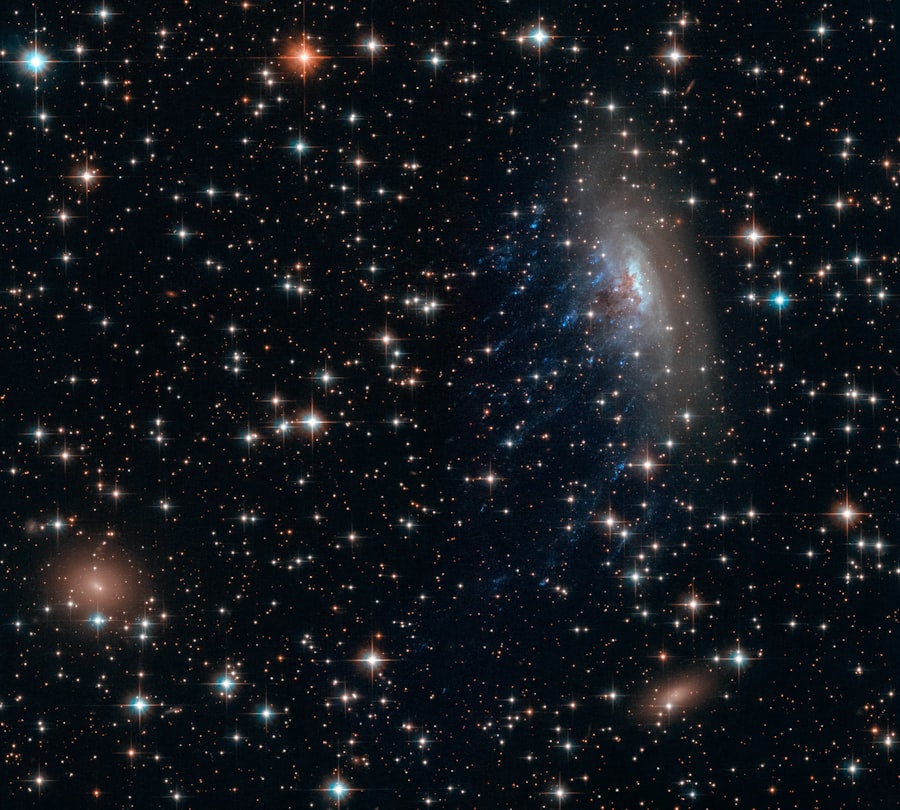
The environment in which a galaxy resides plays a significant role in its evolution. The discovery of UDGs in both dense cluster environments and in seemingly isolated regions suggests that their formation might not be dictated by a single type of environment. This diversity in their surroundings adds another layer to their mystery.
Found in Clusters: The “Faded” Galaxy Hypothesis
A notable observation is the presence of UDGs within galaxy clusters. In these dense environments, galaxies are subjected to various forms of interaction, including tidal stripping and harassment. The UDGs found in clusters could be interpreted as dwarf galaxies that have been transformed into their diffuse state through these interactions. They might have once been more compact galaxies whose stellar components have been so widely distributed by gravitational forces that they have become difficult to detect.
In the Void: The Intriguing Isolation
The detection of UDGs in relatively low-density cosmic voids is particularly intriguing. In these less active environments, the “puffing up” mechanisms driven by interactions with massive galaxies are less likely to be the primary causal factor. The presence of UDGs in voids lends support to theories suggesting intrinsic formation in diffuse environments or other mechanisms that operate independently of strong gravitational interactions.
Satellite Galaxies: Tiny Companions Tell Tales
The presence or absence of smaller satellite galaxies orbiting UDGs can also provide clues about their formation. If UDGs are the tidally disrupted remnants of larger dwarf galaxies, they might have lost most, if not all, of their original satellites. Conversely, if they are intrinsically diffuse galaxies, they might still retain a retinue of smaller companions.
Ultra diffuse galaxies have recently garnered significant attention in the field of astronomy due to their intriguing characteristics and the mysteries they present regarding galaxy formation and dark matter. Researchers are continually exploring these enigmatic structures, and a related article delves deeper into their properties and implications for our understanding of the universe. For more insights, you can read about these fascinating celestial bodies in this article, which highlights the latest findings and theories surrounding ultra diffuse galaxies.
The Future of UDG Research: New Telescopes, New Insights
| Property | Typical Value | Units | Description |
|---|---|---|---|
| Effective Radius (Re) | 1.5 – 5 | kiloparsecs (kpc) | Radius containing half the total light of the galaxy |
| Surface Brightness | 24 – 27 | mag/arcsec² | Central surface brightness in the V-band |
| Stellar Mass | 10^7 – 10^8 | Solar masses (M☉) | Total mass in stars |
| Dark Matter Halo Mass | 10^10 – 10^11 | Solar masses (M☉) | Estimated total mass including dark matter |
| Velocity Dispersion | 20 – 50 | km/s | Stellar velocity dispersion indicating mass distribution |
| Gas Content | Low to Moderate | — | Amount of neutral hydrogen gas (HI) |
| Color (g – r) | 0.4 – 0.7 | mag | Indicates stellar population age and metallicity |
| Star Formation Rate | Very Low | Solar masses per year (M☉/yr) | Current rate of star formation |
The study of Ultra Diffuse Galaxies is a rapidly evolving field. As new observational facilities come online and existing ones are upgraded, astronomers will have unprecedented capabilities to probe these faint objects. This will move the field from identifying and cataloging to performing detailed, high-resolution studies.
The James Webb Space Telescope: Peering Deeper into the Past
The James Webb Space Telescope (JWST) is poised to revolutionize UDG research. Its infrared capabilities allow it to pierce through cosmic dust and observe fainter, more distant objects than ever before. JWST will be instrumental in studying the early formation of UDGs, potentially observing their progenitors and the first light emitted by their stars. Detailed spectroscopic analysis with JWST will also allow for precise measurements of their chemical composition and star formation history.
Large Ground-Based Telescopes: Enhanced Resolution and Sensitivity
Next-generation ground-based telescopes, such as the Extremely Large Telescope (ELT) and the Giant Magellan Telescope (GMT), will offer even greater resolution and sensitivity. These instruments will enable astronomers to resolve individual stars in nearby UDGs, providing direct insights into their stellar populations and internal structure. This will be akin to being able to examine the individual bricks of a distant building, rather than just seeing its overall shape.
Advanced Simulations: Refining Theoretical Models
The ongoing development of computational power and sophisticated astrophysical simulation codes will allow researchers to create more realistic models of galaxy formation, specifically tailored to producing UDGs. These refined simulations will be crucial for testing the predictions of various formation scenarios and for interpreting the observational data from new telescopes.
The Search Continues: A Universe of Mysteries Awaits
The mystery of Ultra Diffuse Galaxies is far from fully solved. These faint and enigmatic objects continue to challenge our fundamental understanding of how galaxies form and evolve. With each new observation and theoretical advancement, we inch closer to unraveling their secrets. The ongoing quest to understand UDGs is a testament to the persistent curiosity that drives scientific exploration, reminding us that even in the seemingly well-understood universe, there are always profound enigmas waiting to be unveiled. They serve as a cosmic reminder that our current understanding is merely a snapshot, and that the universe holds many more wonders yet to be discovered.
FAQs
What are ultra diffuse galaxies?
Ultra diffuse galaxies (UDGs) are a type of galaxy characterized by their large size but very low brightness. They have a similar size to the Milky Way but contain far fewer stars, making them difficult to detect.
How do ultra diffuse galaxies form?
The exact formation process of ultra diffuse galaxies is still under study, but they are thought to form through processes such as tidal interactions, gas stripping, or by being “failed” galaxies that did not accumulate enough gas to form many stars.
Where are ultra diffuse galaxies typically found?
Ultra diffuse galaxies are often found in galaxy clusters and groups, where gravitational interactions with other galaxies and the cluster environment may influence their properties.
Why are ultra diffuse galaxies important to study?
Studying ultra diffuse galaxies helps astronomers understand galaxy formation and evolution, the role of dark matter, and the environmental effects on galaxies in clusters.
Do ultra diffuse galaxies contain dark matter?
Yes, many ultra diffuse galaxies are believed to contain significant amounts of dark matter, which helps them maintain their structure despite having relatively few stars. However, the exact dark matter content can vary among different UDGs.