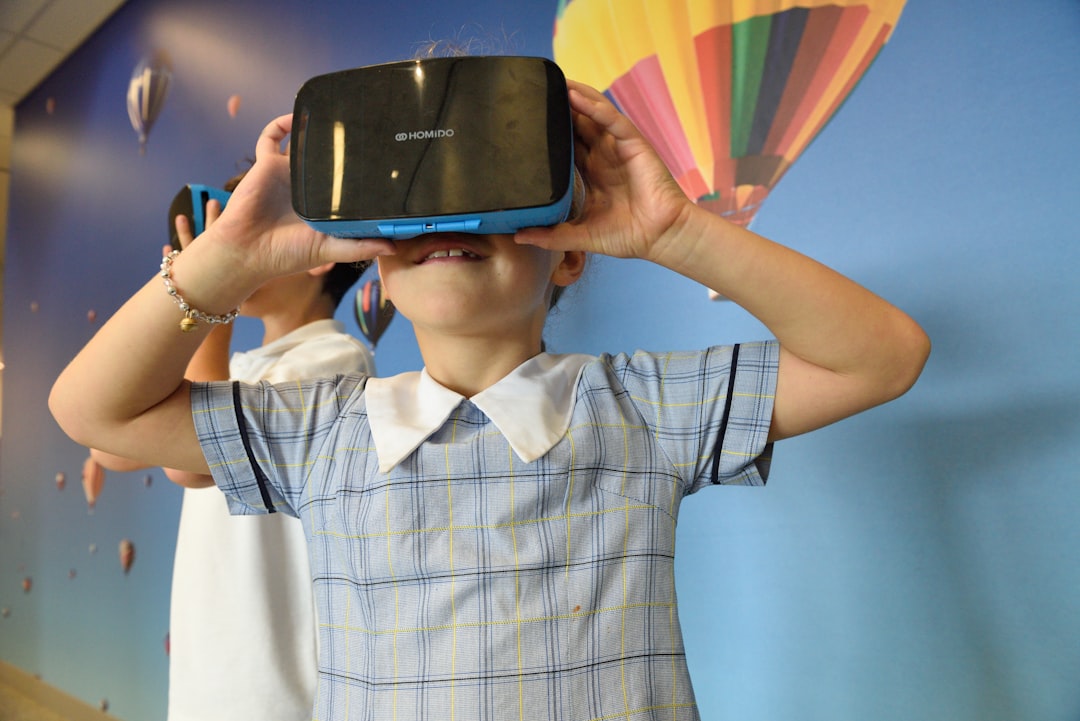
The concept of a simulated reality, where human existence and the universe itself are products of a sophisticated artificial intelligence, has transitioned from speculative fiction to a topic of serious scientific and philosophical inquiry. This article explores the burgeoning field of evidence gathering for simulation theory, examining theoretical frameworks, potential observable phenomena, and the inherent challenges in verifying such a profound hypothesis.
The notion that reality might be an illusion or a construct is not a contemporary invention. Ancient philosophical traditions, from Plato’s Allegory of the Cave to Hindu Maya, have long contemplated the illusory nature of existence. These timeless inquiries lay the groundwork for modern simulation theory, offering a rich historical context for its contemporary proponents.
Plato’s Allegory of the Cave
Plato’s influential allegory describes prisoners chained in a cave, observing only shadows projected on a wall and mistaking these shadows for reality. This vivid metaphor underscores the distinction between perception and true reality, and remarkably foreshadows the core tenet of simulation theory: that our perceived reality might be a mere projection. For centuries, this allegory has served as a touchstone for philosophical discussions on epistemology and metaphysics, offering a foundational narrative for considering the limits of human perception.
Descartes’ Malicious Demon
René Descartes, a pivotal figure in Western philosophy, introduced the concept of a “malicious demon” or “evil genius” in his Meditations on First Philosophy. This hypothetical entity, immensely powerful and cunning, endeavors to deceive Descartes about everything he perceives. While Descartes ultimately sought to refute this skepticism through logical deduction, his thought experiment provided a rigorous framework for questioning the veracity of sensory experience, a framework directly applicable to the simulation hypothesis. The demon, in essence, is an early iteration of a superintelligence capable of constructing a convincing but ultimately false reality.
Bostrom’s Simulation Argument
Nick Bostrom’s 2003 paper “Are You Living in a Computer Simulation?” galvanized modern interest in the topic. Bostrom posited a tripartite dilemma: either humanity will almost certainly go extinct before reaching a “posthuman” stage (a technological state where civilizations possess enormous computing power), or posthuman civilizations are highly unlikely to run a significant number of ancestor simulations, or we are almost certainly living in a simulation. He argued that if a civilization reaches a posthuman stage and has an interest in running detailed historical simulations of its ancestors, then the number of simulated realities would vastly outnumber the single “base” reality, making it statistically probable that we reside within a simulated one. This argument, while not providing direct evidence, shifted the discussion from mere speculation to a probabilistic framework, forcing a re-evaluation of its plausibility. Bostrom’s work transformed the discourse from fringe speculation to a legitimate subject of academic scrutiny.
Recent discussions surrounding simulation theory have gained traction, particularly in light of various research studies exploring the implications of our perceived reality. One intriguing article that delves into the evidence and research supporting simulation theory can be found at My Cosmic Ventures. This piece examines the philosophical and scientific underpinnings of the theory, offering insights into how advancements in technology and quantum physics may suggest that our universe could indeed be a sophisticated simulation.
Searching for Digital Artifacts within the Fabric of Reality
If our universe is a simulation, it stands to reason that certain computational limitations or “bugs” might be detectable. Just as a poorly rendered video game might exhibit glitches, a simulated reality might display anomalies that betray its artificial nature. Scientists are actively exploring various avenues to uncover such digital artifacts.
The “Resolution” of Reality: Planck Length and Time
In physics, the Planck length (approximately 1.6 x 10⁻³⁵ meters) and Planck time (approximately 5.4 x 10-44 seconds) represent the theoretical smallest possible units of distance and time, respectively. Below these scales, our current understanding of physics breaks down. Some theorists propose that these fundamental limits could be interpreted as the “pixel size” or “frame rate” of our simulated reality. A simulation, by its very nature, would require a finite resolution, and these Planck units could be precisely that. Analyzing phenomena at these scales, or searching for deviations from expected continuous behavior, might offer clues. For instance, if experiments could ever push the boundaries of measurement precision to these scales, any observed discreteness or “aliasing” could be highly suggestive.
Cosmic Ray Anomalies
High-energy cosmic rays, particles originating from outer space, traverse the cosmos at near light speed. The GZK cutoff (Greisen-Zatsepin-Kuzmin limit) predicts a theoretical maximum energy for these cosmic rays due to interactions with the cosmic microwave background radiation. However, some observations have hinted at cosmic rays exceeding this theoretical limit. While these anomalies have alternative astrophysical explanations, some simulation theorists propose that such discrepancies could be a “computational error” or a “rendering glitch” within the simulated environment. Imagine, if you will, the simulation running out of processing power to accurately model every particle interaction at such extreme energies, leading to an unexpected outcome.
Fine-Tuning of Fundamental Constants
The universe’s fundamental physical constants – such as the gravitational constant, the speed of light, and the mass of an electron – appear to be exquisitely “fine-tuned” for the emergence of life. Even minute alterations to these values would render the universe uninhabitable. This “fine-tuning problem” has frequently been cited as evidence for a divine creator. However, in the context of simulation theory, it could be interpreted as the deliberate programming of parameters within the simulation to achieve specific outcomes, such as the emergence of complex life. The “programmer” would simply adjust these values until the desired conditions arose. This doesn’t necessarily prove a simulation, but it offers a compelling alternative explanation to teleological arguments.
Computational Limitations and Resource Management
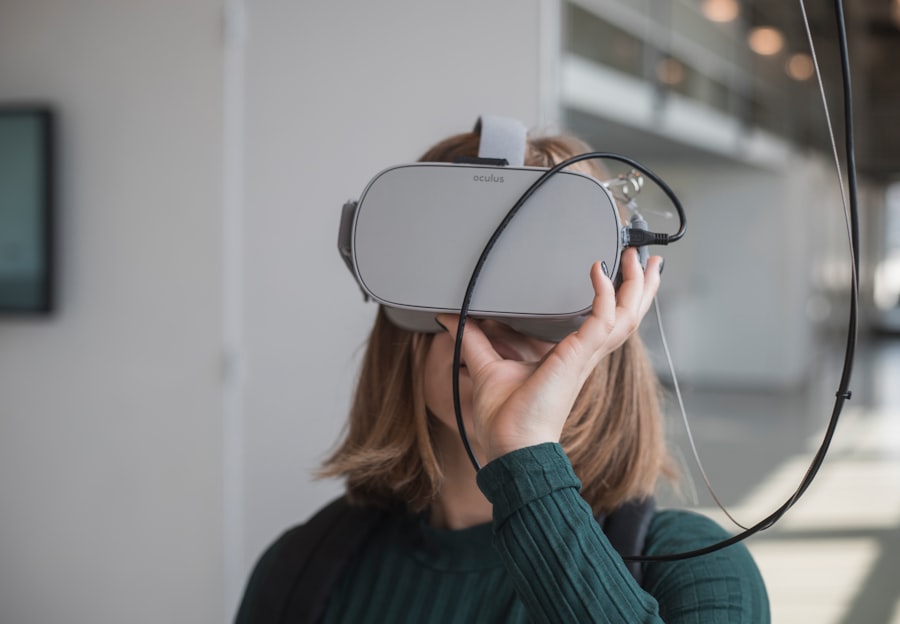
Any computer program, no matter how sophisticated, operates within the constraints of finite computational resources. If our reality is a simulation, then evidence of these limitations might surface in unexpected ways, much like game developers optimize rendering distant objects to save processing power.
Holographic Principle and Information Density
The holographic principle in theoretical physics suggests that all information contained within a three-dimensional volume can be encoded on a two-dimensional surface enclosing that volume. This concept, often associated with black hole thermodynamics, implies a fundamental limit to the information density of the universe. Some proponents of simulation theory interpret this as a mechanism for resource management within a simulated environment. By encoding information on a lower-dimensional “surface,” the processing requirements for rendering the “interior” could be significantly reduced. This is analogous to how a 3D image projected onto a 2D screen can convey the illusion of depth without needing to render every single point in the 3D space.
The Problem of “Unobserved Reality”
Consider the vastness of the universe, with countless galaxies, stars, and planets, the vast majority of which remain utterly unobserved by humanity. If these distant regions exist as fully rendered and constantly evolving entities, the computational cost would be immense. Simulation theory proposes that the “simulator” might employ strategies to conserve resources, such as only fully rendering portions of reality that are actively being observed or interacted with. This “lazy rendering” approach, where unobserved phenomena exist in a “collapsed” or less detailed state, is a common optimization technique in video games. While difficult to prove, this idea provides a teleological explanation for why so much of the universe appears to exist beyond our immediate perception.
The Decay of Physical Laws
Could the fundamental laws of physics themselves be subject to “decay” or slight alterations over vast cosmological timescales? While currently considered inviolable, some speculative ideas suggest that extremely subtle, almost imperceptible shifts in physical constants or laws might occur, perhaps due to precision errors compounding over aeons within the simulation. This would be akin to “numerical drift” in long-running computational models. Detecting such a minute change would require an unprecedented level of precision and long-term observation, but it remains a theoretical avenue for investigation.
The Observer Effect and Consciousness
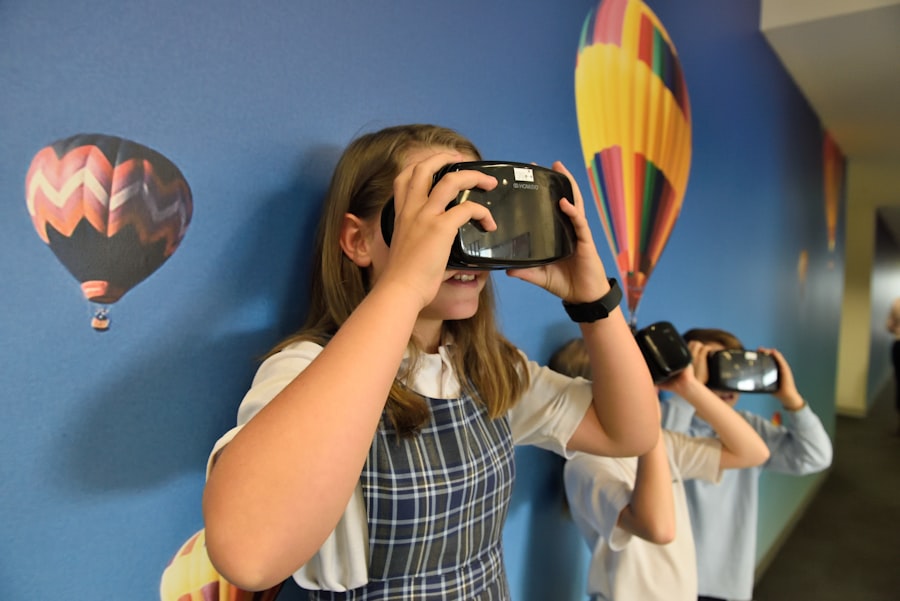
The role of consciousness in quantum mechanics, particularly the observer effect, where the act of observation influences the state of quantum particles, presents another intriguing parallel with simulated realities.
Quantum Indeterminacy and Measurement
At the quantum level, particles exist in a superposition of states until measured, at which point they “collapse” into a definite state. This inherent indeterminacy is a cornerstone of quantum mechanics. From a simulation perspective, this could be interpreted as the simulator only computing the definite state of a particle when it becomes necessary for an observation or interaction to occur, thereby saving computational power. Why render countless particles in definite states if they are not being observed? This aligns with the “lazy rendering” principle, applying it even to the most fundamental constituents of reality. The universe only “calculates” the outcome when a conscious observer makes an interaction.
The Role of Consciousness in Collapsing Wave Functions
Some interpretations of quantum mechanics, notably the Copenhagen interpretation, emphasize the undeniable link between an observation and the collapse of a quantum wave function. This suggests that consciousness itself plays a fundamental, active role in shaping reality at its most basic level. If our universe is a simulation, consciousness could be the mechanism by which the simulation interacts with the “rendering engine,” prompting it to generate specific outcomes. It transforms from a passive observer to an active participant in the universe’s unfolding. This is a profound implication, blurring the lines between the simulated and the conscious entity.
The Potential for “Glitches in the Matrix”
Beyond theoretical arguments, some anecdotal observations or unexplained phenomena are occasionally posited as potential “glitches in the matrix.” These range from déjà vu experiences to seemingly improbable coincidences or even reports of fleeting perceptual anomalies. While these are usually attributable to psychological phenomena or statistical probability, the simulation hypothesis offers an alternative, albeit speculative, framework for their interpretation. Imagine, if you will, the simulation occasionally struggling to maintain perfect consistency, leading to momentary lapses or repetitions. Of course, such anecdotes are far from scientific evidence, but they fuel the popular imagination surrounding the simulation concept.
Recent discussions surrounding simulation theory have gained traction, particularly in light of compelling evidence and research that suggest our reality may not be as it seems. A fascinating article that delves into this topic can be found at My Cosmic Ventures, where various scientific perspectives and philosophical implications are explored. This exploration not only challenges our understanding of existence but also invites us to consider the nature of consciousness and reality itself.
Unfalsifiability and the Limits of Verification
| Category | Research/Study | Key Findings | Year | Researcher(s) |
|---|---|---|---|---|
| Quantum Mechanics | Simulation Hypothesis and Quantum Indeterminacy | Quantum phenomena suggest discrete information processing akin to computational simulation. | 2012 | Silas Beane et al. |
| Cosmology | Pixelated Universe Model | Universe may have a finite resolution, similar to pixels in a simulation. | 2013 | Silas Beane et al. |
| Philosophy | Simulation Argument | Probability argument that advanced civilizations could run ancestor simulations. | 2003 | Nick Bostrom |
| Computational Limits | Limits of Physical Reality as Computational Constraints | Physical constants and limits may reflect computational resource constraints. | 2016 | Various Theoretical Physicists |
| Experimental Physics | Testing for Simulation Artifacts | Search for anomalies or glitches in physical laws that could indicate simulation. | Ongoing | Multiple Research Groups |
| Information Theory | Universe as Information Processing System | Physical reality can be described as information, supporting simulation concepts. | 2010 | John Archibald Wheeler |
Despite the compelling arguments and intriguing parallels, simulation theory faces substantial epistemological challenges, primarily its potential unfalsifiability. How would one definitively prove or disprove that we are in a simulation?
The Challenge of Empirical Testing
A defining characteristic of a scientific hypothesis is its testability and falsifiability. Can we devise an experiment that could definitively confirm or deny our simulated existence? Such experiments would likely require probes that could somehow “break out” of the simulation’s parameters or interact with the underlying computational layer, which presents an almost insurmountable hurdle. Any observed anomaly could always be reinterpreted within the existing framework of physical laws, albeit with more complex explanations. This makes direct empirical verification exceedingly difficult.
The Problem of Recursive Simulations
If we are in a simulation, what prevents the “base reality” from also being a simulation? This leads to an infinite regress, a “turtles all the way down” scenario where definitively identifying the “true” base reality becomes impossible. Each layer of simulation could contain within it another simulation, ad infinitum. This recursive problem highlights the deep philosophical implications and the inherent difficulty in establishing a definitive “original” reality if the hypothesis is true.
The Nature of “Evidence” in a Simulated Reality
Ultimately, what constitutes “evidence” when the very fabric of reality is in question? If the simulator is sufficiently powerful and sophisticated, it could theoretically produce any evidence it desires, or seamlessly integrate any anomalies into the simulated framework. This makes distinguishing between genuine computational artifacts and intentionally programmed features incredibly difficult. For a definitive answer, we might require a “debug mode” or an “administrator password” to the universe itself, tools we currently lack.
While direct proof remains elusive, the ongoing exploration of these philosophical, theoretical, and observable avenues ensures that the question of whether we are living in a simulation will continue to captivate and challenge human intellect. It serves as a powerful reminder to question our assumptions about reality and to remain open to profound, paradigm-shifting possibilities. The journey to uncover the truth, whether we are in a base reality or a simulated one, is a testament to the insatiable human quest for understanding.
FAQs
What is simulation theory?
Simulation theory is the hypothesis that reality, including the Earth and the universe, could be an artificial simulation, such as a computer simulation, rather than an objective physical reality.
What kind of evidence is discussed in simulation theory research?
Research into simulation theory often explores philosophical arguments, computational limits in physics, anomalies in quantum mechanics, and mathematical patterns in nature that some interpret as signs of an underlying simulated structure.
Have scientists found definitive proof that we live in a simulation?
No definitive proof currently exists to confirm that we live in a simulation. The theory remains speculative and philosophical, with ongoing debates and research but no conclusive empirical evidence.
What are some common arguments supporting simulation theory?
Common arguments include the rapid advancement of computing technology suggesting future civilizations could run simulations, the idea that simulated beings would be unaware of their status, and observations of physical constants and quantum phenomena that some interpret as signs of digital constraints.
How do researchers test or investigate simulation theory?
Researchers propose experiments to detect potential “glitches” or limitations in physical laws, such as searching for pixelation in space-time or anomalies in cosmic rays, but these tests are theoretical and have not yielded conclusive results.