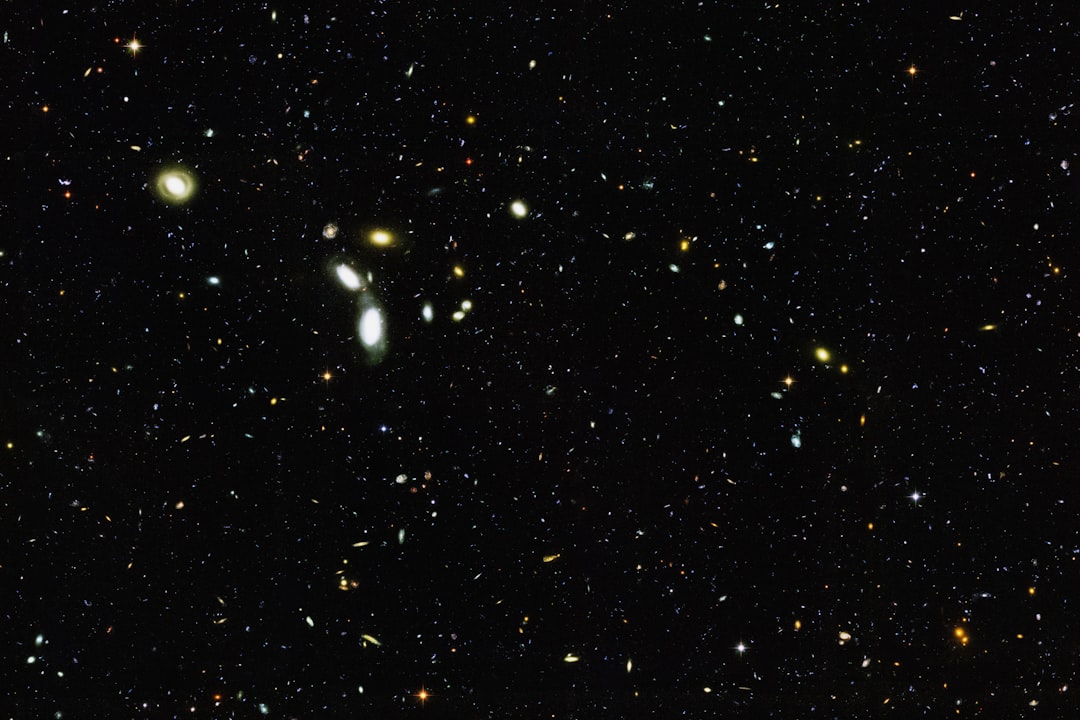
The cosmos, in its vastness, presents a profound enigma. While the observable universe, comprised of stars, galaxies, and interstellar gas, offers a breathtaking spectacle, it accounts for a mere fraction of the total mass-energy content. For decades, astronomers and physicists have grappled with this discrepancy, leading to two leading hypotheses that seek to explain the universe’s observed gravitational behavior: dark matter and modified gravity. This article aims to unravel the intricate details of these competing explanations, exploring their origins, supporting evidence, challenges, and the ongoing quest to discern their validity.
The concept of dark matter emerged not from direct observation, but from discrepancies in the gravitational effects observed in celestial bodies. It is, in essence, a placeholder term for invisible matter that interacts gravitationally but does not emit, absorb, or reflect electromagnetic radiation, rendering it undetectable by conventional telescopes. Its existence is inferred from its gravitational influence on visible matter.
Galactic Rotation Curves: A Spiraling Puzzle
One of the earliest and most compelling pieces of evidence for dark matter arose from the study of galactic rotation curves. In the 1970s, Vera Rubin and her colleagues meticulously measured the orbital speeds of stars and gas within spiral galaxies. According to Newtonian mechanics and the distribution of visible matter, stars farther from the galactic center should orbit at significantly slower speeds than those closer in. However, observations consistently showed that stars in the outer regions of galaxies orbit at roughly the same speed, or even faster, than those in the inner regions.
- Unexpected Flatness: This “flatness” of galactic rotation curves was like observing a merry-go-round where the outer horses are spinning just as fast as the inner ones. This strongly suggested the presence of a massive, invisible halo of matter surrounding galaxies, providing the extra gravitational pull needed to keep the outer stars in their orbits.
- Mass-to-Light Ratio Discrepancy: Furthermore, the inferred mass of galaxies based on their visible light emission was found to be considerably less than the mass required to explain their observed rotation speeds. This mass-to-light ratio discrepancy pointed towards a substantial amount of unseen matter.
Galaxy Clusters: Gravitational Lighthouses
The evidence for dark matter extends beyond individual galaxies to the colossal structures they inhabit: galaxy clusters. Fritz Zwicky, in the 1930s, was one of the first to note this phenomenon by studying the Coma Cluster. He observed that the galaxies within the cluster were moving too rapidly to be held together by the gravitational pull of the visible matter alone. Without additional mass, the cluster should have dispersed long ago.
- Kinetic Energy vs. Gravitational Binding: Zwicky calculated the kinetic energy of the galaxies within the cluster and compared it to the gravitational binding energy calculated from the visible mass. The kinetic energy far exceeded the binding energy, indicating a significant deficit of mass.
- Gravitational Lensing Effects: Modern observations of galaxy clusters utilize gravitational lensing, a phenomenon where massive objects warp spacetime, bending the light from background sources. The degree of bending, or lensing, is directly proportional to the mass of the foreground object. By analyzing the distorted images of distant galaxies behind clusters, astronomers can map the distribution of mass within the cluster. These lensing studies consistently reveal a mass distribution that significantly exceeds the mass of visible gas and galaxies, strongly supporting the dark matter hypothesis.
- Hot Gas Confinement: Galaxy clusters are also filled with vast amounts of hot, X-ray emitting gas. The temperature of this gas implies a high internal pressure. For this gas to be gravitationally bound within the cluster, a much greater gravitational force is required than what the visible matter can provide. Dark matter acts as the invisible scaffolding that confines this superheated plasma.
The Cosmic Microwave Background: Echoes of the Early Universe
The Cosmic Microwave Background (CMB) radiation, a faint afterglow from the Big Bang, provides a crucial snapshot of the early universe. Tiny temperature fluctuations, or anisotropies, in the CMB are the seeds from which large-scale structures like galaxies and clusters eventually formed. The pattern and amplitude of these anisotropies are exquisitely sensitive to the composition of the early universe.
- Acoustic Oscillations: In the early universe, photons and baryons (normal matter) were tightly coupled, forming a plasma. Sound waves, or acoustic oscillations, propagated through this plasma. The density fluctuations associated with these oscillations left their imprint on the CMB.
- Dark Matter’s Gravitational Role: The presence and gravitational influence of dark matter are essential for explaining the observed pattern of CMB anisotropies. Dark matter, being non-interactive with photons, formed gravitational potential wells into which baryonic matter fell. Without dark matter, the gravitational perturbations would not have been strong enough to account for the observed structure formation in the CMB. Cosmological models that incorporate dark matter accurately predict the spectrum of CMB anisotropies, a triumph for the dark matter paradigm.
The Weakly Interacting Massive Particles (WIMPs) Hypothesis
While the evidence for dark matter’s existence is robust, its exact nature remains a profound mystery. One of the leading candidates for dark matter particles is the Weakly Interacting Massive Particle (WIMP). These hypothetical particles are predicted by some extensions of the Standard Model of particle physics, such as supersymmetry.
- “WIMP Miracle”: The “WIMP miracle” refers to the serendipitous coincidence that if WIMPs were produced thermally in the early universe in a typical abundance, their predicted relic abundance today would match the observed abundance of dark matter. This makes them an attractive, though unproven, candidate.
- Direct and Indirect Detection Efforts: A significant observational effort is underway to directly detect WIMPs. Experiments like underground detectors shield from cosmic rays and search for rare interactions between WIMP particles and atomic nuclei. Indirect detection experiments look for the annihilation products of WIMPs, such as gammas rays or neutrinos, emanating from regions where dark matter is expected to be concentrated, like the galactic center. So far, these searches have yielded no definitive WIMP detections, leading to constraints on WIMP properties.
Other Dark Matter Candidates
While WIMPs have been a focal point, other candidates for dark matter are also being explored:
- Axions: These are very light, hypothetical particles originally proposed to solve a problem in quantum chromodynamics (QCD). They interact very weakly and could form a Bose-Einstein condensate.
- Sterile Neutrinos: These are hypothetical neutrinos that do not interact via the weak nuclear force, only through gravity.
- Primordial Black Holes: While considered less likely for the bulk of dark matter, very small black holes formed in the early universe could, in principle, contribute.
The ongoing debate between dark matter and modified gravity theories continues to captivate astrophysicists, as researchers seek to explain the discrepancies observed in galactic rotation curves and cosmic structure formation. A related article that delves deeper into this fascinating topic can be found at My Cosmic Ventures, where various perspectives on the implications of both theories are explored, shedding light on the future of cosmological research.
Redefining Gravity: The Modified Gravity Alternative
Rather than invoking unseen matter, could the observations be explained by a modification of Einstein’s theory of general relativity or Newtonian gravity at large scales? This is the core idea behind modified gravity theories. These theories propose that gravity itself behaves differently under certain conditions, such as in regions of very low acceleration.
The MOND Revolution: A Simpler Explanation?
The most prominent modified gravity theory is Modified Newtonian Dynamics (MOND), proposed by Mordehai Milgrom in the early 1980s. MOND suggests that for accelerations below a certain threshold ($a_0$), the gravitational force deviates from the inverse-square law observed at higher accelerations.
- The Acceleration Threshold: In MOND, gravity doesn’t weaken as quickly with distance in regions where accelerations are very low, typically found in the outer regions of galaxies. This “boost” in gravitational force at low accelerations can explain the flat rotation curves without the need for dark matter.
- Empirical Successes: MOND has shown remarkable success in explaining the rotation curves of a wide variety of spiral galaxies without invoking any dark matter. It also provides a natural explanation for the Tully-Fisher relation, which correlates a galaxy’s luminosity with its rotation speed.
Challenges and Extensions of MOND
Despite its elegance in explaining galactic dynamics, MOND faces significant challenges when applied to larger cosmological scales.
- Galaxy Clusters: A Stumbling Block: Standard MOND struggles to fully explain the dynamics of galaxy clusters. While it can account for some of the missing mass, it often still requires a significant amount of dark matter to fully bind the clusters.
- Cosmic Microwave Background Discrepancies: The power spectrum of the CMB anisotropies is not as well reproduced by MOND as it is by the standard Lambda-CDM model which includes dark matter. This suggests that MOND alone cannot explain the structure of the early universe.
- Relativistic Extensions: To address these issues and incorporate MOND into a relativistic framework consistent with general relativity, several extensions have been developed, such as TeVeS (Tensor-Vector-Scalar gravity). These theories attempt to reconcile the success of MOND at galactic scales with the successes of general relativity at solar system scales and cosmology. However, these relativistic theories are often more complex and have their own observational constraints.
The Interplay of Evidence: Dark Matter vs. Modified Gravity

The scientific community is engaged in a vigorous debate to discern which of these hypotheses better describes the universe. Both dark matter and modified gravity offer compelling explanations for certain phenomena, but each has its strengths and weaknesses.
Evidence Favoring Dark Matter
The dark matter paradigm remains the dominant framework in cosmology for several key reasons.
- Cosmological Structure Formation: Dark matter provides a natural explanation for the formation of large-scale structures in the universe, from galaxies to clusters and superclusters. Its gravitational influence allowed for the initial clumping of matter, seeding the cosmic web we observe today.
- Gravitational Lensing Consistency: The amount of dark matter inferred from gravitational lensing observations across various scales (galaxies, clusters, and the cosmic background) is remarkably consistent. This consistency across different observational methods strengthens the dark matter case.
- Multiple Lines of Evidence: The support for dark matter comes from an array of independent observational avenues, as detailed earlier: galactic rotation, galaxy cluster dynamics, gravitational lensing, and the CMB. This convergence of evidence is a powerful argument in its favor.
Evidence Favoring Modified Gravity
Modified gravity theories, particularly MOND, shine when explaining specific galactic phenomena.
- Galactic Rotation Curve Simplicity: The ability of MOND to explain galactic rotation curves without invoking dark matter is a significant achievement. It offers a more parsimonious explanation for these observations.
- Tully-Fisher Relation: MOND provides a direct explanation for the observed Tully-Fisher relation, which elegantly links a galaxy’s luminosity to its rotation velocity.
- Low-Acceleration Regimes: Modified gravity attempts to explain phenomena that arise in regimes of very low acceleration, a domain where Newtonian gravity and general relativity are less rigorously tested.
The Quest for Definitive Answers: Future Observational Frontiers

The ongoing scientific endeavor to resolve the dark matter versus modified gravity debate hinges on future observations and experiments designed to probe these hypotheses with unprecedented precision.
The James Webb Space Telescope (JWST) and Galaxy Evolution
The James Webb Space Telescope, with its unparalleled sensitivity and infrared capabilities, is revolutionizing our understanding of early galaxy formation and evolution.
- Early Universe Galaxies: JWST’s ability to observe distant, early galaxies allows astronomers to study their masses and dynamics at very early cosmic epochs. This can provide crucial data on whether dark matter halos were present in these nascent structures and how they influenced their growth.
- Detailed Mass Distribution Studies: JWST can also provide more detailed maps of the mass distribution within galaxies and galaxy clusters through its ability to observe the light profiles of stars and gas. This can help refine the comparisons between dark matter models and observations.
The Vera C. Rubin Observatory and the Cosmic Web
The Vera C. Rubin Observatory’s Legacy Survey of Space and Time (LSST) will create the largest and deepest 3D map of the universe ever produced.
- Large-Scale Structure Surveys: LSST will map the distribution of millions of galaxies and study weak gravitational lensing across vast swathes of the sky. This will provide incredibly precise measurements of the cosmic web and the effects of gravity on its formation.
- Testing Cosmological Models: The sheer volume and precision of data from LSST will be instrumental in distinguishing between dark matter-dominated models and various modified gravity theories by testing their predictions for the growth and clustering of cosmic structures.
Direct and Indirect Detection Experiments: The Hunt for Dark Matter Particles
The ongoing search for dark matter particles continues with increasingly sensitive experiments.
- Next-Generation Detectors: Future generations of direct detection experiments aim to explore lower interaction cross-sections, pushing closer to the parameter space predicted by some WIMP models.
- New Indirect Detection Signatures: Advancements in astronomical observation, particularly with gamma-ray telescopes and neutrino detectors, could potentially reveal new indirect signals of dark matter annihilation or decay.
Gravitational Wave Astronomy: A New Cosmic Messenger
The burgeoning field of gravitational wave astronomy offers entirely new ways to probe the universe’s most extreme events and gravitational phenomena.
- Black Hole Mergers: Observations of black hole mergers by LIGO, Virgo, and Kagra can provide insights into the behavior of gravity in strong-field regimes. Deviations from general relativity’s predictions could hint at modified gravity.
- Supernovae and Neutron Stars: Gravitational waves from supernovae and neutron star mergers could also offer unique probes of gravitational physics and potentially reveal subtle differences between dark matter and modified gravity theories.
The ongoing debate between dark matter and modified gravity continues to intrigue astrophysicists, as researchers explore various theories to explain the universe’s mysterious behavior. A recent article delves into the implications of these two competing ideas, shedding light on how they might reshape our understanding of cosmic structures. For those interested in a deeper exploration of this topic, you can read more about it in this insightful piece on the subject. Check it out here to discover the latest developments in the quest to understand the fundamental forces at play in our universe.
Conclusion: The Enduring Mystery
| Aspect | Dark Matter | Modified Gravity |
|---|---|---|
| Basic Concept | Invisible matter that interacts gravitationally but not electromagnetically | Modification of Newtonian or Einsteinian gravity laws at large scales |
| Purpose | Explain galaxy rotation curves, gravitational lensing, and large-scale structure | Explain galaxy rotation curves and cosmic acceleration without unseen matter |
| Evidence | Galaxy rotation curves, Bullet Cluster, Cosmic Microwave Background (CMB) anisotropies | Fits some galaxy rotation curves; struggles with cluster and cosmological data |
| Key Models | Cold Dark Matter (CDM), Weakly Interacting Massive Particles (WIMPs), Axions | MOND (Modified Newtonian Dynamics), TeVeS (Tensor–Vector–Scalar gravity) |
| Compatibility with General Relativity | Dark matter fits within General Relativity framework | Requires modification or extension of General Relativity |
| Cosmological Implications | Explains structure formation and CMB power spectrum well | Challenges explaining large-scale structure and CMB observations |
| Current Challenges | Direct detection of dark matter particles remains elusive | Difficulty explaining all gravitational phenomena consistently |
The mystery of dark matter versus modified gravity represents one of the most compelling frontiers in modern physics and cosmology. While the dark matter paradigm, embodied by the Lambda-CDM model, has enjoyed remarkable success in explaining a wide range of cosmological observations, the elegance and empirical successes of modified gravity theories at galactic scales cannot be ignored.
As observational capabilities continue to advance, granting us sharper eyes to peer into the universe’s profound depths, the ultimate answer inches closer. Whether we discover elusive dark matter particles, uncover a fundamental flaw or modification in our understanding of gravity, or perhaps even find a synthesis of both concepts, the pursuit of this cosmic puzzle promises to reshape our fundamental understanding of the universe and our place within it. The cosmos, in its silent grandeur, continues to beckon us to unravel its deepest secrets.
FAQs
What is dark matter?
Dark matter is a form of matter that does not emit, absorb, or reflect light, making it invisible to current telescopes. It is hypothesized to make up about 27% of the universe’s mass-energy content and is inferred from its gravitational effects on visible matter, radiation, and the large-scale structure of the universe.
What is modified gravity?
Modified gravity refers to a set of theories that propose changes to Einstein’s General Relativity to explain cosmic phenomena without invoking dark matter. These theories attempt to modify the laws of gravity at large scales to account for observed galactic rotation curves and other astrophysical data.
How do dark matter and modified gravity differ in explaining galaxy rotation curves?
Dark matter explains galaxy rotation curves by positing an unseen mass that provides additional gravitational pull, keeping stars moving faster at the edges of galaxies. Modified gravity theories, on the other hand, suggest that the laws of gravity change at low accelerations, eliminating the need for extra unseen mass to explain these observations.
What evidence supports the existence of dark matter over modified gravity?
Evidence supporting dark matter includes observations of the cosmic microwave background, gravitational lensing, galaxy cluster dynamics, and large-scale structure formation, all of which align well with dark matter models. Some phenomena, such as the Bullet Cluster collision, are challenging to explain with modified gravity alone.
Are dark matter and modified gravity mutually exclusive theories?
Not necessarily. While traditionally viewed as competing explanations, some researchers explore hybrid models that incorporate aspects of both dark matter and modified gravity to better explain certain astrophysical observations. However, the majority of the scientific community currently favors dark matter as the primary explanation.