
The question of whether reality is a fundamental, objective truth or a sophisticated simulation has long occupied the thoughts of philosophers, scientists, and the general public alike. This article explores various lines of inquiry and evidence that lend credence to the simulation hypothesis, examining theoretical frameworks, scientific observations, and technological advancements that collectively suggest the possibility of our existence within a constructed reality.
The notion that our perceived reality might be an illusion is not a modern invention. Ancient civilizations and philosophers have grappled with similar concepts, albeit through different lenses.
Plato’s Allegory of the Cave
Plato’s famous allegory, articulated in his work Republic, describes prisoners chained in a cave, their backs to the entrance. They can only see shadows cast on the wall in front of them, which they mistake for reality. For these prisoners, the shadows are their entire world. This allegory serves as an enduring metaphor for the limitations of human perception and the possibility of a deeper, more fundamental reality beyond our immediate grasp. The allegory compels the reader to consider whether their own perceptions might be similarly constrained, with what they perceive as reality being merely a reflection of something greater.
Descartes’ Evil Demon Argument
Centuries later, René Descartes, in his Meditations on First Philosophy, introduced the powerful concept of an “evil demon” or “malicious genie.” This hypothetical entity, supremely powerful and cunning, could employ all its energies to deceive him. Descartes used this thought experiment to raise fundamental doubts about the reliability of sensory experience and even basic logical truths. If such a demon could exist, then all of reality, including his own body and the external world, could be an elaborate deception. This argument, while a cornerstone of skepticism, inadvertently laid groundwork for later simulation hypotheses by demonstrating the philosophical viability of a comprehensively deceptive reality.
Simulation theory has garnered significant attention in recent years, with various articles exploring the possibility that our reality might be a sophisticated simulation created by an advanced civilization. One such article that delves into the evidence supporting this intriguing concept can be found on My Cosmic Ventures. It discusses the philosophical implications and scientific arguments surrounding simulation theory, providing readers with a comprehensive overview of the topic. For more insights, you can read the article here: My Cosmic Ventures.
Scientific and Mathematical Arguments for Simulation
Modern science and mathematics offer new perspectives on the simulation hypothesis, moving beyond purely philosophical conjecture to explore empirical and computational evidence.
Computational Limitations and Fine-Tuning
One of the most compelling arguments for a simulated reality stems from observations of the universe’s fundamental constants and its apparent “fine-tuning.” The physical laws governing our universe, such as the gravitational constant, the speed of light, and the mass of fundamental particles, appear precisely calibrated for the existence of life. Even slight deviations in these values would render the universe uninhabitable.
The Anthropic Principle
The Anthropic Principle, in its various forms, posits that the reason we observe the universe to be fine-tuned is simply because if it weren’t, we wouldn’t exist to observe it. While this provides a philosophical explanation, some proponents of the simulation hypothesis suggest that fine-tuning is an inherent characteristic of a simulated environment where parameters are set to allow for specific outcomes – in this case, the emergence of complex life. It is as though the dials of the universe were precisely adjusted by a cosmic programmer.
Computational Cost and Resource Management
A sophisticated simulation would likely prioritize efficient resource management. If a simulator were to create a vast universe, it would probably only render what is necessary for the conscious observers within it. This concept, sometimes called “render on demand,” suggests that distant galaxies or unobserved quantum states might not exist in a fully realized form until they are observed or interacted with. This aligns with certain interpretations of quantum mechanics, where observation plays a crucial role in determining reality. The universe, in this view, behaves like a video game engine, only generating detailed graphics for the areas within the player’s immediate field of view.
The Quantized Nature of Reality
At the most fundamental levels, physics describes reality as discrete rather than continuous. Energy, momentum, and even space-time itself appear to be quantized, meaning they exist in indivisible units.
Planck Length and Time
The Planck length and Planck time represent the smallest possible meaningful units of length and time, respectively, according to current physics. Below these scales, the very concepts of space and time break down. This discreteness is reminiscent of pixels on a screen or the smallest units of information in a digital simulation. If reality were truly continuous, these fundamental limits would not necessarily exist. The existence of these smallest units suggests a underlying granular, almost digital, structure to reality, akin to the discrete data points that compose a digital image.
Digital Information and Black Holes
The information paradox associated with black holes further hints at the primacy of information in the universe. When matter falls into a black hole, information about its properties seems to be lost, yet quantum mechanics dictates that information cannot be destroyed. Stephen Hawking and others have proposed that this information is encoded onto the event horizon of the black hole, suggesting that information itself might be a fundamental building block of reality, much like bits in a computer program. If information is conserved and fundamental, it opens avenues for considering reality as information processing.
Technological Progression and the Simulation Argument

The rapid advancement of computing power and virtual reality technologies provides a compelling analog for the simulation hypothesis.
The Bostrom Trilemma
Philosopher Nick Bostrom’s “simulation argument” poses a trilemma: at least one of the following propositions must be true:
- The fraction of human-level civilizations that survive to reach a posthuman stage is very close to zero.
- The fraction of posthuman civilizations that are interested in running ancestor simulations is very close to zero.
- We are almost certainly living in a computer simulation.
Bostrom argues that if advanced civilizations are technologically capable of creating highly realistic simulations of their ancestors, and if there are many such civilizations, then the number of simulated realities would vastly outnumber the single “base reality.” Therefore, the probability of any given conscious observer existing in a simulated reality becomes overwhelmingly high. This line of reasoning suggests that if humanity itself ever reaches a post-human stage and creates ancestor simulations, then the likelihood of our reality being a simulation increases dramatically. It’s a powerful argument that forces the reader to confront the implications of our own technological trajectory.
Virtual Reality and Augmented Reality
The capabilities of modern virtual reality (VR) and augmented reality (AR) technologies, while still nascent, offer a glimpse into the potential for creating immersive, believable simulated environments. As these technologies mature, it becomes plausible to imagine future iterations so advanced that they would be indistinguishable from “base reality” for those within them. The fidelity of graphics, haptic feedback, and the ability to simulate complex physical interactions are continually improving. If we, as a comparatively primitive civilization, can already create convincing virtual worlds, it stands to reason that a super-advanced civilization could create a simulation of unparalleled realism.
Mimicking Conscious Experience
The ultimate challenge for a truly immersive simulation lies in replicating conscious experience. While current VR focuses on sensory input, future simulations might aim to model consciousness itself. This raises profound questions about the nature of consciousness: is it an emergent property of sufficiently complex computation, or does it require something more fundamental? If consciousness can be simulated, then the distinction between a simulated being and a “real” one becomes blurred. The reader is encouraged to consider the implications of AI that is indistinguishable from human intelligence.
Anomalies and Unexplained Phenomena
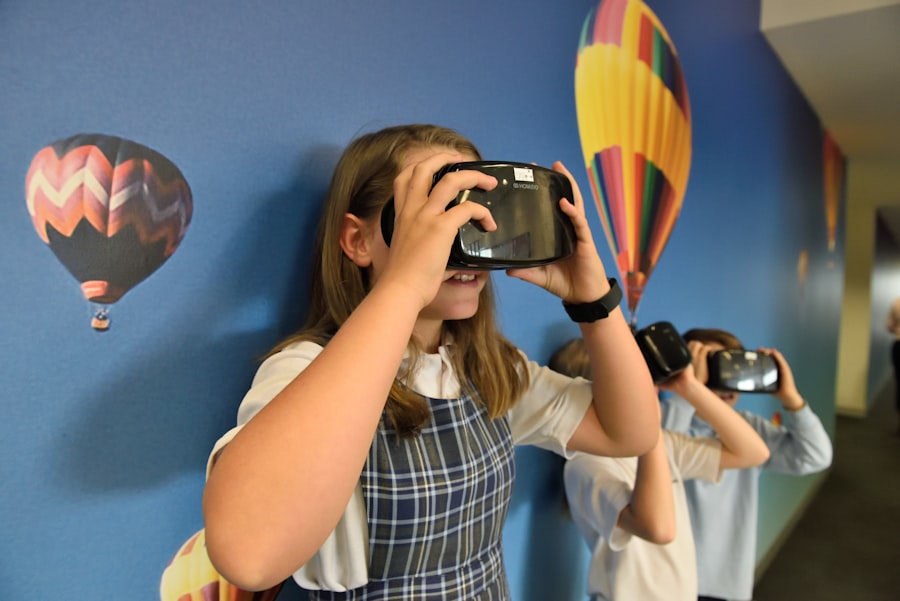
Certain anomalies and theoretical challenges within our current understanding of physics and cosmology are sometimes interpreted as potential glitches or limitations of a simulated reality.
The “Glitch in the Matrix” Phenomenon
Colloquial references to “glitches in the Matrix” often describe inexplicable events, coincidences, or perceived flaws in the fabric of reality. While usually attributed to human perception, cognitive biases, or statistical chance, some view these phenomena, such as déjà vu, unexpected synchronicity, or peculiar patterns in data, as evidence of coding errors, system reboots, or resource limitations within a simulated environment. The idea is that the underlying programmatic structure might occasionally reveal itself through minor inconsistencies.
The Problem of Infinities
Many equations in physics, when pushed to their limits, produce infinite values, which are physically unrealistic. These “infinities” often signal a breakdown in our current theoretical models or, from a simulation perspective, could be interpreted as boundary conditions or computational limits within the simulation itself. The universe, like any well-designed computer program, might have mechanisms to avoid infinite loops or calculations that would consume infinite resources.
The End of the Universe and Simulation Shutdown
Theoretical models for the ultimate fate of the universe, such as the “Big Crunch” or “Heat Death,” describe scenarios where the universe either collapses back upon itself or gradually dissipates into a uniform state of maximum entropy. From a simulation perspective, these could be interpreted as potential end programs or controlled shutdowns of the simulation. A simulator might choose to conclude a simulation when its parameters are met or when it no longer serves its purpose. The reader is invited to consider whether our cosmic destiny is merely a predefined program.
The concept of simulation theory has gained traction in recent years, prompting discussions about the nature of reality and our existence within it. A fascinating article that delves into this topic can be found at My Cosmic Ventures, where various arguments and evidence supporting the idea that we might be living in a simulated universe are explored. This thought-provoking piece encourages readers to consider the implications of such a reality and how it could reshape our understanding of consciousness and existence.
Conclusion: The Unfolding Canvas of Reality
| Metric | Description | Relevance to Simulation Theory | Example/Study |
|---|---|---|---|
| Computational Limits of the Universe | Estimates of the maximum computational capacity of the physical universe | Suggests the universe could be a computational simulation constrained by processing power | Physicist Seth Lloyd’s calculations on the universe as a quantum computer |
| Pixelation of Space-Time | Hypothetical smallest units of space and time (Planck length/time) | Could indicate a discrete grid underlying reality, similar to pixels in a simulation | Research on Planck scale physics and quantum gravity |
| Quantum Indeterminacy | Phenomenon where particles exist in probabilistic states until observed | May imply a rendering process that only resolves details when observed, like in simulations | Double-slit experiment and wavefunction collapse studies |
| Mathematical Structure of Physical Laws | Physical laws can be expressed as elegant mathematical equations | Supports the idea that reality is based on code or algorithms | Max Tegmark’s Mathematical Universe Hypothesis |
| Cosmic Ray Anisotropy | Observed directional variations in cosmic ray energies | Could be evidence of a lattice or grid structure in space-time consistent with simulation | Studies on ultra-high-energy cosmic rays by CERN and other observatories |
| Fine-Tuning of Physical Constants | Physical constants appear precisely set to allow life | May suggest intentional calibration by a simulator | Anthropic principle discussions in cosmology |
The question of whether reality is a simulation remains one of the most profound and challenging inquiries facing humanity. While definitive proof is elusive, the confluence of philosophical arguments, scientific observations, and technological advancements provides a compelling case for its possibility.
The idea of our universe as a grand computational experiment offers a unique framework for understanding many perplexing aspects of reality, from its fine-tuned parameters to its quantized nature. As we continue to develop our own simulated worlds, the ethical and existential implications of such a revelation would be immense. It urges us to look beyond immediate appearances and ponder the true nature of existence, prompting a re-evaluation of what it means to be real. The ongoing exploration of this hypothesis challenges us to consider that the canvas upon which our lives are painted may not be a fundamental, objective expanse, but rather an intricately crafted, endlessly fascinating simulation.
FAQs
What is simulation theory?
Simulation theory is the hypothesis that reality, including the Earth and the universe, could be an artificial simulation, such as a computer simulation, created by an advanced civilization.
What kind of evidence supports simulation theory?
Evidence cited for simulation theory includes observations of physical phenomena that resemble computational processes, such as quantum mechanics’ probabilistic nature, the pixelation of space-time at the Planck scale, and mathematical patterns underlying physical laws.
Who are some prominent proponents of simulation theory?
Philosophers like Nick Bostrom and scientists such as Elon Musk have popularized simulation theory, arguing that future civilizations might run ancestor simulations, making it statistically likely that we live in one.
Are there any scientific experiments testing simulation theory?
Some researchers have proposed experiments to detect anomalies or “glitches” in physical constants or cosmic rays that could indicate a simulated environment, but no conclusive experimental evidence has been found to date.
What are the main criticisms of simulation theory?
Critics argue that simulation theory is unfalsifiable and lacks empirical evidence, making it more a philosophical speculation than a scientific theory. Others question the assumptions about technological capabilities and motivations of hypothetical simulators.