
The realm of computation, as it is commonly understood, operates on principles that are readily demonstrable and intuitively graspable. The binary system, composed of bits representing either 0 or 1, forms the bedrock of all digital information processing. This foundational unit, however, is akin to a single, solid brick in a grand edifice. Quantum computing, conversely, proposes a fundamental shift in this paradigm, leveraging the bizarre and counterintuitive principles of quantum mechanics to build a new kind of computational edifice, one with the potential to solve problems currently intractable for even the most powerful supercomputers. To unravel the secrets of quantum computing is to peer into a universe of possibilities, where information is not merely switched on or off, but exists in a spectrum of states, allowing for computations of unprecedented complexity.
The departure point for understanding quantum computing lies in the quantum bit, or qubit. Unlike a classical bit, which is definitively either 0 or 1, a qubit can exist in a superposition of states. This means it can represent 0, 1, or a combination of both simultaneously. Imagine a classical bit as a light switch: it is either on or off. A qubit, on the other hand, is like a dimmer switch, capable of being fully on, fully off, or at any level of brightness in between. This seemingly subtle difference unlocks immense computational potential.
Superposition: The Quantum Advantage
Superposition is perhaps the most revolutionary concept in quantum computing. A system of $n$ classical bits can represent only one of $2^n$ possible states at any given time. However, a system of $n$ qubits, due to superposition, can represent all $2^n$ states simultaneously. This exponential growth in representational capacity is the fundamental engine driving quantum advantage. To illustrate, consider a system of just 300 qubits. This number of qubits could, in theory, represent more states than there are atoms in the observable universe. This is not an exaggeration, but a consequence of the multiplicative nature of quantum states.
Entanglement: The Mysterious Connection
Another cornerstone of quantum computing is entanglement, a phenomenon where two or more qubits become linked in such a way that they share the same fate, irrespective of the distance separating them. If one entangled qubit is measured and found to be in a particular state, the state of the other entangled qubits is instantaneously determined. Einstein famously referred to this as “spooky action at a distance.” In the context of computation, entanglement allows for correlations between qubits that are impossible in classical systems. This interconnectedness enables complex operations and the processing of information across multiple qubits in a coordinated manner.
Quantum Gates: Manipulating Qubits
Just as classical computers use logic gates (AND, OR, NOT) to manipulate bits, quantum computers employ quantum gates to manipulate qubits. However, quantum gates are reversible operations, meaning that the sequence of operations can be undone, a requirement stemming from the principles of quantum mechanics. Examples of quantum gates include the Hadamard gate, which creates superposition, and the CNOT gate, which can entangle qubits. The design and implementation of these gates are critical for building functional quantum circuits.
Quantum computing has emerged as a groundbreaking field that promises to unlock the secrets of the universe, enabling us to solve complex problems that were previously thought to be insurmountable. For those interested in exploring this fascinating intersection of technology and fundamental physics, a related article can be found at My Cosmic Ventures, where the implications of quantum computing on our understanding of the cosmos are discussed in depth. This resource delves into how quantum algorithms could revolutionize our approach to scientific inquiries and potentially unveil the mysteries that govern the fabric of reality.
The Hardware Challenge: Building a Quantum Computer
Despite the theoretical promise, building a functional quantum computer is a formidable engineering challenge. The delicate nature of quantum states makes them highly susceptible to environmental noise and decoherence, which can disrupt computations. A range of physical systems are being explored as potential platforms for qubits, each with its own strengths and weaknesses.
Superconducting Qubits: The Leading Contender
Superconducting qubits, fabricated from superconducting circuits, currently represent one of the most promising avenues for building quantum computers. These qubits operate at extremely low temperatures, close to absolute zero, to minimize noise and maintain their quantum properties. Their relatively fast gate operations and scalability make them a focal point for many research efforts and commercial ventures.
Trapped Ion Qubits: Precision and Connectivity
Trapped ion qubits use electromagnetic fields to suspend and manipulate individual ions. These qubits are known for their long coherence times, meaning they can maintain their quantum states for extended periods. Their strong connectivity, allowing any ion to interact with any other ion, is also a significant advantage for certain types of quantum algorithms.
Photonic Qubits: Harnessing Light
Photonic qubits utilize photons as their quantum carriers of information. Light is inherently robust and can travel long distances without significant loss of information, making photonic approaches appealing for scalability and network-based quantum computing. However, generating and controlling single photons efficiently remains a challenge.
Topological Qubits: Robustness Through Design
Topological qubits are a more theoretical concept that aims to encode quantum information in the fundamental properties of matter, rather than in the charge or spin of individual particles. This approach promises inherent resilience to noise and errors, as the information is inherently protected by the topological structure. While promising, the realization of stable topological qubits is still in its early stages.
The Noise Problem: Decoherence and Error Correction
The Achilles’ heel of all current quantum computing hardware is decoherence. Quantum states are fragile and can easily collapse into classical states when interacting with their environment. This loss of quantum information is known as decoherence, and it leads to errors in computation. Overcoming decoherence requires extreme isolation of qubits and sophisticated error correction techniques, which in turn require a significant overhead in terms of the number of physical qubits needed to represent a single logical qubit.
Quantum Algorithms: Unlocking New Computational Power
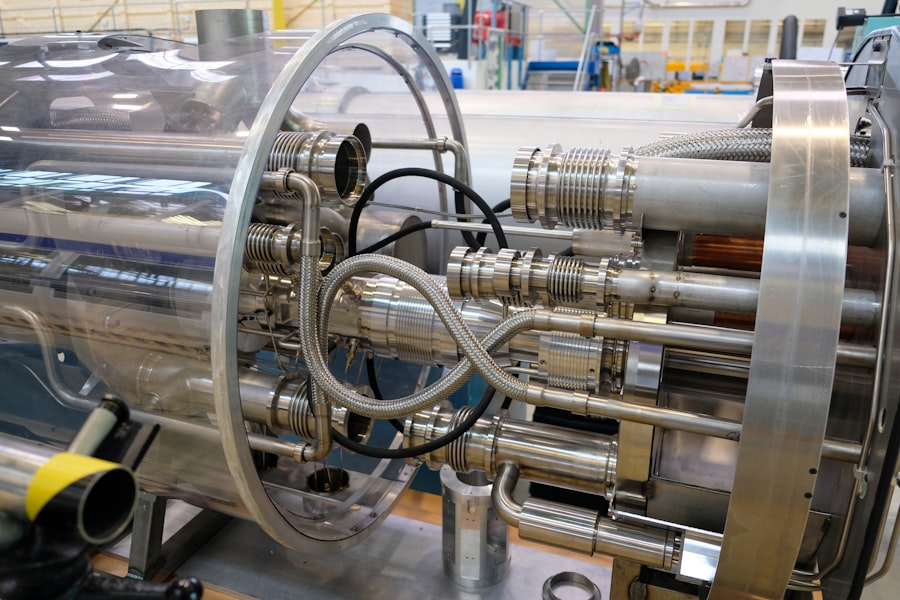
The true power of quantum computing lies not just in the hardware, but in the algorithms designed to run on it. These algorithms exploit superposition and entanglement to solve specific problems far more efficiently than their classical counterparts.
Shor’s Algorithm: Breaking Modern Cryptography
Perhaps the most famous quantum algorithm is Shor’s algorithm, developed by Peter Shor in 1994. This algorithm can efficiently factor large numbers, a task that forms the basis of much of modern internet security, such as the RSA encryption system. The ability of a sufficiently large quantum computer to run Shor’s algorithm poses a significant threat to current cryptographic standards, driving research into post-quantum cryptography.
Grover’s Algorithm: Accelerating Database Search
Grover’s algorithm, developed by Lov Grover in 1996, offers a quadratic speedup for searching unsorted databases. While not as dramatic as the exponential speedup of Shor’s algorithm, a quadratic improvement can still be substantial for very large datasets. Imagine searching for a specific book in an enormous library; Grover’s algorithm is like having a magical way to narrow down the possibilities much faster than flipping through every single book.
Quantum Simulation: Understanding Complex Systems
Quantum computers are ideally suited for simulating other quantum systems, a task that is incredibly difficult for classical computers. This capability has profound implications for scientific research. For example, quantum simulation can be used to:
Materials Science Discovery
By accurately simulating the behavior of atoms and molecules, quantum computers could accelerate the discovery of new materials with desired properties. This could lead to advancements in areas like superconductors, catalysts, and advanced battery technologies.
Drug Discovery and Development
Understanding the intricate interactions of molecules in biological systems is fundamental to drug discovery. Quantum simulation can model these interactions with unprecedented accuracy, paving the way for the development of more effective and personalized medicines.
Quantum Chemistry Calculations
Quantum chemistry aims to understand and predict chemical reactions at a fundamental level. Quantum computers can perform these calculations with much higher fidelity than classical methods, leading to a deeper understanding of chemical processes and enabling the design of novel chemical compounds.
Optimization Problems: Finding the Best Solution
Many real-world problems involve finding the optimal solution from a vast number of possibilities. This includes problems in logistics, finance, and artificial intelligence. Quantum algorithms, such as the Quantum Approximate Optimization Algorithm (QAOA), are being developed to tackle these complex optimization challenges.
The Future of Quantum Computing: From Theory to Application
The field of quantum computing is in a dynamic state of evolution. While significant challenges remain, the progress being made across hardware and algorithms is undeniable. The journey from theoretical construct to widespread practical application is a long one, but the potential impact is immense.
The NISQ Era: Noisy Intermediate-Scale Quantum Computers
We are currently in the Noisy Intermediate-Scale Quantum (NISQ) era. This refers to quantum computers that have a limited number of qubits (typically tens to a few hundred) and are too noisy to perform certain complex fault-tolerant computations. However, these NISQ devices are already capable of performing tasks that are beyond the reach of classical computers for specific, narrowly defined problems, offering a glimpse into the potential of quantum advantage.
Towards Fault-Tolerant Quantum Computers
The ultimate goal is to build fault-tolerant quantum computers, which will possess robust error correction mechanisms capable of overcoming the inherent fragility of qubits. Achieving fault tolerance requires a significant increase in the number of physical qubits and the development of highly efficient error-correction codes. This is a long-term goal, but it represents the pathway to unlocking the full transformative power of quantum computation.
Industry Adoption and Quantum Supremacy
Various industries are actively exploring the potential applications of quantum computing. From financial modeling and risk analysis to supply chain optimization and drug discovery, the adoption of quantum solutions is expected to grow as the technology matures. The concept of “quantum supremacy,” where a quantum computer demonstrably performs a task that is impossible for the best classical computers, has already been achieved by some research groups, marking significant milestones in the field.
Quantum computing is poised to revolutionize our understanding of the universe, unlocking secrets that have long eluded scientists. Recent advancements in this field suggest that quantum systems could simulate complex physical phenomena, providing insights into everything from black holes to the fundamental nature of reality. For those interested in exploring the intersection of technology and cosmic mysteries, a fascinating article can be found at My Cosmic Ventures, which delves into how quantum computing may help us unravel the fabric of the universe.
The Societal Impact: Opportunities and Challenges
| Metric | Description | Current Status | Potential Impact on Understanding the Universe |
|---|---|---|---|
| Qubit Count | Number of quantum bits in a quantum computer | 100+ qubits (Noisy Intermediate-Scale Quantum devices) | Higher qubit counts enable simulation of complex quantum systems, aiding in modeling fundamental particles and forces |
| Quantum Volume | Measure of quantum computer performance considering qubit count, connectivity, and error rates | Quantum volume ~ 128 (as of 2024) | Improved quantum volume allows more accurate simulations of quantum phenomena relevant to cosmology and particle physics |
| Decoherence Time | Time qubits maintain quantum state before losing coherence | Milliseconds to seconds (varies by technology) | Longer decoherence times enable more complex calculations, crucial for simulating quantum effects in the early universe |
| Quantum Algorithms for Physics | Algorithms designed to simulate quantum field theories and particle interactions | Development ongoing; examples include Variational Quantum Eigensolver (VQE) and Quantum Phase Estimation (QPE) | These algorithms can help unlock mysteries of dark matter, quantum gravity, and the Big Bang |
| Simulation of Quantum Gravity | Ability to model quantum aspects of gravity using quantum computers | Experimental stage; theoretical frameworks being tested | Could provide insights into unifying general relativity and quantum mechanics, revealing secrets of black holes and spacetime |
| Entanglement Entropy Studies | Measurement of quantum entanglement to understand information distribution in the universe | Active research area with quantum simulators | Helps in understanding the holographic principle and information paradox in black holes |
The advent of powerful quantum computers will undoubtedly reshape society in profound ways. Understanding these potential impacts, both positive and negative, is crucial for responsible development and deployment.
Revolutionizing Scientific Discovery
As highlighted earlier, quantum computing holds the key to accelerating scientific discovery across numerous disciplines. The ability to model complex systems with unprecedented accuracy will unlock new frontiers in our understanding of the universe, from the subatomic to the cosmic.
Economic Transformation and New Industries
The development and application of quantum computing will foster new industries and transform existing ones. This will create new economic opportunities, requiring a workforce with specialized skills in quantum information science and engineering.
The Cryptographic Arms Race
The ability of quantum computers to break current encryption algorithms necessitates a proactive approach to cybersecurity. The transition to post-quantum cryptography is a significant undertaking, requiring global collaboration and investment to secure digital infrastructure against future quantum threats.
Ethical Considerations and Responsible Innovation
As with any powerful new technology, ethical considerations are paramount. Issues such as equitable access to quantum resources, the potential for misuse of quantum capabilities, and the impact on employment will require careful deliberation and the establishment of responsible innovation frameworks. The journey into the quantum realm is an exciting one, filled with the promise of extraordinary advancements, but it also demands vigilance and foresight.
FAQs
What is quantum computing?
Quantum computing is a type of computing that uses quantum bits, or qubits, which can exist in multiple states simultaneously due to the principles of quantum mechanics. This allows quantum computers to process complex calculations much faster than classical computers.
How does quantum computing help in understanding the universe?
Quantum computing can simulate quantum systems and complex physical phenomena that are difficult or impossible for classical computers to model. This capability helps scientists explore fundamental questions about the nature of matter, energy, and the origins of the universe.
What are qubits and how do they differ from classical bits?
Qubits are the basic units of information in quantum computing. Unlike classical bits, which represent either 0 or 1, qubits can represent 0, 1, or both simultaneously due to superposition. This property enables quantum computers to perform many calculations at once.
What challenges currently exist in quantum computing?
Some major challenges include qubit stability (decoherence), error rates, and the difficulty of scaling up the number of qubits. Researchers are actively working on improving hardware, error correction methods, and algorithms to make quantum computing more practical.
Can quantum computing solve all scientific problems related to the universe?
While quantum computing holds great promise for advancing our understanding of complex quantum phenomena, it is not a universal solution. Some problems may remain beyond its reach due to technical limitations or the inherent complexity of certain systems. However, it is a powerful tool that complements other scientific methods.