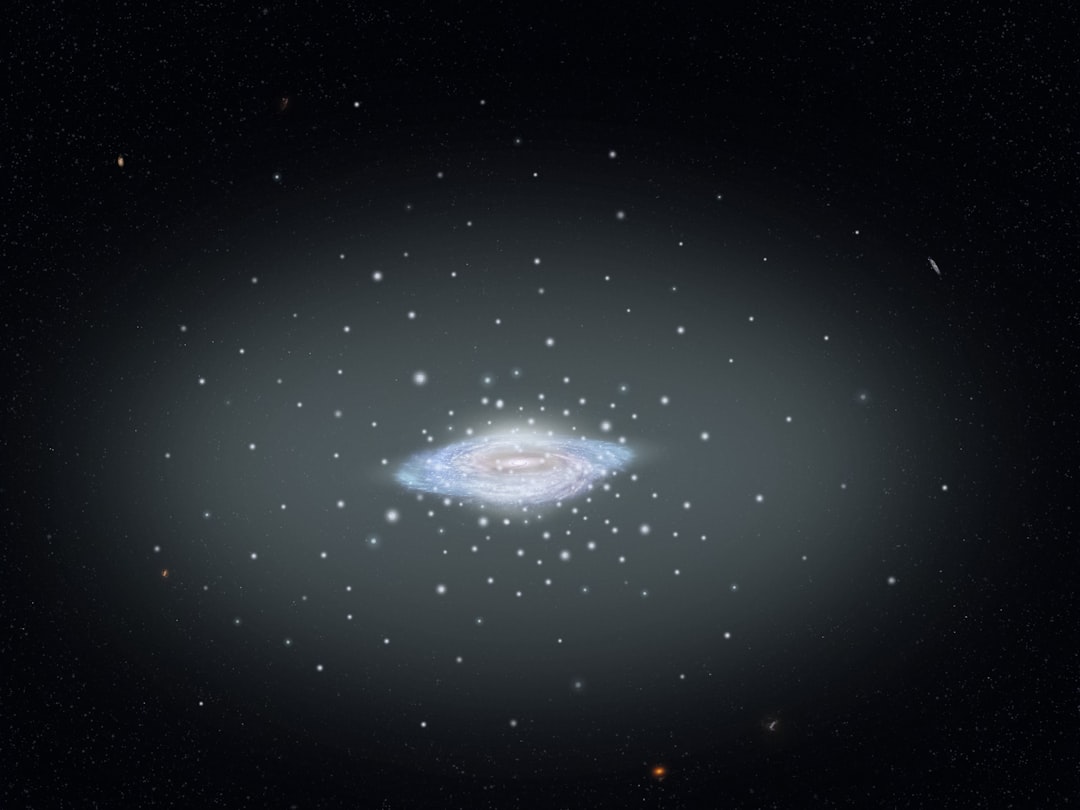
The question of whether the Universe is inexorably expanding outward or destined to reverse course and collapse inward has captivated cosmologists and philosophers for centuries. This article delves into the scientific understanding of the Universe’s fate, examining the evidence that supports its current expansion and the theories that propose potential future scenarios.
The concept of a dynamic, rather than static, Universe gained significant traction in the early 20th century, largely due to the pioneering work of Edwin Hubble. His observations laid the groundwork for our understanding of cosmic expansion.
Redshift as a Cosmic Fingerprint
One of the most crucial pieces of evidence supporting cosmic expansion is the redshift of light from distant galaxies. When light waves originate from an object moving away from an observer, their wavelengths are stretched, shifting towards the red end of the electromagnetic spectrum. Conversely, light from an object moving closer is blueshifted.
- The Doppler Effect in Astronomy: This phenomenon is analogous to the change in pitch of a siren as an ambulance approaches and then recedes. In astronomy, it provides a direct measure of a galaxy’s radial velocity relative to Earth.
- Measuring Galactic Velocities: Early spectroscopic analyses of galactic light revealed a predominant redshift, indicating that most galaxies are moving away from our own Milky Way. The greater the redshift, the faster the galaxy is receding.
Hubble’s Law: The Expanding Fabric of Spacetime
Hubble’s groundbreaking discovery in 1929 solidified the notion of an expanding Universe. He observed a direct proportionality between a galaxy’s distance from Earth and its recession velocity.
- A Linear Relationship: Hubble’s Law can be expressed as $v = H_0d$, where $v$ is the recession velocity, $d$ is the proper distance to the galaxy, and $H_0$ is the Hubble constant. This constant represents the rate of expansion of the Universe.
- Not an Explosion into Space: Importantly, the expansion described by Hubble’s Law is not galaxies hurtling through a static space, but rather the stretching of space itself. Imagine dots on the surface of an inflating balloon; as the balloon expands, the dots move further apart, even though they are stationary on the surface. This analogy helps to illustrate how all observers in an expanding Universe would perceive other galaxies moving away from them.
In exploring the intriguing question of whether the universe is expanding or crashing, one can gain further insights by reading the related article on cosmic phenomena at My Cosmic Ventures. This article delves into the latest research and theories surrounding the dynamics of the universe, providing a comprehensive overview of the evidence supporting both expansion and potential collapse scenarios.
The Role of Dark Energy: Accelerating Expansion
While Hubble’s initial observations pointed to an expanding Universe, later discoveries revealed an even more astonishing truth: the expansion is not merely continuing, but it is also accelerating. This acceleration is attributed to a mysterious force known as dark energy.
Evidence for Acceleration
The acceleration of cosmic expansion was an unexpected finding, challenging the prevailing wisdom that gravity should be slowing down the expansion over time.
- Type Ia Supernovae as Standard Candles: Observations of distant Type Ia supernovae provided the crucial evidence. These specific types of stellar explosions are known for their consistent peak luminosity, making them excellent “standard candles” for measuring cosmic distances.
- Unexpected Dimming: In the late 1990s, two independent research teams, the Supernova Cosmology Project and the High-Z Supernova Search Team, observed that distant Type Ia supernovae were fainter than expected based on the assumed rate of expansion. This dimming suggested that the supernovae were farther away than predicted, implying that the Universe’s expansion has been speeding up over cosmic time.
The Enigma of Dark Energy
The mechanism driving this acceleration remains one of the greatest mysteries in modern cosmology. Scientists have given it the placeholder name “dark energy.”
- A Repulsive Gravitational Force: Dark energy is theorized to possess a negative pressure, which acts as a repulsive force, counteracting gravity’s attractive pull. Instead of drawing matter together, dark energy pushes spacetime apart.
- Dominating the Cosmic Energy Budget: Current cosmological models suggest that dark energy constitutes approximately 68% of the Universe’s total energy density, far outweighing ordinary matter (about 5%) and dark matter (about 27%). Its ubiquitous presence dictates the long-term fate of the Universe.
Possible Fates of the Universe: A Cosmic Crossroads
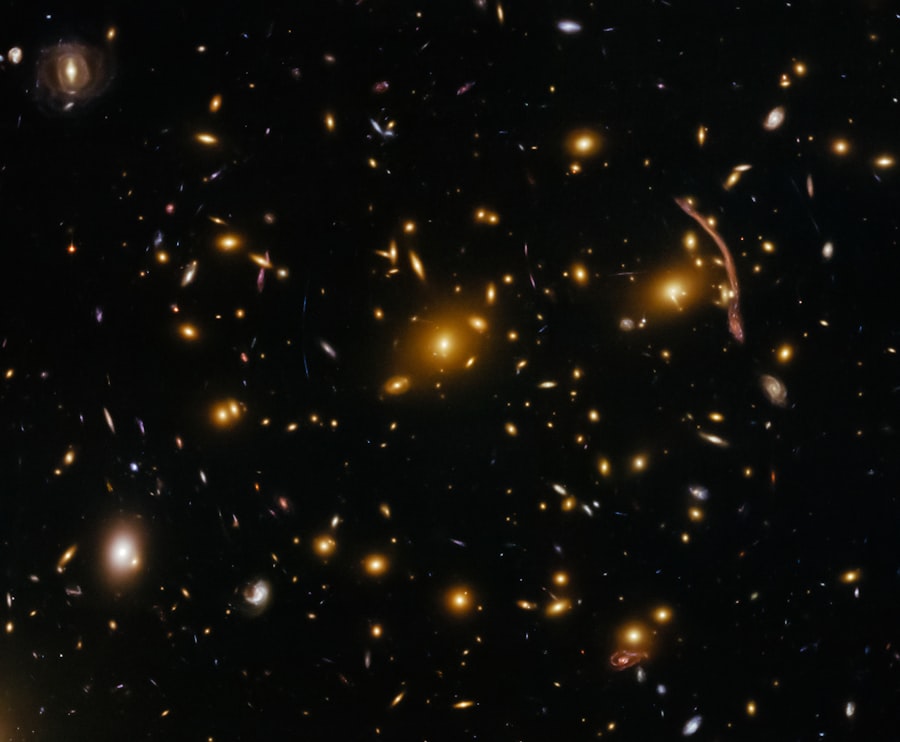
The ultimate destiny of the Universe hinges on the interplay between its expansion, the amount of matter and energy it contains, and the properties of dark energy. Cosmologists propose several potential scenarios, each with distinct implications for the future.
The Big Freeze (Heat Death)
This is currently considered the most probable fate given the observed accelerated expansion. In this scenario, the Universe continues to expand indefinitely, eventually reaching a state of maximum entropy.
- Ever-Diluting Matter: As space expands, matter and radiation become increasingly diluted. Galaxies will drift further and further apart, eventually becoming isolated islands in a vast, empty cosmos.
- Stellar Extinction: Stars will gradually exhaust their fuel and die out, leaving behind white dwarfs, neutron stars, and black holes. New star formation will cease as the gas and dust required for their birth become too sparse.
- Black Hole Evaporation: Even black holes, over unimaginably long timescales, are predicted to slowly “evaporate” through Hawking radiation, leaving behind only fundamental particles.
- A Cold, Dark, Empty Universe: Ultimately, the Universe would reach a state of thermodynamic equilibrium, often referred to as “heat death,” where all energy is evenly distributed, and no further work can be done. It would be a cold, dark, and utterly inanimate expanse.
The Big Crunch
This scenario, once highly favored, posits that if the Universe contained enough matter and energy, its gravitational pull would eventually overcome the expansion, causing it to reverse course and contract.
- Gravitational Dominance: For a Big Crunch to occur, the average density of the Universe would need to be greater than a critical density. If this were the case, gravity would eventually slow the expansion to a halt and then pull all matter back together.
- Reversal of Time’s Arrow: The cosmic microwave background radiation would gradually blueshift as the contracting Universe heated up. Galaxies would rush together, and space itself would shrink.
- A Singular Endpoint: The Big Crunch would culminate in a state of immense density and temperature, possibly similar to the conditions at the Big Bang, but in reverse. Some theories even suggest a cyclic Universe, where a Big Crunch is followed by a new Big Bang.
The Big Rip
This more extreme scenario, also driven by dark energy, envisions an ever-accelerating expansion that tears apart all structures, from galaxies down to individual atoms.
- Increasing Dark Energy Density: The Big Rip would occur if dark energy’s density were to increase over time, rather than remaining constant. This enhanced repulsive force would progressively override all other forces.
- Hierarchical Unbinding: Initially, galaxies would be torn apart from their clusters. Then individual galaxies would disassociate, followed by stars being ripped from their galaxies. Eventually, planets would be torn from their stars, and then molecules and atoms themselves would be unbinded.
- Fundamental Particle Annihilation: In the final moments of a Big Rip, even the fundamental forces holding atomic nuclei together would be overcome, reducing all matter to a sea of freely isolated, expanding particles. This is considered a particularly hostile and final end to the Universe.
The Big Slurp
A more speculative and less understood scenario involves a concept from string theory known as a “false vacuum decay,” leading to what is sometimes called the Big Slurp.
- The Higgs Field and Vacuum Energy: This theory relates to the Higgs field, which gives elementary particles mass. The Universe currently exists in a “false vacuum,” meaning it’s in a stable but not the absolute lowest energy state.
- Bubble of True Vacuum: If a bubble of “true vacuum” (the absolute lowest energy state) were to spontaneously form somewhere in the Universe, it would expand at the speed of light, converting everything it encounters into the lower energy state. This transition would fundamentally alter the laws of physics.
- Instantaneous Transformation: The Big Slurp would be an instantaneous transformation across the observable Universe. The exact consequences are difficult to predict, as the new laws of physics would be unknown, but it would effectively mean the end of life and structures as we know them.
The Critical Density and Cosmic Geometry
The ultimate fate of the Universe is intimately linked to its average density, specifically its relation to a theoretical “critical density.” This concept also influences the overall geometry of the cosmos.
Open, Closed, and Flat Universes
The average density of matter and energy in the Universe determines its spatial curvature, which in turn influences its gravitational behavior and ultimately its fate.
- Critical Density: This is the precise average density of matter and energy required for the Universe to eventually halt its expansion, but only after an infinite amount of time. If the actual density matches the critical density, the Universe is considered “flat.”
- Open Universe (Density < Critical Density): If the Universe’s average density is less than the critical density, its gravity is insufficient to halt the expansion. The Universe would expand forever, leading to a Big Freeze. Its geometry would be negatively curved, like the surface of a saddle.
- Closed Universe (Density > Critical Density): If the Universe’s average density exceeds the critical density, gravity would eventually overcome the expansion, causing it to contract back into a Big Crunch. Its geometry would be positively curved, like the surface of a sphere.
- Flat Universe (Density = Critical Density): In a flat Universe, expansion would continue indefinitely, but the rate of expansion would asymptotically approach zero over infinite time. Its geometry would be Euclidean, like a flat sheet of paper.
Observations Favoring a Flat Universe
Current cosmological observations, particularly those of the Cosmic Microwave Background (CMB) radiation, strongly suggest that the Universe’s geometry is very close to flat.
- Cosmic Microwave Background Anisotropies: The slight temperature variations in the CMB, remnants of the Big Bang, provide a powerful probe of the Universe’s geometry. The size of these fluctuations can be used to determine the curvature of spacetime.
- Implications for the Critical Density: The observed flatness implies that the Universe’s total energy density (including dark energy) is remarkably close to the critical density. This finding reinforces the dominance of dark energy in shaping the Universe’s trajectory.
The debate over whether the universe is expanding or crashing has intrigued scientists for decades, and a recent article explores this topic in depth. In the piece, researchers examine various theories and observations that contribute to our understanding of cosmic dynamics. For those interested in delving deeper into this fascinating subject, you can read more about it in this insightful article on cosmic ventures. Check it out here to gain a broader perspective on the universe’s fate.
Conclusion: A Universe in Unfolding
| Metric | Value | Unit | Description |
|---|---|---|---|
| Hubble Constant (H₀) | 70 | km/s/Mpc | Rate of expansion of the universe |
| Redshift (z) | 0 to 10+ | Dimensionless | Measure of how much the universe has expanded since light was emitted |
| Cosmic Microwave Background Temperature | 2.725 | K | Temperature of the residual radiation from the Big Bang |
| Density Parameter (Ω) | ~1.0 | Dimensionless | Ratio of actual density to critical density; indicates flat universe |
| Dark Energy Density | ~0.7 | Fraction of total energy density | Contributes to accelerated expansion of the universe |
| Age of the Universe | 13.8 | billion years | Time since the Big Bang |
| Deceleration Parameter (q₀) | -0.55 | Dimensionless | Indicates the universe’s expansion is accelerating |
The scientific consensus, built upon decades of observational data and theoretical refinement, paints a picture of a Universe that is not only expanding but doing so at an accelerating rate. While the ultimate destiny remains an area of active research, the evidence overwhelmingly points towards a future dominated by dark energy, leading to a “Big Freeze” or, less likely, a “Big Rip.”
The question, “Is the Universe expanding or collapsing?” can now be answered with considerable confidence: it is expanding, and that expansion is accelerating. The prospect of a collapsing Universe, while a fascinating theoretical possibility, is not supported by the current cosmological evidence. Instead, inhabitants of this cosmic epoch are witnesses to a Universe in perpetual unfolding, destined for an eternity of ever-increasing emptiness and cold, a stark but ultimately grand testament to the laws of physics that govern our existence.
FAQs
Is the universe currently expanding or contracting?
The universe is currently expanding. Observations of distant galaxies show that they are moving away from us, indicating that space itself is stretching over time.
What evidence supports the idea that the universe is expanding?
The primary evidence comes from the redshift of light from distant galaxies, which shows they are moving away from Earth. Additionally, the cosmic microwave background radiation and the distribution of galaxies support the expansion model.
What is the Big Bang theory in relation to the universe’s expansion?
The Big Bang theory posits that the universe began as a hot, dense point approximately 13.8 billion years ago and has been expanding ever since. This expansion explains the observed movement of galaxies and the cooling of the universe over time.
Could the universe ever stop expanding and start contracting?
It is theoretically possible if the density of matter and energy in the universe were high enough to halt expansion and cause a “Big Crunch.” However, current evidence suggests the expansion is accelerating due to dark energy, making contraction unlikely.
What role does dark energy play in the universe’s expansion?
Dark energy is a mysterious form of energy that permeates space and is driving the accelerated expansion of the universe. It counteracts the gravitational pull of matter, causing galaxies to move away from each other at an increasing rate.