The concept of the space-time continuum, a four-dimensional fabric interwoven by space and time, has long been a cornerstone of modern physics, most notably formulated by Albert Einstein. While the intricate mathematical descriptions of this continuum can seem abstract, its implications are profoundly tangible, particularly when it comes to the experience of astronauts venturing beyond Earth’s gravitational embrace. One of the most counter-intuitive yet experimentally verified consequences of this continuum is the phenomenon of time dilation, where time passes at a different rate for observers in different frames of reference. For those who travel at high speeds or experience strong gravitational fields, a direct consequence is that they age slower than their counterparts who remain stationary or in weaker gravitational environments. This article will delve into how the space-time continuum dictates this age differential for astronauts, exploring the underlying physics and the observations that confirm it.
The Fabric of Reality
To grasp why astronauts age slower, one must first understand the space-time continuum itself. Imagine reality not as a static stage, but as a dynamic, pliable fabric. This fabric, the space-time continuum, is not merely a backdrop against which events unfold; it is an active participant, capable of being warped and stretched by mass and energy. Developed from Einstein’s theories of special and general relativity, the continuum posits that space and time are not independent entities but are inextricably linked. Events that occur in space also occur in time, and the geometry of one influences the other.
Relativity and Frames of Reference
Central to understanding time dilation is the concept of frames of reference. In physics, a frame of reference is simply a coordinate system used to describe the position and motion of objects. When two observers are in different frames of reference, especially if one is moving relative to the other or is subjected to different gravitational forces, their measurements of time and space can diverge. Special relativity deals with frames of reference moving at constant velocities relative to each other, while general relativity extends this to include accelerating frames and the effects of gravity. The space-time continuum provides the framework for understanding how these differences in frames of reference lead to observable effects like time dilation.
The Inseparability of Space and Time
The notion that space and time are inseparable is crucial. Consider a journey. We typically think of it in terms of distance traversed through space over a duration of time. However, within the space-time continuum, this journey is a path through four dimensions. The speed at which one moves through space directly affects the speed at which one moves through time. The faster an object travels through space, the slower it travels through time, relative to a stationary observer. This relationship is not arbitrary; it is a fundamental property of the universe, dictated by the speed of light, which remains constant for all observers.
A fascinating related article that delves deeper into the effects of space travel on human biology can be found at My Cosmic Ventures. This article explores not only how astronauts age slower in space due to the effects of microgravity on cellular processes but also examines the psychological and physiological challenges faced during long-duration missions. Understanding these factors is crucial as humanity prepares for future explorations beyond Earth.
Special Relativity and Velocity Time Dilation
The Twin Paradox: A Thought Experiment
One of the most famous illustrations of velocity time dilation is the “twin paradox,” a thought experiment designed to highlight the counter-intuitive nature of special relativity. Imagine two identical twins. One twin remains on Earth, while the other embarks on a long space journey at a significant fraction of the speed of light. According to special relativity, the traveling twin will experience less time passing than the twin who remained on Earth. Upon the traveler’s return, they will be biologically younger than their Earthbound sibling. This is not a paradox in the true sense, but rather a revelation about the relativistic nature of time.
How Speed Affects Time
The mathematical foundation for this effect is described by the Lorentz factor, which quantifies the degree of time dilation. As an object’s velocity approaches the speed of light, the Lorentz factor increases exponentially, meaning time for that object slows down dramatically compared to a stationary observer. For astronauts, even speeds achieved by current spacecraft, while substantial, are still a minuscule fraction of the speed of light. Consequently, the time dilation effects experienced are very small, but they are measurable and accumulate over long durations. Think of it like a river: the faster you row your boat downstream through the “river of space,” the slower the water (or “river of time”) flows past you.
Experimental Verification: Muons and Atomic Clocks
The predictions of special relativity regarding time dilation are not merely theoretical constructs. They have been rigorously tested and confirmed through numerous experiments. One classic example involves muons, subatomic particles created in the Earth’s upper atmosphere. Muons have a very short lifespan. If time dilation did not occur, most muons would decay before reaching the Earth’s surface. However, due to their high speeds, time for them slows down significantly from our perspective on Earth, allowing a much larger number of muons to be detected at ground level than would otherwise be possible. Furthermore, highly precise atomic clocks flown on high-speed aircraft and even on the International Space Station have confirmed these relativistic effects, demonstrating that the clocks indeed run slower when in motion.
General Relativity and Gravitational Time Dilation
Gravity’s Warping of Space-Time
General relativity introduces another crucial factor that influences the passage of time: gravity. Einstein’s theory describes gravity not as a force, but as a curvature in the space-time continuum caused by the presence of mass and energy. Massive objects, like stars and planets, warp the fabric of space-time around them. The stronger the gravitational field, the greater the curvature. This curvature affects the paths of objects moving through space and also influences the flow of time.
The Deeper the Well, The Slower the Clock
Imagine space-time as a flat rubber sheet. Placing a heavy ball on the sheet causes it to sag, creating a depression. This depression represents the gravitational field. Now, imagine trying to roll a marble across the sheet. If it rolls near the heavy ball, its path will be deflected by the depression. Similarly, objects moving through a gravitational field follow curved paths. More importantly for our discussion, time itself passes more slowly in stronger gravitational fields. The closer you are to a massive object, the deeper you are in its “gravitational well,” and the slower time will tick for you relative to someone in a weaker gravitational field.
The International Space Station: A Case Study
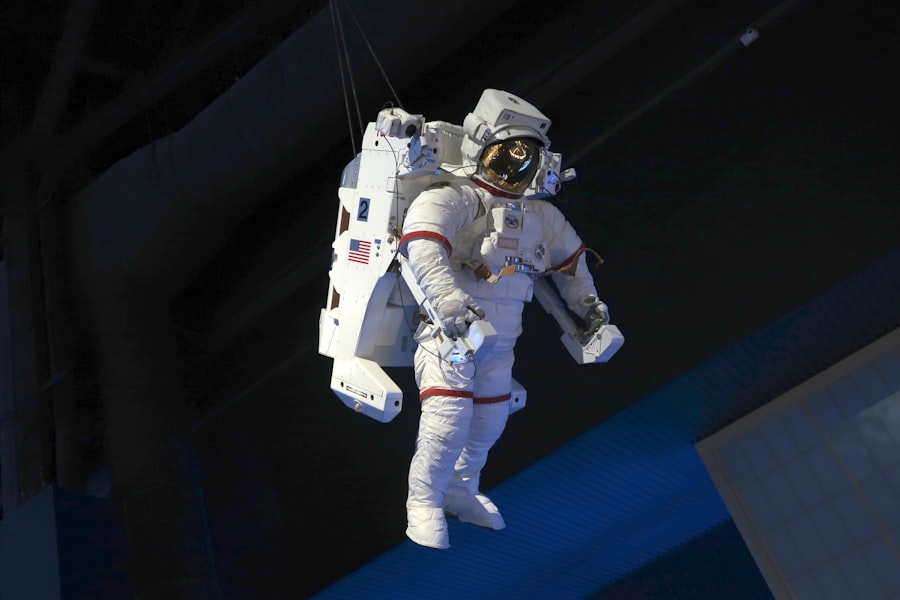
Astronauts on the International Space Station (ISS) experience both velocity and gravitational time dilation. While they are moving at high speeds (approximately 7.66 kilometers per second), which causes time to slow down for them, they are also further away from Earth’s gravitational pull than those on the surface. Earth’s gravity is weaker at the ISS’s altitude. In fact, the gravitational time dilation effect tends to make time pass faster for the astronauts on the ISS compared to those on Earth. However, the velocity time dilation effect is stronger, resulting in a net effect where the astronauts on the ISS age slightly slower than people on Earth. This net effect is very small, measured in fractions of a second over months, but it is precisely what the theories predict.
The Combined Effects on Astronauts
A Delicate Balancing Act
The experience of astronauts in orbit is a fascinating interplay between special and general relativistic effects. They are simultaneously in motion and in a weaker gravitational field. The relative magnitudes of these two effects determine the net outcome for their aging process. For missions like those to the ISS, the velocity time dilation usually predominates, leading to them aging slightly slower. However, for hypothetically much higher orbital altitudes with significantly weaker gravity, or for very close proximity to extremely massive objects, the gravitational time dilation could theoretically outweigh the velocity effect.
Quantifying the Difference: Small but Real
The actual difference in aging for astronauts due to relativistic effects is remarkably small for current space missions. For a six-month stay on the ISS, an astronaut would age approximately 0.007 seconds less than someone on Earth. While this difference is imperceptible to the individual, it is a triumph of scientific prediction and measurement. It unequivocally demonstrates that our intuition about time as a universal constant breaks down at relativistic speeds and in strong gravitational fields, as described by the space-time continuum.
Implications for Future Space Travel
As humanity ventures further into space and considers missions to other planets or even interstellar travel, understanding and accounting for these relativistic effects will become increasingly important. For journeys at speeds approaching the speed of light, the time dilation would become significantly more pronounced, potentially allowing travelers to reach distant stars within their lifetime while centuries or millennia pass on Earth. This would fundamentally alter our perception of time and distance for future generations of explorers, turning science fiction into a lived reality governed by the very fabric of existence.
Recent studies have shown that astronauts experience slower aging processes while in space, a phenomenon that has intrigued scientists for years. This intriguing topic is further explored in a related article that discusses the effects of microgravity on human biology and the implications for long-duration space missions. For more insights, you can read the full article here. Understanding these effects not only sheds light on the aging process but also helps in planning future explorations beyond our planet.
Measuring the Time Dilation Anomaly
| Metric | Earth | Space (ISS Orbit) | Notes |
|---|---|---|---|
| Gravitational Time Dilation | Standard (1g) | Approximately 0.00000001% slower aging | Weaker gravity in orbit causes time to pass slightly faster relative to Earth surface |
| Velocity Time Dilation | Stationary | Approximately 0.00001% slower aging | High orbital speed (~28,000 km/h) causes time to pass slower for astronauts |
| Net Time Dilation Effect | Baseline | About 0.00001% slower aging | Velocity effect dominates gravitational effect, resulting in net slower aging |
| Biological Aging Rate | Normal human aging | Varies due to microgravity effects | Microgravity can cause muscle atrophy and bone density loss, but does not slow biological aging |
| Example: Scott Kelly vs. Mark Kelly | Earth-bound twin | Spent 340 days in space | Scott Kelly aged about 0.005 seconds less than his twin due to relativistic effects |
High-Precision Atomic Clocks
The ability to measure these minute temporal discrepancies relies on the development of incredibly precise instruments. Modern atomic clocks are the gold standard for such measurements. These clocks utilize the resonant frequencies of atoms to keep time with astonishing accuracy, measuring time in femtoseconds (quadrillionths of a second). By comparing atomic clocks placed in different frames of reference – one on Earth and one on a fast-moving spacecraft or in a different gravitational potential – scientists can detect and quantify the time dilation.
Satellite Navigation Systems: A Practical Application
The Global Positioning System (GPS) provides a daily, practical demonstration of relativistic time dilation. The satellites that orbit Earth are moving at high speeds and are in a weaker gravitational field than receivers on the ground. Both special and general relativistic effects must be accounted for in the satellite’s onboard clocks. Without these relativistic corrections, GPS devices would quickly become inaccurate, accumulating errors of several kilometers per day. This demonstrates that the abstract principles of the space-time continuum have very real-world implications that govern the technology we use every day.
Future Observational Opportunities
As we develop more sophisticated spacecraft and explore more extreme environments, opportunities to observe and measure time dilation will expand. Missions to study black holes or neutron stars, objects with incredibly strong gravitational fields, will provide natural laboratories for testing the limits of general relativity and observing profound gravitational time dilation effects. Future particle accelerators, capable of accelerating particles to even higher speeds, will also offer further avenues for studying velocity time dilation.
The Philosophical and Practical Ramifications
Redefining Our Understanding of Time
The fact that time is not absolute but is relative to an observer’s motion and gravitational environment fundamentally alters our philosophical understanding of existence. It suggests that there is no universal “now” that applies to everyone everywhere. Each observer experiences their own unique passage of time, interwoven with their journey through space. This can be a disorienting but also an empowering realization, highlighting the dynamic and interconnected nature of the cosmos.
Navigating the Future of Exploration
For the future of space exploration, the implications are profound. Interstellar travel, once a distant dream, becomes more conceivable if time dilation at near-light speeds is leveraged. Astronauts could potentially travel vast distances within their own lifespans. However, it also raises logistical and ethical considerations. If a crew returns after a long journey to find that centuries have passed on Earth, reintegration into society, or even the survival of their loved ones, would present immense challenges.
The Unifying Power of Space-Time
Ultimately, the study of time dilation in astronauts underscores the profound explanatory power of the space-time continuum. It is not just a theoretical framework but a description of the fundamental architecture of our universe. The fact that we can observe and measure these subtle differences in the passage of time for those who venture beyond our planet is a testament to the ingenuity of human scientific inquiry and the elegance of nature’s laws. While astronauts may not return noticeably younger to the naked eye, their journeys are a constant reminder that they are subtly, but surely, dancing to a different cosmic beat, a beat dictated by the very essence of space and time.
FAQs
1. Why do astronauts appear to age slower in space?
Astronauts experience time dilation due to the effects of special relativity when traveling at high speeds in orbit, causing their biological clocks to run slightly slower compared to people on Earth. This means they age marginally less during their time in space.
2. Does microgravity affect the aging process of astronauts?
Microgravity impacts various physiological systems, such as muscle and bone density loss, but it does not slow down the fundamental biological aging process. The perceived slower aging is primarily due to relativistic effects, not microgravity.
3. How significant is the difference in aging for astronauts in space?
The difference is extremely small. For example, astronauts aboard the International Space Station age only a few milliseconds less than people on Earth over several months due to time dilation effects.
4. Are there any health risks associated with aging in space?
Yes, astronauts face health challenges like muscle atrophy, bone loss, and radiation exposure, which can accelerate certain aging-related conditions despite the minor time dilation effects.
5. Can the slower aging effect in space be used for medical or scientific benefits?
Currently, the time dilation effect is too small to have practical medical benefits. However, studying how the body responds to space conditions helps scientists understand aging and develop countermeasures for long-duration space missions.