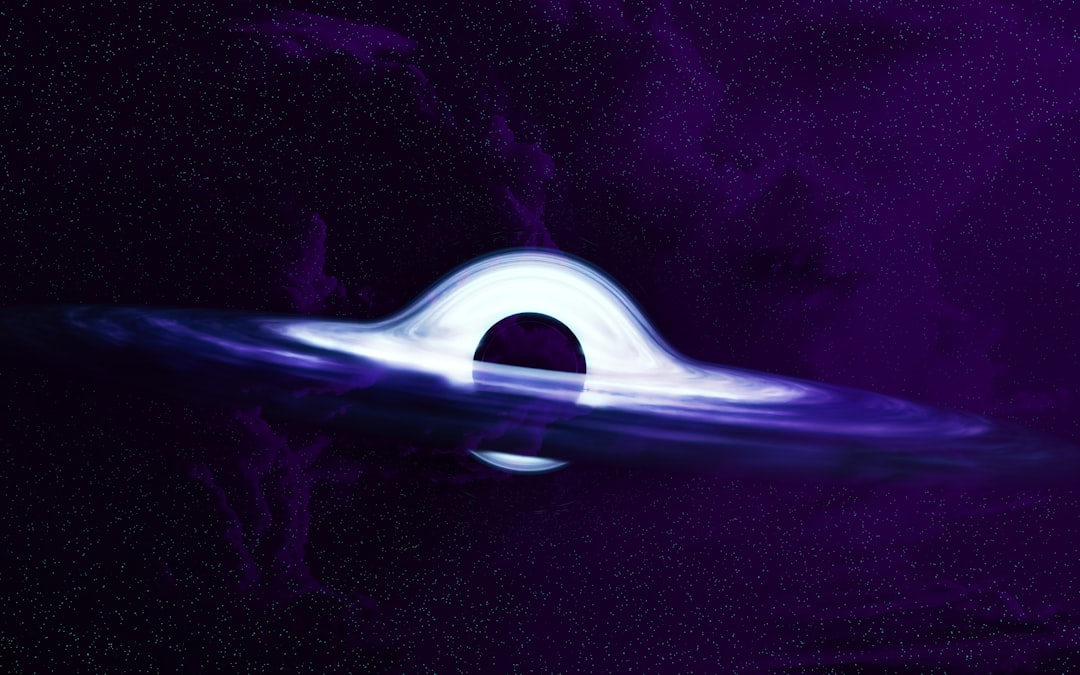
The cosmic ballet of our solar system, a meticulously choreographed dance of planets around our Sun, is a scene familiar to many. Yet, like a rogue dancer potentially entering the stage, the concept of a black hole’s influence introduces a profound shift in our understanding of this delicate equilibrium. While our solar system is currently a solitary entity with no known black hole in its immediate vicinity, contemplating this theoretical scenario allows us to explore the fundamental laws of physics and the immense power of gravity. The presence of a black hole, even one at a considerable distance, would not be a subtle whisper but a gravitational roar that could resound through our cosmic neighborhood. This article will delve into the potential impacts such an object might have, analyzing the forces at play and the dramatic transformations that could ensue.
Imagine our solar system as a finely tuned instrument. Black holes, with their immense gravitational pull, could act like an errant hand plucking the strings with unpredictable force. The most immediate and pervasive effect of a black hole’s proximity would be the tidal forces it exerts. These forces are not uniform across an object; the side closer to the black hole experiences a stronger gravitational pull than the side farther away.
Tidal Disruption Events: The Ultimate Unraveling
If a black hole were to pass close enough to a star, like our Sun, the tidal forces could become so extreme that they would overcome the Sun’s own gravity. This phenomenon is known as a Tidal Disruption Event (TDE).
The Sun’s Fate: From Burning Star to Cosmic Debris
In the event of a close encounter, the Sun would be stretched and squeezed, much like dough under a baker’s hands. The leading edge of the Sun, pulled more strongly by the black hole, would begin to elongate. Simultaneously, the trailing edge would be left behind, experiencing a weaker pull. This differential pull would rip the Sun apart, creating long streams of plasma that would then either fall into the black hole or be ejected into space. Our familiar star, the source of life and warmth, would be reduced to incandescent ribbons hurtling through the void.
Planetary Devastation: A Chaotic Cascade
The planets, too, would not escape this gravitational maelstrom. As the Sun distorts and disintegrates, the stable orbits that have governed planetary motion for billions of years would collapse. Planets caught in the direct path of the disruption would likely be flung out of the solar system entirely. Others might be accelerated into wildly elliptical orbits, careening through the remnants of the Sun. The familiar, orderly procession of planets would be replaced by a chaotic cascade of collisions and ejections.
Reshaping Planetary Orbits: A Dance of Destabilization
Even if a black hole did not directly disrupt the Sun, its gravitational influence would still ripple through the solar system, creating significant orbital instability.
Perturbing Inner Planets: A Closer Call with Chaos
The inner planets, Mercury, Venus, Earth, and Mars, are more tightly bound to the Sun. A passing black hole would exert a powerful tug, altering their orbital paths. These changes might lead to increased asteroid impacts as orbital resonances are disrupted, or even direct collisions between planets. Earth’s stable climate, a product of its consistent orbit, would be thrown into disarray, leading to extreme temperature fluctuations and catastrophic environmental changes.
Outer Giants: A Cosmic Push and Pull
The gas giants – Jupiter, Saturn, Uranus, and Neptune – possess immense masses, and their orbits are far more extensive. A black hole’s gravity could nonetheless significantly perturb these orbits. Jupiter, with its massive gravitational influence on the inner solar system, could be pushed into a new orbit, potentially clearing out or scattering asteroids and comets. Alternatively, it could be nudged into an orbit that brings it into closer proximity with the inner planets, increasing the risk of collisions.
If you’re curious about the implications of a black hole entering our solar system, you might find the article “The Cosmic Dance: Understanding Black Holes and Their Impact on Our Universe” on My Cosmic Ventures particularly enlightening. This piece delves into the nature of black holes, their formation, and the potential consequences of their presence in our cosmic neighborhood. For more insights, you can read the article here: The Cosmic Dance: Understanding Black Holes and Their Impact on Our Universe.
Accretion Disks: The Fiery Aftermath
When matter falls towards a black hole, it doesn’t typically fall in a straight line. Instead, it spirals inward, forming a Superheated disk of gas and dust known as an accretion disk. This disk is a veritable furnace, and its formation would have profound consequences for the solar system.
The Birth of an Accretion Disk: Cosmic Recycling on a Grand Scale
If the black hole were to encounter gas and dust clouds within the solar system, or the ejected material from a disrupted Sun, these materials would begin to spiral towards the black hole. As they gained speed, the particles would collide, generating immense heat through friction. This process would create a flattened, spinning disk of superheated plasma.
Radiation Hazards: A Deadly Glow
Accretion disks are incredibly luminous, emitting vast amounts of electromagnetic radiation across the spectrum, from radio waves to X-rays and gamma rays.
Sterilization of Planets: A Lethal Barrage
Earth, and indeed any planet within a certain radius of the black hole, would be subjected to an unprecedented barrage of ionizing radiation. This radiation would strip away the atmosphere, sterilize the surface, and render any form of complex life impossible. The very elements that sustain life – breathable air, liquid water – would be irrevocably altered or blasted away.
Altering Stellar Light: A New Dawn or Eternal Dusk
The light from our Sun, the familiar golden hue that bathes our planet, would be overshadowed by the intense glow of the accretion disk. This could lead to a new “dawn” of radiation or an “eternal dusk” depending on the relative brilliance and spectral output of the accretion disk compared to the Sun. The predictable cycle of day and night would be replaced by a harsher, more dangerous illumination.
Jets and Outflows: Cosmic Cannons
The immense gravitational forces and magnetic fields associated with black holes can also launch powerful jets of plasma and particles, extending outwards for vast distances.
Interstellar Shrapnel: Harming Distant Worlds
These jets, often referred to as relativistic jets due to the speeds at which they travel, are immense cosmic cannons. If a black hole were to align its jets with our solar system, the energetic particles within them could bombard planets, causing widespread destruction. Imagine our solar system caught in the crossfire of a cosmic artillery duel.
Stripping Planetary Atmospheres: A Gradual Erosion
The relentless bombardment of charged particles from these jets would strip away planetary atmospheres over time, much like sandblasting a statue. Even if a planet survived the initial gravitational turmoil, its ability to retain an atmosphere, essential for temperature regulation and shielding from radiation, would be severely compromised.
Inducing Magnetic Field Collapse: Losing Our Shield
The energetic particles within these jets could also disrupt and even collapse planetary magnetic fields. These magnetic fields act as invisible shields, deflecting harmful solar and cosmic radiation. Without this protection, planets would be directly exposed to the harsh realities of space, accelerating their demise.
Gravitational Lens: Bending the Light
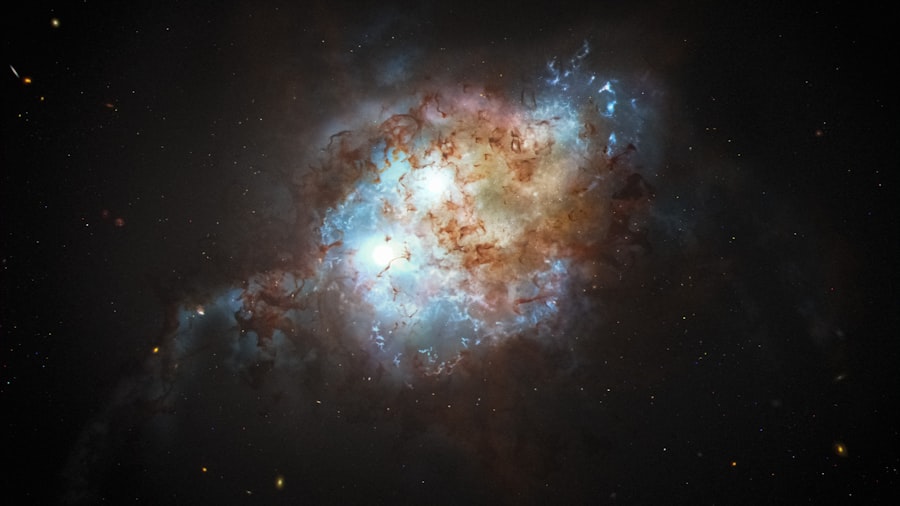
Black holes, despite their darkness, are powerful manipulators of light. Their immense gravity can bend the path of light rays passing nearby, a phenomenon known as gravitational lensing.
The Distortion of Space: A Warped Perspective
Imagine space as a rubber sheet. Placing a heavy ball on it creates a dip. A black hole is akin to an infinitely heavy ball, creating a deep depression in this sheet. Light rays traveling near this depression, instead of traveling in a straight line, would follow the curvature of spacetime.
Warping Distant Stars: A Cosmic Funhouse Mirror
If a black hole were to pass between us and a distant star or galaxy, it would act as a cosmic magnifying glass and distorting mirror. The light from the distant object would be bent around the black hole, creating multiple images, rings of light (Einstein rings), or arcs. This would completely warp our view of the universe, making it difficult to discern the true positions and distances of celestial objects.
Misjudging Distances: A Disoriented Navigation
Our understanding of the cosmos relies on accurate measurements of distance and light. Gravitational lensing would introduce significant errors in these measurements, effectively disorienting navigators of the cosmos. It would be like trying to read a map where the lines warp and shift before your eyes.
Observing the Unobservable: A Glimpse Through the Veil
While disruptive, gravitational lensing can also be a unique tool. The bending of light can allow us to see objects that would otherwise be obscured by intervening matter or too faint to detect. A black hole could, in essence, act as a cosmic telescope, revealing previously invisible corners of the universe for a fleeting moment.
The Long-Term Stability of the Solar System: A Fragile Equilibrium
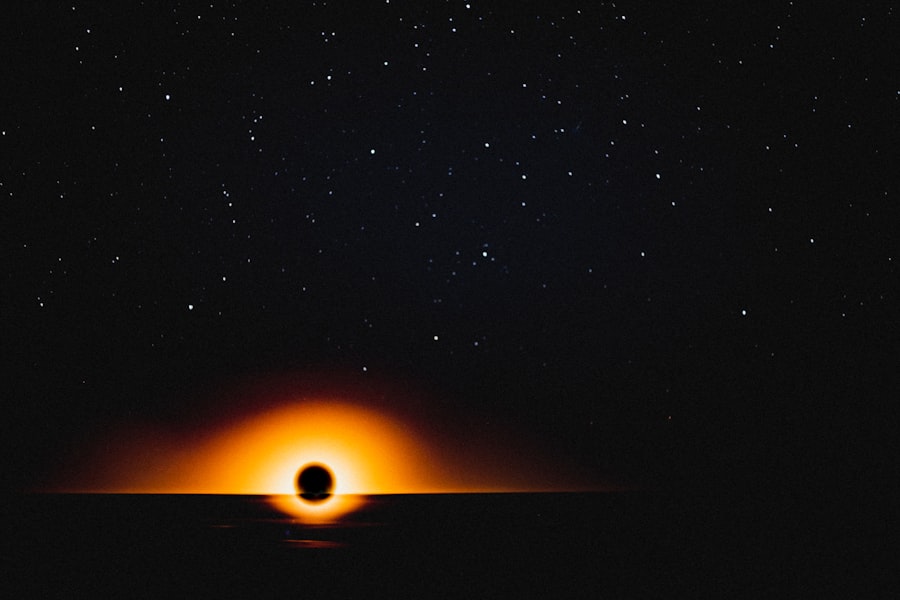
The current stability of our solar system is a result of billions of years of gravitational interactions. The introduction of a black hole would shatter this delicate equilibrium, leading to unpredictable and potentially catastrophic long-term consequences.
Orbital Migrations: A Cosmic Drift
The gravitational influence of a black hole could cause the planets to slowly drift from their current orbits. This migration could be inwards or outwards, leading to planets occupying regions of the solar system that are either too hot or too cold for their current composition and potential for life.
Planets on the Move: A Planetary Shuffle
Imagine the planets playing a game of cosmic musical chairs. As the black hole’s gravity pulls and pushes, the planets would be forced to find new positions. This shuffle could lead to more frequent and severe gravitational interactions between planets, increasing the likelihood of collisions or ejections.
The Galactic Context: A Wider Perspective
It is crucial to remember that our solar system exists within the vastness of the Milky Way galaxy. The Milky Way itself contains numerous black holes, including a supermassive black hole at its center, Sagittarius A*.
Galactic Encounters: The Unseen Dangers
While our immediate solar system might be safe, there is always a theoretical possibility of a rogue black hole from interstellar space entering our galactic neighborhood. Furthermore, as our solar system orbits the galactic center, it periodically passes through denser regions of stars and gas, increasing the chances of encountering stellar-mass black holes or other compact objects. These encounters, though statistically rare, represent a significant long-term hazard.
The Threat of Galactic Mergers: A Cosmic Collision Course
In the distant future, the Milky Way galaxy is on a collision course with the Andromeda galaxy. While direct stellar collisions during such a merger are unlikely due to the vast distances between stars, the gravitational forces involved would undoubtedly stir up the orbits of stars and planetary systems within both galaxies. The precise impact on our solar system’s stability during such a monumental event remains a subject of intense astronomical study.
In conclusion, while the direct impact of a black hole on our solar system remains a theoretical construct, exploring this scenario provides invaluable insights into the fundamental forces that govern the universe. The immense gravitational pull of a black hole could unravel our Sun, scatter our planets, and bathe our world in lethal radiation. The concept serves as a potent reminder of the precarious balance that allows our solar system to exist and the profound cosmic forces that shape our destiny. This contemplation, far from being a source of fear, fuels our scientific curiosity and deepens our appreciation for the rare and precious nature of our celestial home.
FAQs
1. What would happen if a black hole entered our solar system?
If a black hole entered our solar system, its strong gravitational pull could disrupt the orbits of planets, asteroids, and other celestial bodies. Depending on its size and proximity, it might cause planets to be ejected from their orbits or even pulled into the black hole itself.
2. Could a black hole passing through the solar system destroy Earth?
While a black hole passing very close to Earth could have catastrophic effects, such events are extremely unlikely. A black hole’s gravity could potentially strip away Earth’s atmosphere or alter its orbit, but the chances of a black hole entering the solar system and coming close enough to Earth are astronomically low.
3. How would scientists detect a black hole entering our solar system?
Scientists would detect a black hole entering the solar system by observing unusual gravitational effects on planets and other objects, as well as detecting X-rays and other radiation emitted by matter being pulled into the black hole. Advanced telescopes and monitoring systems would likely notice these anomalies well before the black hole approached Earth.
4. Are there any black holes near our solar system currently?
No known black holes are currently near our solar system. The closest known black holes are many light-years away, posing no threat to our solar system. Black holes are generally detected by their interactions with nearby matter or through gravitational effects on surrounding stars.
5. Can a black hole form inside our solar system?
It is highly unlikely for a black hole to form inside our solar system because black holes typically form from the collapse of massive stars, which our solar system does not currently contain. The formation of a black hole requires conditions not present within the solar system.