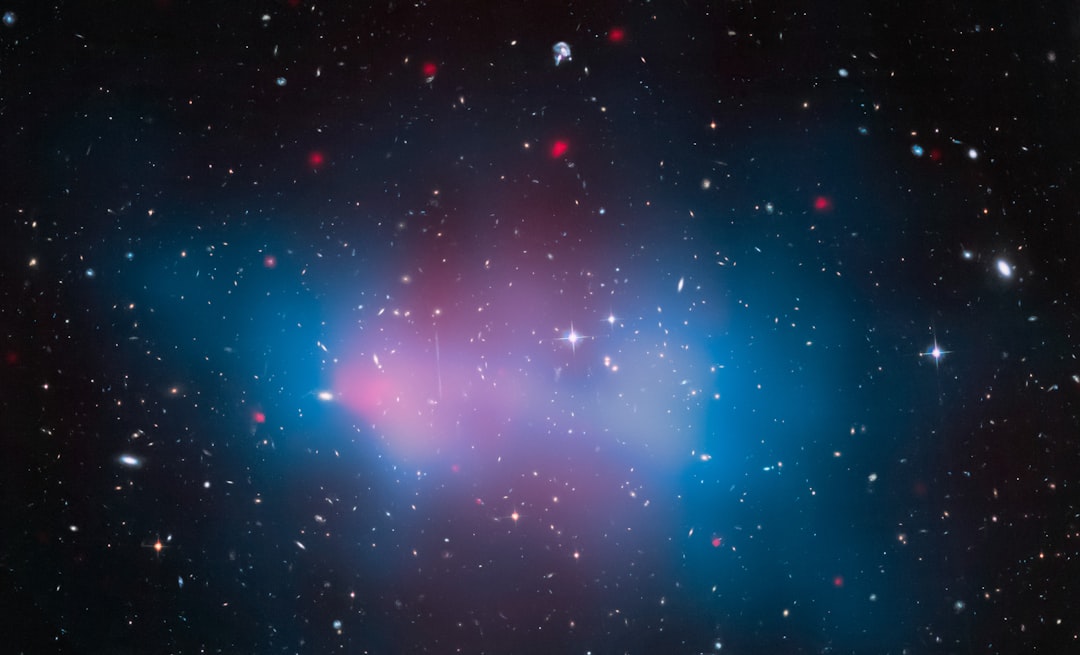
The enigmatic nature of dark matter has been a persistent puzzle for cosmologists and physicists for decades. Its existence is inferred through gravitational effects on visible matter, radiation, and the large-scale structure of the universe, yet it remains undetected by direct observation. While NASA, as a leading space agency globally, is extensively involved in research related to dark matter, some theories propose that the agency may be withholding crucial information from the public, potentially orchestrating a “cover-up.” This article explores these claims, examining the arguments and evidence presented by proponents of this theory, while also providing counter-arguments and a broader scientific context.
The concept of dark matter arose from observational discrepancies that could not be explained by the visible matter alone. Early observations of galaxy rotation curves, for instance, showed that stars on the outskirts of galaxies were orbiting at speeds inconsistent with the gravitational pull of the visible mass. This suggested the presence of an unseen, gravitationally interacting substance.
Initial Astronomical Observations
In the 1930s, Swiss astronomer Fritz Zwicky, observing the Coma Cluster of galaxies, noted that the galaxies were moving too fast to be held together by the visible mass. He coined the term “dunkle Materie,” or dark matter, to describe this invisible component. His findings, though initially met with skepticism, laid the groundwork for future investigations.
Vera Rubin’s Revolutionary Work
Decades later, in the 1970s, American astronomer Vera Rubin, along with her colleague Kent Ford, provided compelling evidence for dark matter through her meticulous studies of galaxy rotation curves. By observing the Doppler shifts of spectral lines from stars in spiral galaxies, she consistently found that stars in the outer regions orbited just as fast as those closer to the galactic center, defying Newtonian mechanics if only visible matter were present. This “flat rotation curve” became a cornerstone of the dark matter hypothesis.
Cosmic Microwave Background (CMB) Radiation
Further support for dark matter comes from observations of the Cosmic Microwave Background (CMB), the faint afterglow of the Big Bang. Anisotropies (variations in temperature) in the CMB provide a snapshot of the early universe, revealing the distribution of matter and energy. Models explaining these anisotropies require a significant amount of cold dark matter, distinct from baryonic (ordinary) matter.
In exploring the intriguing theories surrounding dark matter, one might find it valuable to read the article titled “Why NASA is Hiding the Truth About Dark Matter,” which delves into the complexities and controversies of this elusive substance. For further insights and a broader understanding of the topic, you can check out a related article that discusses the implications of dark matter on our understanding of the universe. This article can be found at My Cosmic Ventures.
Allegations of a NASA Cover-Up
Despite the extensive scientific consensus and the various lines of evidence supporting dark matter, some individuals and groups propose that NASA and other scientific institutions are actively concealing information about its true nature. These allegations often stem from interpretations of publicly available data, perceived silences from the agency, or a distrust of established scientific narratives.
Misinterpretation of Data and Anomaly Hunting
Proponents of the “cover-up” theory often highlight anomalies or inconclusive results from scientific experiments, interpreting them as deliberate obfuscation rather than the inherent challenges of cutting-edge research. For example, some point to unexplained signals in particle detectors or telescopes as evidence of dark matter being directly observed, but then assert that NASA suppresses these findings. It is crucial to remember that scientific progress is a journey of refinement, with many initial observations requiring further scrutiny and verification.
The “Silent” Treatment and Lack of Direct Detection
A common argument suggests that NASA’s inability to directly detect dark matter, despite numerous dedicated experiments, is not a failure of technology but a conscious decision to withhold information. They posit that the agency has already identified dark matter but chooses to keep its characteristics confidential, perhaps for national security reasons or to maintain control over a potentially game-changing discovery. However, the scientific community, including researchers funded by NASA, openly discusses the challenges and setbacks in dark matter detection, underscoring the transparency of the research process.
Conspiracy Theories and Alternative Explanations
In some extreme interpretations, the “dark matter cover-up” becomes intertwined with broader conspiracy theories, suggesting that dark matter is not what scientists claim it is, but rather something more exotic or even extraterrestrial in origin. These theories often suggest that NASA is involved in a larger scheme to control information about the universe. Such claims typically lack empirical evidence and rely on speculation and conjecture rather than scientific methodology.
NASA’s Extensive Dark Matter Research
NASA, through its various missions and scientific programs, is at the forefront of dark matter research. The agency dedicates significant resources to understanding this elusive component of the universe, employing a diverse range of observational techniques and theoretical models.
Space-Based Telescopes and Observatories
NASA operates and collaborates on several space-based telescopes designed to probe the universe for clues about dark matter. Missions like the Hubble Space Telescope and the James Webb Space Telescope provide invaluable data on galaxy formation and evolution, gravitational lensing, and the distribution of matter in the cosmos. These observations are crucial for mapping the intricate web of dark matter halos that are believed to envelop galaxies.
Fermi Gamma-ray Space Telescope
The Fermi Gamma-ray Space Telescope, a key NASA mission, searches for gamma-ray signals that could be produced by the annihilation or decay of dark matter particles. While direct evidence remains elusive, Fermi has placed stringent constraints on the properties of potential dark matter candidates. The exploration of these high-energy phenomena is a vital avenue in the hunt for dark matter’s elusive signature.
Alpha Magnetic Spectrometer (AMS-02)
The Alpha Magnetic Spectrometer (AMS-02), mounted on the International Space Station, is a powerful particle physics detector that measures cosmic rays with unprecedented precision. While primarily designed to search for antimatter, AMS-02 also looks for signatures that could be indirect evidence of dark matter annihilation. Its data has ruled out some dark matter models but continues to provide valuable insights into exotic particle interactions in space.
Theoretical Physics and Computational Modeling
Beyond observational efforts, NASA also supports theoretical physicists who develop and refine models of dark matter, exploring various candidate particles such as Weakly Interacting Massive Particles (WIMPs), axions, and sterile neutrinos. These theoretical frameworks guide experimental searches and help interpret observational data. Furthermore, supercomputer simulations, often supported by NASA, are used to model the gravitational collapse of dark matter and its influence on the formation of cosmic structures, providing a cosmic blueprint against which observations can be compared.
Examining the Counter-Arguments to a Cover-Up
The notion of a NASA dark matter cover-up faces significant counter-arguments rooted in the principles of scientific inquiry, the structure of scientific communities, and the transparency of research.
The Nature of Scientific Discovery
Scientific discovery is rarely a sudden revelation behind closed doors. Instead, it is an iterative process of hypothesis, experimentation, peer review, and open debate. If NASA possessed definitive evidence of dark matter’s true nature, withholding it would be incredibly difficult and counterproductive to the agency’s mission of scientific advancement and public understanding. The scientific community thrives on new discoveries, and the prestige associated with such a groundbreaking finding would be enormous.
International Collaboration and Transparency
Dark matter research is a global endeavor involving thousands of scientists from diverse institutions and countries. NASA often collaborates with international partners on missions and experiments. A cover-up by a single agency would require an unprecedented level of global coordination and secrecy, an unlikely scenario given the decentralized nature of scientific research and the inherent human desire to share knowledge. Imagine trying to keep a secret when hundreds of independent researchers, each driven by curiosity and intellectual ambition, are scrutinizing every piece of data. It would be like trying to bottle smoke.
Public Funding and Accountability
NASA is a publicly funded organization, and its research activities are subject to public and governmental oversight. Scientific results are routinely published in peer-reviewed journals, presented at conferences, and communicated to the public through various outreach initiatives. Any attempt to systematically suppress or manipulate data on such a fundamental aspect of the universe would inevitably face intense scrutiny and potential exposure. There are too many eyes, both within and outside the scientific community, to maintain a sustained deception.
The Scientific Process and Self-Correction
Science is a self-correcting enterprise. Errors and misinterpretations are gradually identified and rectified through further research and critical analysis. If a “cover-up” were in place, dissenting voices and alternative interpretations would eventually emerge and challenge the official narrative. The very essence of scientific methodology is to question, test, and revise, thus rendering a long-term, widespread cover-up inherently unstable. It’s a bit like a complex ecosystem, where various elements interact and influence each other; any attempt to artificially control one element will inevitably cause ripples throughout the system.
In exploring the mysteries of the universe, many enthusiasts have come across intriguing theories about dark matter and the potential reasons behind NASA’s secrecy on the subject. A related article that delves deeper into the implications of dark matter on our understanding of the cosmos can be found on My Cosmic Ventures. You can read more about these fascinating concepts and the ongoing debates in the scientific community by visiting this insightful resource.
The Continuing Pursuit of Dark Matter
| Metric | Data/Value | Explanation |
|---|---|---|
| Number of NASA Publications on Dark Matter | 120+ | Scientific papers and articles published by NASA related to dark matter research. |
| Public NASA Missions Focused on Dark Matter | 3 | Missions such as the Fermi Gamma-ray Space Telescope and the upcoming Nancy Grace Roman Space Telescope. |
| Estimated Dark Matter in Universe | 27% | Percentage of the universe’s mass-energy content believed to be dark matter. |
| NASA’s Official Statement on Dark Matter Transparency | Publicly Available | NASA regularly publishes findings and updates on dark matter research. |
| Conspiracy Theories on NASA Hiding Dark Matter Truth | Numerous | Various unverified claims exist but lack credible evidence. |
| Funding for Dark Matter Research (NASA) | Significant | NASA allocates substantial resources to study dark matter through various projects. |
The scientific community, including NASA, remains committed to unraveling the mystery of dark matter. The ongoing research encompasses a multi-pronged approach, utilizing a range of theoretical and experimental methodologies.
Direct Detection Experiments
Underground laboratories around the world house detectors designed to directly observe dark matter particles interacting with ordinary matter. These experiments, shielded from cosmic rays and other background noise, search for the faint recoil of atomic nuclei caused by a collision with a dark matter particle. While results have been consistently negative so far, they continue to push the boundaries of sensitivity and provide crucial constraints on dark matter properties.
Indirect Detection Experiments
Indirect detection experiments look for the products of dark matter annihilation or decay in space. As mentioned with Fermi and AMS-02, these experiments scrutinize cosmic rays, gamma rays, and neutrinos for characteristic signatures that could indicate the presence of dark matter. The universe acts as a massive particle collider, and these instruments are the eyes and ears listening for the whispers of dark matter reactions.
Collider Experiments
Particle accelerators, such as the Large Hadron Collider (LHC) at CERN, attempt to produce dark matter particles in controlled laboratory settings. By colliding high-energy protons, scientists hope to create conditions similar to the early universe, where dark matter might have been formed. The failure to directly produce dark matter at the LHC has prompted a re-evaluation of some of the leading dark matter candidate models, prompting the scientific community to explore new theoretical avenues.
Axion Searches and Other Exotic Candidates
Beyond WIMPs, scientists are exploring other exotic dark matter candidates, such as axions. These hypothetical particles are much lighter than WIMPs and interact even more weakly with ordinary matter. Dedicated experiments are being built to search for axions, pushing the frontiers of experimental physics. This ongoing exploration exemplifies the dynamic nature of scientific inquiry, where current limitations serve as catalysts for novel approaches and innovative solutions.
The claim of a NASA “dark matter cover-up” lacks substantial evidence and contradicts the fundamental principles of scientific research. While the elusive nature of dark matter can fuel speculation, the scientific community, including NASA, operates with a commitment to transparency, collaboration, and open inquiry. The ongoing quest to understand dark matter is a testament to humanity’s insatiable curiosity and its unwavering pursuit of knowledge, a journey where every unanswered question is a beacon for future exploration, not a hidden truth.
FAQs
1. What is dark matter?
Dark matter is a form of matter that does not emit, absorb, or reflect light, making it invisible to current telescopes. It is believed to make up about 27% of the universe’s mass and energy, influencing the gravitational behavior of galaxies and large-scale structures.
2. Why is dark matter important to scientists?
Dark matter is crucial for understanding the composition and evolution of the universe. It helps explain the observed gravitational effects that cannot be accounted for by visible matter alone, such as the rotation curves of galaxies and the formation of cosmic structures.
3. Does NASA hide information about dark matter?
There is no credible evidence that NASA hides information about dark matter. NASA conducts and supports numerous scientific missions and research projects aimed at studying dark matter and shares findings openly with the scientific community and the public.
4. How does NASA study dark matter?
NASA studies dark matter through space telescopes and observatories that observe cosmic phenomena influenced by dark matter, such as galaxy clusters and cosmic microwave background radiation. Missions like the Fermi Gamma-ray Space Telescope and the upcoming Nancy Grace Roman Space Telescope contribute to this research.
5. What are the current challenges in understanding dark matter?
The main challenges include the inability to directly detect dark matter particles and the lack of a definitive theory explaining its nature. Scientists rely on indirect observations and experiments, such as underground detectors and particle accelerators, to gather more information.