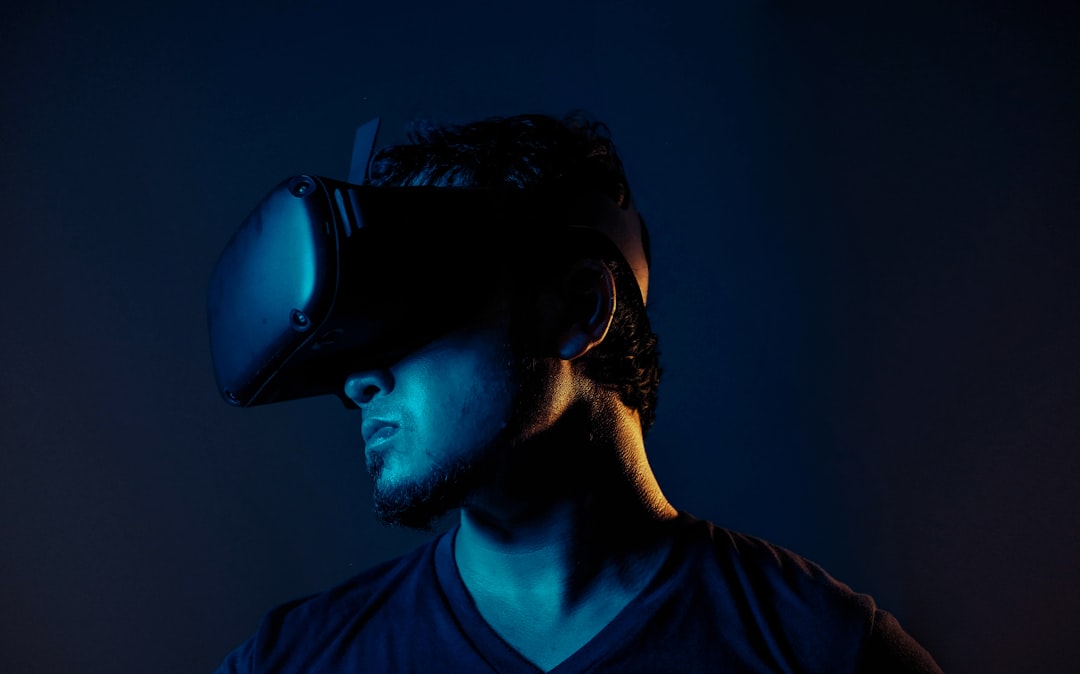
The landscape of human interaction with digital information has undergone a significant transformation in recent decades. From static text on screens to engaging multimedia, the trajectory has consistently pointed towards deeper integration and more profound sensory engagement. This evolution culminates, at least for now, in immersive experiences, prominently featuring virtual reality (VR) as a pioneering technology. This article delves into the multifaceted world of VR, examining its foundational principles, diverse applications, historical trajectory, and the challenges accompanying its development.
Immersive experiences, at their core, aim to transport the user’s perception into a simulated environment, transcending the boundaries of the physical world. Virtual reality, augmented reality, and mixed reality are the primary categories within this domain, each offering a distinct approach to blurring the lines between the digital and the real.
Defining Virtual Reality
Virtual reality is characterized by its ability to create a completely simulated environment, often experienced through head-mounted devices that replace the user’s view of the physical world with a digitally generated one. This isolation from external stimuli is crucial for achieving a sense of presence, the psychological phenomenon of feeling genuinely “there” within the virtual space.
Augmented Reality and Mixed Reality
While VR creates entirely new worlds, augmented reality (AR) overlays digital information onto the user’s view of the real world. Think of a smartphone application that allows you to see virtual furniture placed in your living room. Mixed reality (MR) takes this a step further, allowing for physical and digital objects to interact within the same environment. An example might be a virtual character walking behind a real-world table, demonstrating a deeper understanding of spatial relationships between the virtual and physical. These distinctions are vital as they underpin the varying design philosophies and application niches of each technology.
Virtual reality continues to revolutionize various industries, from gaming to education, providing immersive experiences that were once thought to be the realm of science fiction. For a deeper understanding of the latest advancements and applications of virtual reality technology, you can read a related article on this topic at My Cosmic Ventures. This resource offers insights into how VR is shaping the future and enhancing user engagement across different fields.
Historical Trajectory and Technological Evolution
The concept of immersive experiences is not novel. Its roots can be traced back to speculative fiction and early attempts at creating artificial realities. However, the practical realization of these concepts has only become viable with rapid advancements in computing power and display technology.
Early Precursors and Visionaries
The Sensorama, developed by Morton Heilig in the 1950s, is often cited as an early attempt at multi-sensory simulation, offering visual, auditory, olfactory, and tactile experiences. Ivan Sutherland’s “The Sword of Damocles” in 1968, a head-mounted display tethered to a computer, represented a critical step towards modern VR, despite its rudimentary graphics and cumbersome nature. These pioneers laid the conceptual and technological groundwork, demonstrating the potential of such systems even with the limitations of their era.
The Rise of Modern VR
The 1980s saw the coining of the term “virtual reality” by Jaron Lanier, alongside a surge in interest from academia and the military. However, it was not until the early 21st century, with developments like the Oculus Rift demonstrating compelling immersion at a relatively accessible price point, that VR began its journey towards mainstream adoption. The continuous miniaturization of components, improvements in display resolution, and sophisticated tracking systems have collectively propelled VR into a new era of capability.
Diverse Applications Across Sectors
The utility of immersive technologies extends far beyond simple entertainment. Their capacity to simulate complex scenarios and facilitate novel interactions has led to their integration into a wide array of industries, each finding unique advantages in their deployment.
Training and Simulation
One of the most impactful applications of VR lies in its ability to provide realistic training environments without the risks or costs associated with real-world scenarios. Surgeons can practice intricate procedures, pilots can simulate emergency landings, and soldiers can train for combat situations, all within a safe and controlled virtual space. This allows for repeated practice and mastery of skills, diminishing the margin for error when faced with actual circumstances.
Education and Learning
VR offers a potent tool for education, transforming passive learning into active exploration. Students can virtually visit ancient civilizations, dissect anatomical structures, or journey through the cosmos, experiencing concepts that were previously confined to textbooks or two-dimensional screens. This experiential learning significantly enhances understanding and retention, acting as a gateway to knowledge that resonates deeply.
Healthcare and Therapy
Beyond surgical training, VR is finding its place in therapeutic applications. It is used to treat phobias by gradually exposing individuals to their fears in controlled environments. Pain management, especially in burn victims, has shown promise through VR-induced distraction. Furthermore, it aids in rehabilitation, helping patients regain motor skills or cognitive function in engaging and motivating virtual settings.
Design and Prototyping
For architects, engineers, and product designers, VR provides an invaluable platform for visualizing and iterating upon designs in a three-dimensional, immersive space. Before a single brick is laid or a component manufactured, stakeholders can walk through a virtual building, examine a product from all angles, and even interact with its virtual elements. This significantly streamlines the design process, enabling early identification of flaws and fostering collaborative refinement.
The Technological Underpinnings
To achieve convincing immersion, VR systems rely on a complex interplay of hardware and software components. Each element plays a crucial role in delivering a seamless and believable virtual experience.
Head-Mounted Displays (HMDs)
The HMD is the most recognizable component of a VR system. It consists of screens positioned directly in front of the user’s eyes, often coupled with lenses to refract and focus the image, creating a wide field of view. The displays must offer high resolution and refresh rates to minimize the “screen-door effect” (visible gaps between pixels) and reduce motion sickness.
Tracking Systems
Accurate tracking of the user’s head and body movements is paramount for immersion. Inside-out tracking, where cameras on the HMD track the surrounding environment, and outside-in tracking, which uses external sensors, are common methodologies. This tracking allows the virtual environment to respond fluidly to the user’s movements, maintaining the illusion of presence.
Input Devices
Interaction with the virtual world is facilitated by various input devices, ranging from handheld controllers with haptic feedback to full-body tracking suits. These devices translate physical gestures and button presses into actions within the virtual environment, enabling users to manipulate objects, navigate, and interact with virtual interfaces.
Software and Content Creation
The software stack, including game engines (e.g., Unity, Unreal Engine) and specialized VR development kits, forms the backbone of content creation. It is within these environments that virtual worlds are constructed, interactions are programmed, and narratives are woven. The quality and realism of the virtual content are just as crucial as the hardware in achieving a truly immersive experience.
Virtual reality continues to revolutionize various industries, from gaming to education, offering immersive experiences that were once thought to be the stuff of science fiction. For those interested in exploring the latest advancements in this technology, a related article can provide deeper insights into its applications and future potential. You can read more about it in this informative piece on virtual reality at My Cosmic Ventures. This exploration not only highlights the current trends but also discusses the challenges and opportunities that lie ahead in the realm of virtual reality.
Challenges and Future Outlook
| Metric | Value | Description |
|---|---|---|
| Global Market Size (2023) | 30 billion | Estimated market value in USD |
| Average Headset Resolution | 2160 x 2160 pixels per eye | Typical display resolution for high-end VR headsets |
| Latency | Less than 20 ms | Time delay between user action and system response |
| Field of View (FOV) | 110 degrees | Typical horizontal field of view in VR headsets |
| Average Frame Rate | 90 Hz | Frames per second for smooth VR experience |
| Number of Active VR Users (2023) | 57 million | Estimated global active users of VR devices |
| Top VR Application Sector | Gaming | Most popular use case for VR technology |
| Average Session Duration | 30 minutes | Typical length of a VR session per user |
Despite its rapid advancements and expanding applications, virtual reality faces several inherent challenges that must be addressed for its full potential to be realized. These hurdles encompass technical limitations, user experience considerations, and broader societal implications.
Technical Hurdles and Limitations
Current VR hardware still presents certain limitations. The weight and bulk of HMDs can be uncomfortable for extended use. The computational demands for rendering highly detailed virtual environments at sufficient frame rates are substantial, often requiring powerful and expensive hardware. Bandwidth limitations can also hinder the delivery of seamless, high-fidelity experiences, particularly for untethered VR.
User Experience and Accessibility
Motion sickness (cybersickness), a common adverse reaction caused by the disconnect between visual perception and vestibular sensation, remains a significant barrier for some users. The complexity of setting up and operating some VR systems can also deter less tech-savvy individuals. Furthermore, the cost of entry, though decreasing, still limits widespread adoption for many consumers.
Content Creation and Ecosystem Development
The creation of high-quality, engaging, and diverse VR content is a continuous challenge. Developing compelling virtual experiences requires specialized skills and resources, and the ecosystem of VR developers and content creators is still maturing. A vibrant and varied content library is crucial for attracting and retaining users.
Ethical and Societal Considerations
As VR becomes more sophisticated, ethical considerations emerge. Questions surrounding data privacy in virtual environments, the potential for addiction, the impact of prolonged immersion on mental health, and the blurring of lines between reality and simulation warrant careful consideration and proactive development of ethical guidelines.
The journey of immersive experiences is far from over. As technology continues to evolve, we can anticipate lighter, more comfortable HMDs, higher resolution displays, more intuitive interaction methods, and increasingly realistic virtual environments. The integration of artificial intelligence will likely lead to more dynamic and adaptive virtual worlds. The future promises a deeper intertwining of the physical and digital, transforming how we learn, work, play, and connect. For the reader peering into this nascent future, understand that virtual reality is not merely a technological advancement; it is a new frontier for human perception and interaction, an ever-expanding canvas upon which new realities are painted.

WATCH NOW ▶️ Do we live in a matrix?
FAQs
What is virtual reality (VR)?
Virtual reality (VR) is a computer-generated simulation of a three-dimensional environment that can be interacted with using special electronic equipment, such as VR headsets and controllers, to create an immersive experience.
How does virtual reality work?
Virtual reality works by using a combination of hardware and software to create a simulated environment. VR headsets display stereoscopic images to each eye, tracking head and body movements to adjust the view in real-time, while sensors and controllers allow users to interact with the virtual world.
What are common uses of virtual reality?
Virtual reality is used in various fields including gaming, education, training simulations (such as for pilots or medical professionals), virtual tours, therapy and rehabilitation, and design visualization.
What equipment is needed to experience virtual reality?
To experience virtual reality, users typically need a VR headset, which may include built-in displays and sensors, along with controllers for interaction. Some systems also require a compatible computer or gaming console, while standalone VR headsets have integrated computing power.
Are there any health concerns associated with virtual reality?
Some users may experience motion sickness, eye strain, or dizziness when using VR, especially during prolonged sessions. It is recommended to take regular breaks and use VR in a safe environment to minimize risks.