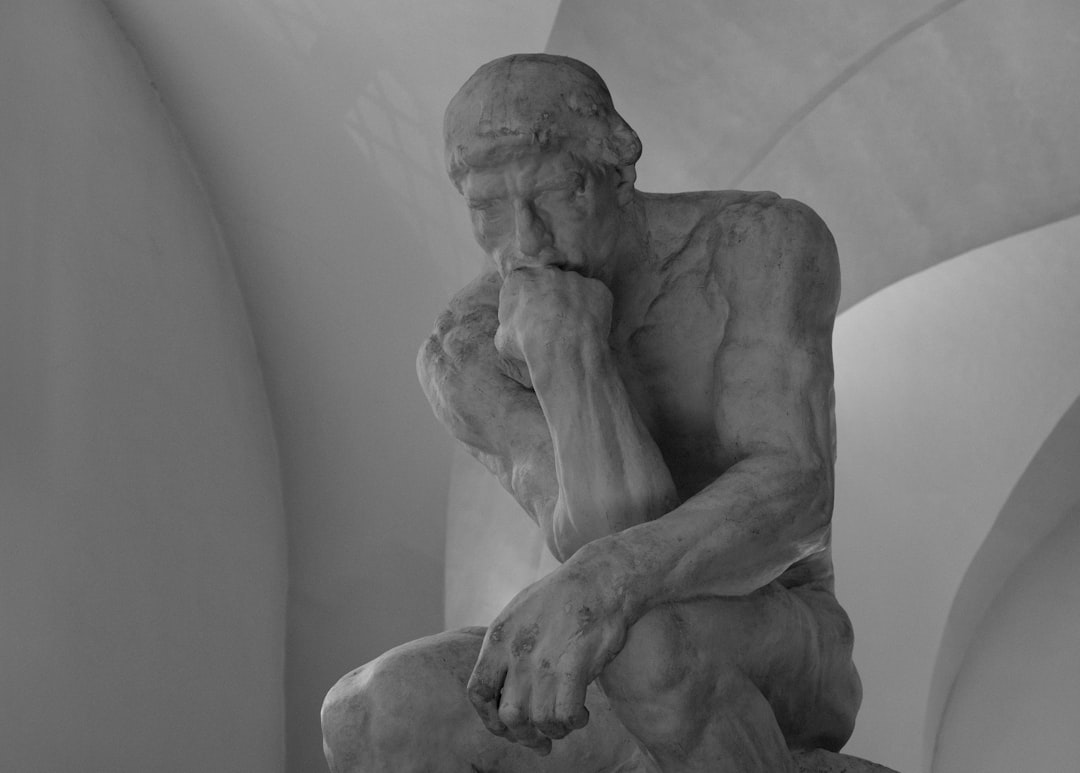
Philosophy, at its core, is the systematic investigation of fundamental questions about existence, knowledge, values, reason, mind, and language. It is not a static collection of doctrines, but rather an active and ongoing process of inquiry. The search for meaning, a deeply ingrained human pursuit, finds in philosophy a powerful and enduring ally. This exploration delves into the role that philosophy plays in illuminating these profound questions and guiding individuals through the complexities of human experience.
Metaphysics, one of the oldest branches of philosophy, grapples with the fundamental nature of reality. It is concerned with what exists, what its properties are, and how these entities and their properties relate to one another. This field asks questions that lie at the very foundation of our understanding of the world and our place within it.
What is Real? The Ontological Inquiry
At the heart of metaphysics lies ontology, the study of being. It seeks to categorize and understand the fundamental categories of existence. Are there only physical objects, or do abstract entities like numbers or concepts also possess a form of reality? This inquiry is akin to understanding the blueprint of the universe, identifying the building blocks and the underlying structure upon which everything else is constructed. Without a preliminary understanding of what constitutes reality, our subsequent investigations into knowledge and values would be built on shaky foundations. The debate between monism (the belief that reality is ultimately one substance) and dualism (the belief that reality consists of two fundamental substances, typically mind and matter) illustrates the diverse approaches taken within ontology.
The Nature of Time and Space
Our experience of the world is inextricably linked to time and space. Metaphysics, therefore, interrogates their nature. Is time a linear progression, a river flowing in one direction, or is it a more complex, perhaps even cyclical, phenomenon? Similarly, the nature of space – whether it is a container in which objects exist or an intrinsic property of objects themselves – has been a subject of enduring philosophical debate. Understanding these fundamental frameworks helps to contextualize our understanding of causality, change, and the very fabric of our lived experience.
Free Will Versus Determinism: Navigating Agency
One of the most persistent and challenging metaphysical questions concerns the existence of free will. Do we possess genuine agency, the capacity to make choices independent of prior causes, or are our actions predetermined by a chain of events stretching back to the beginning of time? This debate has profound implications for our understanding of moral responsibility, praise, blame, and the very concept of personhood. The deterministic viewpoint suggests that every event, including human action, is the inevitable consequence of antecedent states of affairs and the laws of nature. Conversely, libertarianism, a strong form of free will, posits that agents have the capacity to initiate causal chains, acting as uncaused causes themselves in certain instances. Compatibilism attempts to reconcile these seemingly opposing ideas, arguing that free will and determinism are not mutually exclusive.
For those interested in exploring the intricate connections between philosophy and the cosmos, a fascinating article can be found at My Cosmic Ventures. This piece delves into the philosophical implications of our understanding of the universe, examining how ancient philosophical questions about existence and knowledge continue to resonate in contemporary scientific discourse. It invites readers to reflect on the nature of reality and our place within it, bridging the gap between philosophical inquiry and cosmic exploration.
The Labyrinth of Knowledge: Epistemology and How We Know What We Know
Epistemology, the theory of knowledge, investigates the nature, origin, and limits of human knowledge. It asks: what constitutes knowledge? How do we acquire it? And how can we be certain that what we claim to know is, in fact, true? This branch of philosophy provides the tools for critical thinking and evaluating the validity of our beliefs and claims.
Sources of Knowledge: Empiricism and Rationalism
Historically, a central debate in epistemology has revolved around the primary sources of knowledge. Empiricism, championed by philosophers such as John Locke and David Hume, posits that all knowledge derives from sensory experience. The mind, in this view, is a tabula rasa, a blank slate, upon which experience writes. In contrast, rationalism, associated with figures like René Descartes and Gottfried Wilhelm Leibniz, argues that reason is the primary source of knowledge. Certain truths, it is argued, can be apprehended through intuition and deduction, independent of sensory input. This is akin to distinguishing between learning by touching and seeing versus learning by logical deduction and innate understanding.
The Problem of Justification: Belief, Truth, and Justification
What distinguishes mere belief from genuine knowledge? According to the traditional philosophical definition, knowledge requires a justified true belief. This means that to know something, one must believe it, it must be true, and one must have good reasons or evidence to support that belief. However, the precise nature of “justification” has been a fertile ground for philosophical debate, leading to various theories such as foundationalism, coherentism, and infinitism, each offering a different model for how our beliefs are supported.
Skepticism: The Constant Companion of Inquiry
Skepticism, in its various forms, challenges the possibility of certain knowledge. Philosophical skeptics raise questions about the reliability of our senses, the certainty of our reasoning, and the justification for our beliefs. While radical skepticism can lead to intellectual paralysis, a more moderate and critical form of skepticism is essential for philosophical progress. It acts as a vital internal critic, prompting us to rigorously examine our assumptions and demand stronger evidence for our claims. Without the probing questions of skepticism, our understanding could stagnate, akin to a river becoming dammed with complacent assumptions.
The Compass of Morality: Ethics and Navigating the Landscape of Values

Ethics, or moral philosophy, concerns itself with the principles of right and wrong conduct. It explores what constitutes a good life, what duties and obligations we have to others, and how we ought to make moral judgments. Ethics provides the framework for understanding and navigating the complex moral landscape of human interaction.
Theories of Morality: Deontology, Consequentialism, and Virtue Ethics
Philosophers have proposed various overarching theories to explain how we determine what is morally right. Deontological ethics, exemplified by Immanuel Kant, emphasizes duties and rules, asserting that certain actions are inherently right or wrong regardless of their consequences. Consequentialist theories, such as utilitarianism, argue that the morality of an action is determined by its outcomes; the right action is the one that produces the greatest good for the greatest number. Virtue ethics, rooted in the philosophy of Aristotle, focuses on the character of the moral agent, emphasizing the cultivation of virtues like courage, honesty, and justice as the foundation for ethical behavior. These different theories offer distinct lenses through which to view and judge moral actions, like different maps for navigating the same territory.
Applied Ethics: Confronting Contemporary Dilemmas
In addition to theoretical frameworks, ethics also engages with specific, practical moral issues that arise in our lives and society. Applied ethics tackles questions in areas such as biomedical ethics (e.g., genetic engineering, euthanasia), environmental ethics (e.g., climate change, conservation), and business ethics (e.g., corporate social responsibility, fair trade). These discussions translate abstract moral principles into concrete guidance for action in a constantly evolving world.
The Nature of Good: Subjectivism, Objectivism, and Relativism
A fundamental question within ethics is whether moral values are objective truths, universally binding, or whether they are subjective preferences or culturally determined norms. Moral objectivism asserts that moral truths exist independently of human opinion. Moral subjectivism, conversely, holds that moral judgments are expressions of individual feelings or attitudes. Moral relativism suggests that morality is relative to cultures or historical periods. Understanding these positions is crucial for engaging in productive inter-cultural dialogue and for discerning the grounds of our own moral convictions.
The Canvas of Creation: Aesthetics and the Appreciation of Beauty and Art

Aesthetics is the branch of philosophy that deals with the nature of beauty, art, and taste, and with the creation and appreciation of beauty. It explores why certain things strike us as beautiful, what makes a piece of art significant, and the role of aesthetic experience in human life.
What is Art? The Enduring Puzzle
Defining art has been a perennial challenge for philosophers. Is art about representation, expression, form, or something else entirely? The boundaries of what constitutes art have shifted dramatically throughout history and across cultures, leading to ongoing debates about artistic intent, audience reception, and the very purpose of artistic endeavors. This is like trying to paint a boundary around a constantly moving target.
The Experience of Beauty: Subjectivity and Universality
Why do we find certain landscapes, musical compositions, or literary works beautiful? Is beauty an inherent property of an object, or is it a subjective experience dependent on the observer? Philosophers have explored the interplay between objective qualities and subjective perception in our aesthetic judgments, debating whether there are universal standards of beauty or if it is entirely a matter of personal taste.
The Role of Art in Human Life
Beyond mere pleasure, art plays a significant role in human experience. It can provoke thought, challenge assumptions, foster empathy, and offer new ways of understanding the world. Philosophical inquiry into aesthetics seeks to articulate these functions, exploring how art contributes to our emotional, intellectual, and spiritual lives.
In exploring the intricate relationship between ethics and human behavior, one might find it enlightening to read a related article that delves into the foundations of moral philosophy. This piece offers insights into how philosophical theories shape our understanding of right and wrong, ultimately influencing our actions in everyday life. For a deeper understanding, you can check out this fascinating exploration of the subject here.
The Architecture of Thought: Logic and the Principles of Sound Reasoning
| Philosophical Branch | Key Focus | Notable Philosophers | Example Question | Historical Period |
|---|---|---|---|---|
| Metaphysics | Nature of reality and existence | Aristotle, Immanuel Kant, René Descartes | What is the nature of being? | Ancient to Modern |
| Epistemology | Theory of knowledge and belief | Plato, John Locke, David Hume | What can we know? | Ancient to Modern |
| Ethics | Moral values and principles | Immanuel Kant, Aristotle, John Stuart Mill | What is the right thing to do? | Ancient to Modern |
| Logic | Principles of valid reasoning | Aristotle, Gottlob Frege, Bertrand Russell | What constitutes a valid argument? | Ancient to Contemporary |
| Aesthetics | Nature of beauty and art | Plato, Immanuel Kant, Friedrich Schiller | What is beauty? | Ancient to Modern |
Logic, a foundational element of philosophy, is the study of valid reasoning and argumentation. It provides the tools and principles for constructing sound arguments, identifying fallacies, and ensuring the coherence and consistency of our thoughts.
Deductive and Inductive Reasoning: The Pillars of Argument
Logic distinguishes between two primary forms of reasoning. Deductive reasoning moves from general premises to a specific conclusion, where if the premises are true, the conclusion must also be true. Inductive reasoning, on the other hand, moves from specific observations to a general conclusion. While inductive reasoning is essential for scientific discovery and everyday inference, its conclusions are probabilistic rather than certain. Understanding the strengths and limitations of each is key to evaluating arguments.
Formal and Informal Logic: Methods of Analysis
Formal logic employs symbolic language and precise rules to analyze the structure of arguments, irrespective of their content. It is concerned with the validity of the logical form. Informal logic, conversely, focuses on the analysis of arguments as they appear in natural language, identifying common fallacies and assessing the strength and persuasiveness of arguments in everyday discourse.
The Importance of Logic in Philosophical Inquiry
Logic is not merely an academic discipline; it is the bedrock of all philosophical investigation. Without the principles of sound reasoning, philosophical arguments would devolve into mere opinion or rhetoric. It is through the rigorous application of logical principles that philosophers can construct coherent theories, critically evaluate opposing viewpoints, and advance our understanding of complex issues. Logic provides the scaffolding that supports the entire edifice of philosophical thought, ensuring its stability and integrity.
In conclusion, the search for meaning finds a profound and indispensable partner in philosophy. From the fundamental nature of reality to the nuances of human knowledge, the principles of morality, the appreciation of beauty, and the very structure of our thought, philosophy offers a robust framework for inquiry. It equips individuals with the critical tools necessary to question, to understand, and to construct a more meaningful existence. By engaging with philosophical questions, we embark on a journey of self-discovery, illuminating the intricate tapestry of our lives and our place within the vast universe.

WATCH NOW ▶️ Do we live in a matrix?
FAQs
What is philosophy?
Philosophy is the study of fundamental questions about existence, knowledge, values, reason, mind, and language. It involves critical analysis and systematic approaches to understanding reality and human experience.
What are the main branches of philosophy?
The main branches of philosophy include metaphysics (study of reality), epistemology (study of knowledge), ethics (study of moral values), logic (study of reasoning), and aesthetics (study of beauty and art).
Who are some famous philosophers?
Famous philosophers include Socrates, Plato, Aristotle, Immanuel Kant, René Descartes, Friedrich Nietzsche, and Confucius, among many others who have contributed to various philosophical traditions.
How does philosophy differ from science?
Philosophy often deals with abstract questions and uses reasoning and argumentation, while science relies on empirical evidence and experimentation to understand the natural world. Both fields can overlap but have different methods and goals.
Why is philosophy important?
Philosophy is important because it encourages critical thinking, helps clarify concepts, addresses ethical dilemmas, and provides a foundation for other disciplines. It fosters a deeper understanding of life and the principles guiding human behavior.