
You stand at the edge of a river, a current of incomprehensible magnitude flowing past. This is the river of time, and you, like all sentient beings, are adrift within its ceaseless motion. Understanding this flow, its direction, and your place within it, is a fundamental quest that has occupied thinkers for millennia. Two powerful concepts, Time’s Arrow and Archimedes’ Point in relation to time, offer distinct yet complementary lenses through which to examine this profound experience.
Imagine a film reel, every frame a snapshot of existence. Time’s Arrow dictates that this reel plays in only one direction – forward. You cannot rewind, cannot skip back to a cherished moment or correct a painful misstep. This intuition, ingrained in your very being, is a cornerstone of how you perceive reality. While the fundamental laws of physics, at their most microscopic level, appear to be time-symmetric – meaning they would work just as well if time ran backward – the macroscopic universe you inhabit demonstrably does not.
Entropy: The Cosmic Clockmaker
The primary physical principle underpinning Time’s Arrow is the second law of thermodynamics, which states that the total entropy of an isolated system can only increase over time, or remain constant in ideal cases. Entropy, a measure of disorder or randomness, is like the natural inclination of a perfectly stacked deck of cards to become scattered over time.
From Order to Disorder
Consider a pristine ice sculpture slowly melting into a puddle. The ordered crystalline structure of the ice transforms into the disordered, molecular motion of liquid water. This process is irreversible. You will never observe a puddle spontaneously coalesce into a perfectly formed ice sculpture on a warm day. The increase in entropy from ordered ice to disordered water is a one-way ticket.
The Universe’s Slow Dissipation
At a cosmic scale, you see this played out in the gradual dispersal of energy. Stars burn out, their concentrated nuclear fuel becoming diffuse radiation. Galaxies slowly drift apart. This inexorable march towards a state of maximum entropy, often referred to as the “heat death” of the universe, is the ultimate destination dictated by Time’s Arrow. Your own existence, from birth to decay, is a microcosm of this universal tendency.
Causality: The Chain of Events
Time’s Arrow is inextricably linked to causality – the principle that cause precedes effect. You cannot experience the consequence before its antecedent. This creates a narrative structure to your life and the world around you. The dominoes fall in a predictable sequence; you cannot see the last domino topple before the first one is pushed.
The Irreversible Nature of Actions
When you act, you set in motion a chain of events. Throwing a stone into a pond creates ripples that spread outwards. You can observe the ripples, but you cannot un-throw the stone and retrieve the original smooth surface of the water. The act of throwing is in the past, and its consequences unfold in the future.
Memory and Prediction: Echoes of the Past
Your ability to remember the past and predict the future is a direct consequence of this causal order. Your memories are records of events that have already occurred, and your predictions are informed by the patterns and relationships established by past causes and their effects. This temporal ordering is essential for your ability to learn, adapt, and plan.
The Psychological Experience: A Stream of Consciousness
Beyond the physical, your subjective experience of time is profoundly shaped by Time’s Arrow. You perceive yourself as moving through time, a consciousness navigating a stream of moments. This feeling of progression, of moving from one experience to the next, is a fundamental aspect of your being.
The Elusive Present Moment
The “present moment” feels like a fleeting point, perpetually slipping into the past as the future rushes in. It’s like trying to hold onto a single drop of water from the river – as soon as you grasp it, it has already moved on. This ephemeral nature of the present underscores the unidirectional flow.
The Weight of History and the Hope for Tomorrow
Your understanding of history and your hopes for the future are built upon the bedrock of Time’s Arrow. The past, with its lessons and legacies, shapes your present understanding, while the future, a landscape of possibilities and uncertainties, fuels your aspirations and anxieties.
In exploring the intricate relationship between time and perspective in physics, a fascinating article titled “The Nature of Time and Space” delves into concepts that resonate with the themes presented in “Time’s Arrow and Archimedes’ Point.” This article examines how our understanding of time influences our perception of the universe and its fundamental laws. For further insights, you can read the article here: The Nature of Time and Space.
The Fixed Fulcrum: Archimedes’ Point in Time
If Time’s Arrow describes the flow of time, then Archimedes’ Point in time offers a conceptual lever to potentially manipulate or understand our relationship with that flow. Archimedes famously declared he could move the Earth if given a lever long enough and a place to stand. Applied to time, this suggests the possibility of finding a fixed point, a vantage from which to gain leverage over temporal experience or understanding.
The Observer’s Dilemma: Caught in the Current
You are, by default, immersed in the river of time. Your consciousness is an intrinsic part of the flowing current. You cannot step outside of it to observe it objectively. This is the observer’s dilemma: your very act of observing time is bound by its temporal nature.
The Limitations of Subjective Experience
Your subjective experience of time, while rich and nuanced, is inherently limited by your position within the flow. You can only perceive the present from your present, remember the past from your present, and anticipate the future from your present. This confinement restricts your ability to gain an Archimedean perspective.
The Illusion of Control
The feeling of controlling your own time – managing schedules, planning events – is often an illusion of control. You are influencing the order and sequence of events within the flow, but you are not altering the flow itself. It’s like rearranging the furniture in a room while the room itself is being carried downstream.
The Search for Extratemporal Perspectives
The quest for an Archimedean Point in time often manifests as a desire for an understanding that transcends the immediate temporal experience. This can take various forms, from philosophical contemplation to scientific inquiry.
Philosophical Meditations on Eternity
Throughout history, philosophers have grappled with concepts of timelessness and eternity, seeking a perspective that stands outside the temporal unfolding of events. Some have posited platonic forms or divine realms as existing in a state of immutable being, a potential Archimedean Point from which to view the transient world.
Scientific Exploration of Time’s Fabric
Modern physics, particularly through theories of relativity, has begun to unravel the seemingly absolute nature of time. The idea that time is not a universal constant but rather a dimension interwoven with space (spacetime) suggests that our perception of its flow might be relative to our motion and gravitational environment. This opens avenues for understanding time not just as a unidirectional arrow, but as a more complex, potentially manipulable fabric.
The Nature of the Lever and the Fulcrum

If we are to find an Archimedean Point in time, we must first understand what that lever and fulcrum might represent conceptually. They are not physical objects in the traditional sense, but rather conceptual tools for gaining a new perspective.
The Lever: Understanding and Influence
The “lever” in this context represents the capacity for deeper understanding and, potentially, influence. This influence is not about reversing time but about appreciating its structure, its constraints, and the interplay of different temporal narratives.
Comprehending Temporal Relativity
Einstein’s theories of relativity provide an example of such a lever. By understanding how time can dilate (slow down) for observers moving at high speeds or in strong gravitational fields, you gain a new leverage over your perception of time’s uniformity. It demonstrates that the river flows differently for different drifters.
Harnessing Concepts of Time Dilation
Concepts like time dilation, while not allowing you to step outside time, permit a conceptual manipulation. You can, through scientific understanding, “travel” to a future point in time relative to a stationary observer by undertaking a high-speed journey. This is a form of temporal leverage.
The Fulcrum: A Stable Reference Point
The “fulcrum” is a point of stability from which this lever operates. It is the conceptual ground that allows for observation and analysis without being entirely swept away by the temporal current.
The Universal Constants of Physics
In physics, universal constants like the speed of light can be considered akin to potential fulcrums. They are invariant across different reference frames and offer a stable point of reference from which to observe and measure temporal phenomena.
Abstract Frameworks of Understanding
Philosophical or mathematical frameworks can also serve as fulcrums. By constructing abstract models of reality, you can step back, metaphorically, and examine the mechanics of time from a more detached, analytical perspective. These frameworks provide a scaffolding upon which to build understanding.
Navigating the Interplay: Arrow and Point
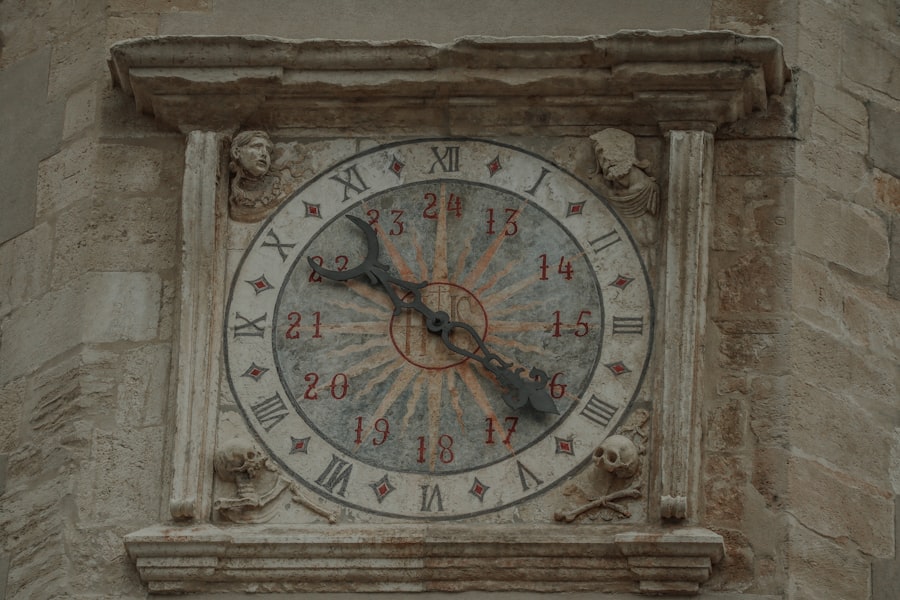
The concepts of Time’s Arrow and Archimedes’ Point are not mutually exclusive; rather, they are complementary. Time’s Arrow describes the undeniable directionality of your experience, while Archimedes’ Point offers a conceptual framework for understanding and relating to that directionality.
Acknowledging the Flow, Seeking Perspective
You must first acknowledge the irresistible flow of Time’s Arrow. The relentless march of moments, the constant increase of entropy, the irreversible chain of causality – these are the fundamental characteristics of your temporal existence.
The Inevitability of Change
Accepting Time’s Arrow means accepting the inevitability of change, both personal and universal. Your body will age, your circumstances will shift, and the universe itself is in a constant state of transformation. This acceptance can foster a sense of presence and appreciation for each unfolding moment.
The Value of the Moment
When faced with the unidirectional flow, the value of the present moment becomes paramount. You cannot reclaim lost time, so understanding its preciousness from this perspective is crucial.
Leveraging Understanding to Navigate
Once you accept the Arrow, the search for an Archimedean Point becomes a tool for navigating this flow more effectively. It’s about finding ways to understand your position and make informed decisions within the temporal stream.
Strategic Planning as Temporal Leverage
Strategic planning, for instance, is a practical application of seeking a temporal leverage. By anticipating future consequences based on present actions, you are attempting to gain a degree of control over your journey along Time’s Arrow. You are not stopping the river, but learning to steer your raft more effectively.
The Wisdom of Historical Perspective
Examining history, not as a mere chronicle of past events, but as a complex interplay of causes and effects, can provide a form of Archimedean perspective. Understanding recurring patterns and human tendencies offers a lever to better navigate present and future challenges.
In exploring the intricate relationship between time and perspective, one can find a fascinating discussion in the article on the nature of time and space at My Cosmic Ventures. This piece delves into concepts that resonate with the themes presented in “Time’s Arrow and Archimedes’ Point,” highlighting how our understanding of the universe is shaped by both temporal and spatial dimensions. For those interested in a deeper understanding, the article can be accessed here.
The Present as a Crossroads
| Concept | Description | Key Metric/Property | Relevance |
|---|---|---|---|
| Time’s Arrow | The one-directional flow of time from past to future | Entropy increase (Second Law of Thermodynamics) | Explains irreversibility in physical processes |
| Time’s Arrow | Psychological perception of time | Memory formation and causality perception | Human experience of time’s flow |
| Archimedes’ Point | Hypothetical vantage point outside the universe | Objective observation without bias | Philosophical tool for understanding reality |
| Archimedes’ Point | Reference frame for absolute measurement | Non-relative spatial and temporal coordinates | Used in theoretical physics and cosmology |
You are perpetually at a crossroads. The past, a collection of echoes; the future, a hazy horizon; and the present, the point where these two converge. Time’s Arrow pushes you onward, and the concept of an Archimedean Point invites you to gain leverage, to understand your journey within this ceaseless movement.
The Illusion of Steadfastness
The desire to find a completely fixed or unchanging point in time is a human inclination, a yearning for permanence in a fleeting existence. However, an Archimedean Point is not about stillness but about a stable perspective from which to observe and understand the motion.
The Dynamic Nature of Existence
Your existence is not static. Even as you read these words, your cells are regenerating, your thoughts are evolving, and the world around you is subtly shifting. Embracing this dynamic nature, rather than resisting it, is key.
The Power of Now
The “power of now,” a concept popular in mindfulness practices, can be seen as an intuitive understanding of an Archimedean Point. It suggests that true agency and experience reside in the present moment, the only point where you can actively engage with the flow.
Embracing the Temporal Dance
Ultimately, navigating the flow of time is a dance. Time’s Arrow provides the rhythm, the insistent beat of progression, while the search for an Archimedean Point provides the steps, the understanding of how to move with grace and intention.
The Ongoing Evolution of Understanding
Your understanding of time is not a destination but a journey. As science and philosophy continue to explore its depths, the nature of Time’s Arrow and the location of potential Archimedean Points will continue to be refined.
The Personal Narrative within the Cosmic Flow
You are both a participant in and an observer of the cosmic flow. By understanding the unidirectional march of Time’s Arrow and by conceptually seeking an Archimedean leverage, you can imbue your own temporal journey with greater meaning and purpose. You are not merely swept along, but are an active, conscious navigator of your unique passage through the river of time.

WATCH NOW ▶️ Entropy and the arrow of time explained
FAQs
What is meant by “Time’s arrow”?
Time’s arrow refers to the concept that time has a specific direction or flow, typically from the past to the future. It is often associated with the irreversible nature of certain physical processes, such as the increase of entropy in thermodynamics.
Who was Archimedes, and what is “Archimedes’ point”?
Archimedes was an ancient Greek mathematician, physicist, and engineer. “Archimedes’ point” is a metaphorical concept referring to an objective vantage point outside of a system from which one can observe and analyze it without bias or limitation.
How are Time’s arrow and Archimedes’ point related in scientific discussions?
In scientific discussions, Archimedes’ point represents an idealized, objective perspective from which one can study the nature of time’s arrow. It involves analyzing the directionality of time and the laws governing it from a detached viewpoint, often in theoretical physics and philosophy.
Why is the concept of Time’s arrow important in physics?
Time’s arrow is important because it explains why certain processes are irreversible and why time seems to flow in one direction. It is fundamental to understanding thermodynamics, cosmology, and the evolution of the universe.
Can Time’s arrow be reversed or altered?
According to current scientific understanding, the macroscopic arrow of time cannot be reversed due to the second law of thermodynamics, which states that entropy tends to increase. However, some physical laws at the microscopic level are time-symmetric, meaning they do not distinguish between past and future.