Astrophysics, a discipline at the intersection of physics and astronomy, endeavors to explain the universe’s most profound phenomena. It utilizes the principles of physics to interpret astronomical observations, thus unraveling the fundamental properties and interactions of celestial objects. From the smallest subatomic particles within stellar cores to the grandest structures of galactic superclusters, astrophysics attempts to provide a coherent understanding of cosmic evolution. This field is not merely about observing distant lights; it is about comprehending the forces that sculpt cosmic landscapes and the processes that dictate their existence. As a reader, you are invited to explore the foundational concepts and ongoing inquiries that define this captivating scientific endeavor.
The twentieth century witnessed a profound revolution in humanity’s understanding of gravity with the advent of Albert Einstein’s theories of relativity. These theories dramatically reshaped the Newtonian paradigm, which had dominated physics for centuries, offering a new conceptual framework for comprehending the universe’s underlying geometry and the behavior of matter and energy within it.
General Relativity and Gravitational Lensing
Einstein’s theory of general relativity, published in 1915, posits that gravity is not a force acting at a distance but rather a manifestation of the curvature of spacetime caused by the presence of mass and energy. Imagine a bowling ball placed on a stretched rubber sheet; the ball creates a depression, and smaller marbles rolling nearby will follow the curve of this depression. Similarly, massive objects like stars and galaxies warp the fabric of spacetime, and objects, including light, follow these curves.
One of the most striking predictions of general relativity is gravitational lensing. This phenomenon occurs when a massive foreground object, such as a galaxy cluster, bends the light from a more distant background object, distorting its image, and sometimes even creating multiple images or luminous arcs. Gravitational lensing acts as a cosmic magnifying glass, allowing astrophysicists to study objects that would otherwise be too faint or too distant to observe directly. It also provides a powerful tool for mapping the distribution of dark matter, an invisible substance that interacts gravitationally but not electromagnetically, as its presence contributes to the overall mass shaping the lensing effect. By analyzing the distortions in background galaxy images, scientists can infer the mass and distribution of the dark matter halos surrounding foreground clusters.
Black Holes: Cosmic Singularities
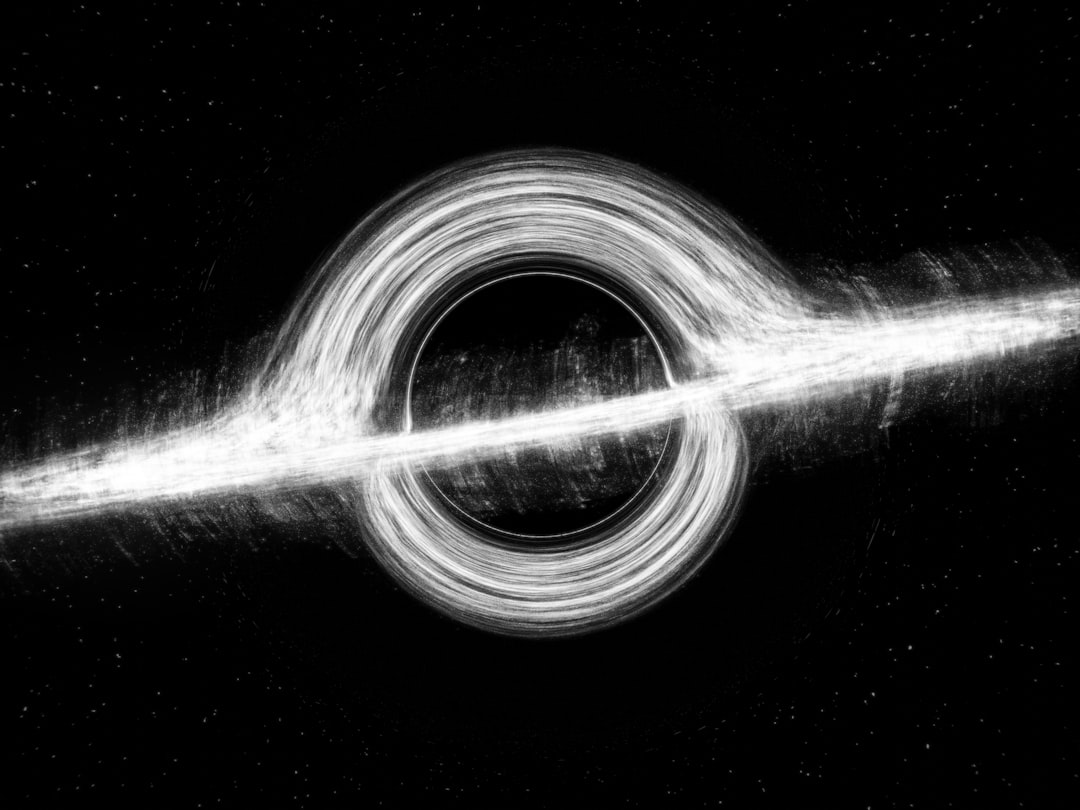
Another profound consequence of general relativity is the prediction of black holes, regions of spacetime where gravity is so intense that nothing, not even light, can escape. These enigmatic objects form from the catastrophic gravitational collapse of massive stars, exceeding a certain mass threshold (the Chandrasekhar limit for white dwarfs, or the Tolman-Oppenheimer-Volkoff limit for neutron stars) upon exhausting their nuclear fuel.
A black hole is characterized by an event horizon, an invisible boundary beyond which escape is impossible. Once matter or light crosses this horizon, it is irretrievably drawn towards a singularity – a point of infinite density at the black hole’s center, where the laws of physics as currently understood are believed to break down. Observationally, black holes are detected not directly, as they emit no light, but through their gravitational influence on surrounding matter. Accretion disks, formed by gas and dust spiraling into a black hole, heat up to immense temperatures and emit powerful X-rays and gamma-rays which can be detected by specialized telescopes. The recent direct observation of the shadow of a supermassive black hole at the center of the galaxy M87 by the Event Horizon Telescope Collaboration stands as a testament to the predictive power of general relativity.
For those interested in the latest developments in astrophysics, a fascinating article titled “Exploring the Mysteries of Dark Matter” can be found at My Cosmic Ventures. This piece delves into the ongoing research surrounding dark matter, its implications for our understanding of the universe, and the innovative techniques scientists are employing to uncover its secrets. Whether you’re a seasoned astrophysicist or a curious enthusiast, this article offers valuable insights into one of the most intriguing aspects of modern astrophysics.
Stellar Alchemy: The Life and Death of Stars
Stars, those shimmering diamonds in the cosmic tapestry, are the fundamental building blocks of galaxies. They are colossal nuclear furnaces, perpetually engaged in a delicate balance between gravitational collapse and outward pressure from thermonuclear fusion. Understanding their life cycles, from birth to demise, is crucial for comprehending the origin of elements heavier than hydrogen and helium, and indeed, the very existence of planets and life.
Star Formation and Protostars
Stars begin their lives within vast, cold, and dense molecular clouds, often referred to as stellar nurseries. Within these clouds, regions of slightly higher density can become gravitationally unstable and begin to collapse under their own weight. As the gas and dust contract, the core of this collapsing region heats up, forming a protostar. This protostellar phase is characterized by intense radiation emitted from the accreting material and powerful outflows of gas known as jets, which clear away surrounding debris. The precise mechanisms of star formation are still an active area of research, with astrophysicists employing computational simulations and observational techniques to unravel the complex interplay of gravity, magnetic fields, and turbulence.
Nuclear Fusion and Stellar Evolution
Once the core temperature and pressure of a protostar reach critical thresholds (approximately 10 million Kelvin), nuclear fusion ignites. In the case of main-sequence stars like our Sun, hydrogen nuclei fuse to form helium, releasing an enormous amount of energy in the process. This outward pressure from fusion balances the inward pull of gravity, establishing a state of hydrostatic equilibrium that can last for billions of years, depending on the star’s initial mass.
The subsequent evolutionary path of a star is largely determined by its initial mass. Low-mass stars, after exhausting their core hydrogen, swell into red giants, shed their outer layers to form planetary nebulae, and eventually cool and fade into white dwarfs. White dwarfs are extremely dense remnants, roughly the size of Earth, supported by electron degeneracy pressure. More massive stars, however, undergo a much more dramatic end. After exhausting their hydrogen, they fuse heavier elements up to iron in their cores. Since iron fusion consumes rather than releases energy, the core collapses catastrophically, leading to a spectacular supernova explosion.
Supernovae and Nucleosynthesis
Supernovae are among the most energetic events in the universe, briefly outshining entire galaxies. These explosions disperse newly synthesized heavy elements – from carbon and oxygen to gold and uranium – into the interstellar medium. This process, known as nucleosynthesis, is fundamental to the existence of planets and life. Without supernovae, the universe would consist primarily of hydrogen and helium, barren of the elements necessary for chemistry and biology. The remnants of supernovae can be either a rapidly spinning neutron star, an incredibly dense object composed almost entirely of neutrons, or, in the case of the most massive stars, a black hole. Astounding observations of supernovae light curves allow astrophysicists to study the mechanics of these stellar cataclysms and the creation of the universe’s diverse elemental inventory.
Galactic Tapestry: Structures and Dynamics of Galaxies
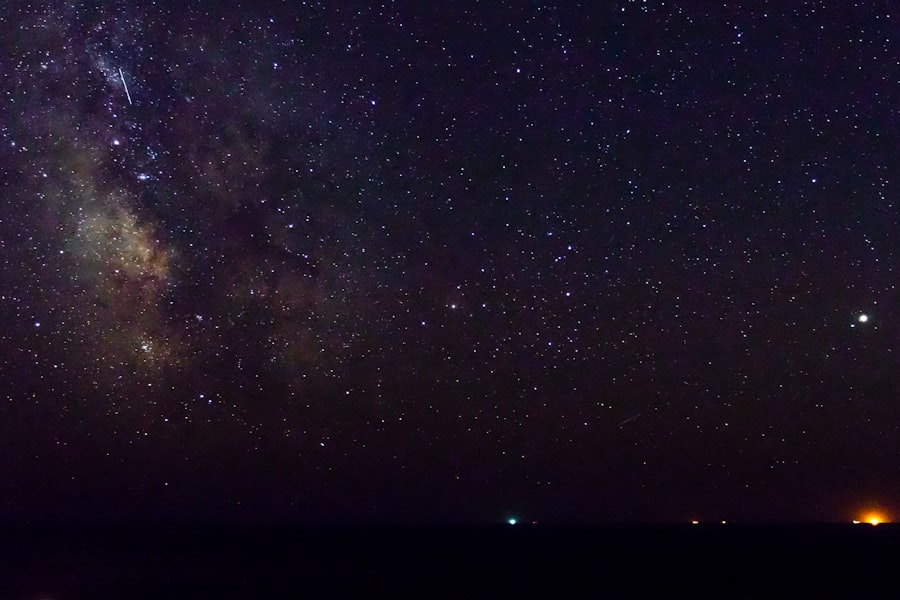
Galaxies are colossal collections of stars, gas, dust, and dark matter, bound together by gravity. They exhibit a breathtaking diversity of shapes, sizes, and compositions, from the majestic spiral arms of the Milky Way to the sprawling elliptical galaxies and the chaotic forms of irregular galaxies. Understanding their formation, evolution, and interactions is central to comprehending the large-scale structure of the cosmos.
Classification of Galaxies
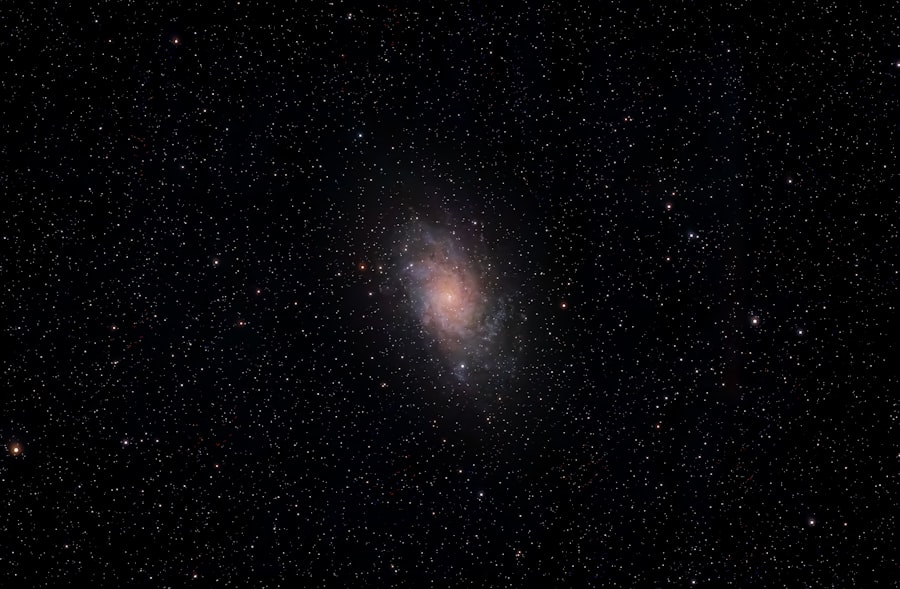
Galaxies are broadly classified into three main types based on their morphological appearance: spirals, ellipticals, and irregulars. Spiral galaxies, such as the Milky Way and Andromeda, feature a flattened disk with prominent spiral arms, a central bulge, and often a halo of globular clusters and dark matter. The arms are regions of active star formation, characterized by young, hot, blue stars. Elliptical galaxies are generally older, redder, and less active in star formation. They range from nearly spherical to highly elongated shapes and contain typically older stellar populations. Irregular galaxies lack a definite structure and often result from gravitational interactions or mergers between other galaxies, exhibiting chaotic star formation.
This classification, originally developed by Edwin Hubble, provides a useful framework for understanding galactic properties, though the universe also contains transitional forms and highly perturbed galaxies.
Galactic Interactions and Mergers
Galaxies are not static entities; they are constantly interacting with their neighbors through gravitational forces. These interactions can lead to spectacular galactic mergers, transformative events that profoundly alter the structure and evolution of the participating galaxies. When two galaxies collide, their stars rarely hit each other due to the vast distances between them, but their gas and dust clouds crash together, triggering bursts of star formation. The gravitational forces during a merger can also disrupt the galaxies’ original morphologies, leading to the formation of irregular galaxies or the eventual settling into more quiescent elliptical forms. The Andromeda galaxy is currently on a collision course with the Milky Way, a cosmic tango expected to culminate in a merger billions of years from now, forming a new, larger elliptical galaxy.
Supermassive Black Holes and Active Galactic Nuclei
At the heart of almost every massive galaxy lies a supermassive black hole, an object millions to billions of times the mass of our Sun. While most supermassive black holes are dormant, some are actively accreting matter, becoming “active galactic nuclei” (AGN). These AGNs are among the most luminous objects in the universe, emitting prodigious amounts of radiation across the electromagnetic spectrum, from radio waves to X-rays and gamma rays. The energy output from AGNs is believed to be powered by the gravitational potential energy released as matter spirals into the supermassive black hole, forming an incredibly hot and luminous accretion disk. The study of AGNs provides insights into the co-evolution of galaxies and their central black holes, with feedback mechanisms from the black hole playing a crucial role in regulating star formation within the host galaxy.
The Cosmic Symphony: Cosmology and the Expanding Universe
Cosmology is the branch of astrophysics that investigates the universe on its largest scales, exploring its origin, evolution, and ultimate fate. It seeks to answer fundamental questions about the nature of space, time, matter, and energy, attempting to construct a coherent narrative for the entire cosmos.
The Big Bang Theory
The prevailing cosmological model, the Big Bang theory, posits that the universe originated from an extremely hot, dense state approximately 13.8 billion years ago and has been expanding and cooling ever since. This theory is supported by a wealth of observational evidence, including the detection of the cosmic microwave background (CMB) radiation, the observed redshift of distant galaxies (Hubble’s Law), and the abundance of light elements (hydrogen, helium, and lithium) predicted by Big Bang nucleosynthesis.
The CMB is often described as the “afterglow” of the Big Bang, a faint, uniform glow detected across the entire sky. It represents the oldest light in the universe, dating back to about 380,000 years after the Big Bang, when the universe had cooled sufficiently for atoms to form, allowing photons to travel freely. The tiny temperature fluctuations in the CMB provide a snapshot of the early universe, revealing the primordial density variations that eventually seeded the formation of galaxies and large-scale structures.
Dark Matter and Dark Energy
Despite the triumph of the Big Bang theory, a significant portion of the universe remains mysterious. Astronomical observations indicate that visible matter (stars, galaxies, gas) accounts for only about 5% of the total mass-energy content of the universe. The remaining 95% is attributed to two enigmatic components: dark matter and dark energy.
Dark matter, composing approximately 27% of the universe, is a non-luminous form of matter that interacts gravitationally but does not emit, absorb, or reflect light. Its existence is inferred from its gravitational effects on visible matter, such as the observed rotation curves of galaxies and the gravitational lensing effect in galaxy clusters. While its precise nature is unknown, candidates for dark matter particles include WIMPs (Weakly Interacting Massive Particles) and axions, though no direct detection has yet been confirmed.
Dark energy, making up about 68% of the universe, is an even more mysterious component responsible for the observed accelerating expansion of the universe. Initially, it was believed that gravity would cause the universe’s expansion to slow down. However, observations of distant supernovae have shown that the expansion is actually speeding up. The nature of dark energy remains one of the most pressing unsolved problems in modern astrophysics, with ideas ranging from a new form of energy inherent in spacetime itself (a cosmological constant) to novel fields or modifications of gravity. The quest to understand dark matter and dark energy represents the frontier of modern cosmological research.
Astrophysics continues to unveil the mysteries of the universe, and a fascinating article that delves deeper into the subject can be found here. This piece explores the latest discoveries in dark matter and its implications for our understanding of cosmic evolution. For those interested in the intricate workings of the universe, this article is a must-read. You can check it out at this link.
The Quest for Exoplanets and Extraterrestrial Life
| Metric | Description | Typical Value | Unit |
|---|---|---|---|
| Speed of Light | Speed at which light travels in vacuum | 299,792,458 | m/s |
| Hubble Constant | Rate of expansion of the universe | 70 | km/s/Mpc |
| Mass of Sun | Mass of our star, the Sun | 1.989 × 10^30 | kg |
| Age of Universe | Estimated time since the Big Bang | 13.8 | billion years |
| Gravitational Constant (G) | Universal constant in Newton’s law of gravitation | 6.674 × 10^-11 | m^3 kg^-1 s^-2 |
| Distance to Andromeda Galaxy | Nearest spiral galaxy to the Milky Way | 2.537 | million light years |
| Temperature of Cosmic Microwave Background | Residual thermal radiation from the Big Bang | 2.725 | K |
| Solar Luminosity | Total energy output of the Sun per second | 3.828 × 10^26 | Watts |
The discovery of planets orbiting stars other than our Sun, known as exoplanets, has revolutionized our understanding of planetary systems and invigorated the search for life beyond Earth. This relatively young field of astrophysics attempts to characterize these distant worlds and assess their potential for habitability.
Exoplanet Detection Methods
The detection of exoplanets presents significant observational challenges due to their small size and faintness compared to their host stars. Astrophysicists employ various indirect methods to infer their presence. The transit method, currently the most successful, involves observing the slight dip in a star’s brightness as an exoplanet passes in front of it, blocking a fraction of its light. The radial velocity method, also known as the Doppler wobble method, detects the tiny reciprocal wobble in a star’s motion caused by the gravitational tug of an orbiting planet. Other techniques include direct imaging, where the planet’s light is directly observed, and gravitational microlensing, which utilizes the bending of starlight by an exoplanet’s gravity.
Characterizing Exoplanet Atmospheres
Once an exoplanet is detected, the next crucial step is to characterize its atmosphere, as this provides vital clues about its composition, temperature, and potential for habitability. During a transit, some of the starlight passes through the exoplanet’s atmosphere, where specific molecules can absorb certain wavelengths of light. By analyzing the tiny changes in the star’s spectrum, astrophysicists can identify the chemical constituents of the exoplanet’s atmosphere, such as water vapor, methane, or carbon dioxide. Upcoming space telescopes, such as the James Webb Space Telescope, are equipped with sophisticated instruments designed to conduct detailed atmospheric characterization, searching for biosignatures – chemical indicators that might suggest the presence of life.
The Search for Habitable Worlds and Biosignatures
The ultimate goal of exoplanet research is to find habitable worlds – planets that possess the necessary conditions for life as we know it, primarily liquid water. This often involves searching for planets within a star’s “habitable zone,” the range of orbital distances where temperatures are suitable for liquid water to exist on a planet’s surface. While liquid water is considered a prerequisite, true habitability is a complex interplay of many factors, including atmospheric composition, geological activity, and magnetic fields. The detection of biosignatures in an exoplanet’s atmosphere, such as an abundance of oxygen or methane alongside other gases that would not naturally coexist without biological processes, would be a monumental discovery, hinting at the profound possibility of life beyond Earth. This ongoing quest, a blend of meticulous observation and theoretical modeling, embodies humanity’s enduring desire to understand its place in the vast cosmic expanse.

WATCH NOW ▶️ Dark energy is deleting the universe proof
FAQs
What is astrophysics?
Astrophysics is a branch of astronomy that focuses on understanding the physical properties and underlying processes of celestial objects and phenomena in the universe, such as stars, planets, galaxies, black holes, and cosmic radiation.
How does astrophysics differ from astronomy?
While astronomy is the broader study of celestial objects and the universe as a whole, astrophysics specifically applies the principles of physics and chemistry to explain how these objects form, evolve, and interact.
What tools do astrophysicists use to study the universe?
Astrophysicists use a variety of tools including telescopes (optical, radio, X-ray, and gamma-ray), spectrometers, satellites, and computer simulations to observe and analyze celestial phenomena.
What are some key topics studied in astrophysics?
Key topics include the life cycles of stars, the nature of black holes, the expansion of the universe, dark matter and dark energy, cosmic microwave background radiation, and the formation of galaxies.
Why is astrophysics important?
Astrophysics helps us understand fundamental questions about the origin, structure, and fate of the universe, providing insights into the laws of physics under extreme conditions and contributing to technological advancements through its research.