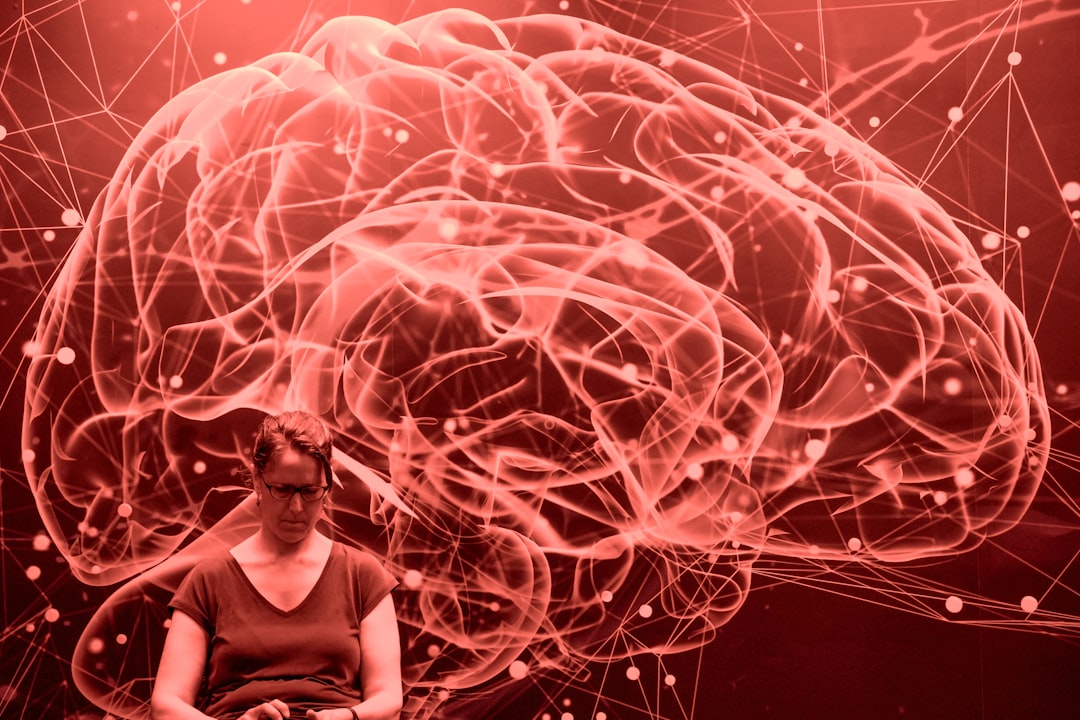
The question of whether the universe itself may possess a form of consciousness, akin to a colossal thinking brain, has captivated thinkers across diverse disciplines for centuries. While this notion might initially evoke images of science fiction, a closer examination reveals a surprisingly persistent thread in philosophical inquiry and, more recently, in scientific speculation. It is a proposition that challenges our fundamental understanding of reality, prompting us to consider if the intricate and seemingly ordered cosmos we inhabit is merely a collection of inert matter, or if there is an emergent property of awareness underlying its vast expanse. This exploration delves into the historical roots of this concept, examines arguments from physics, biology, and philosophy, and considers the ongoing quest to understand consciousness itself, using the universe as a potential canvas upon which these profound questions are painted.
The idea of a sentient universe is not a modern contrivance; it has deep roots in ancient cosmologies and philosophical traditions. Many early civilizations envisioned a universe imbued with divine or semi-divine forces that guided its workings, a concept that, while not precisely a “thinking brain,” suggests an inherent intelligence or will at play. For observers of the heavens in antiquity, the predictable movements of celestial bodies, the cyclical nature of seasons, and the intricate dance of light and shadow must have strongly implied a deliberate design, a cosmic order that transcended mere random chance.
Ancient Philosophies and the Animate Cosmos
Across the globe, various cultures developed mythologies and philosophies that attributed agency and purpose to the natural world. From the animistic beliefs of indigenous peoples, where every rock, tree, and stream possessed a spirit, to the more formalized pantheons of ancient Greece and Rome, the universe was often perceived as a living, breathing entity.
The Stoic Conception of Logos
In Ancient Greece, Stoic philosophers, such as Zeno of Citium and Marcus Aurelius, proposed the concept of Logos, a universal reason or divine fire that permeated and governed all of existence. This Logos was not just a passive principle but an active, rational force that dictated the course of events and imbued the universe with order. For the Stoics, everything was interconnected through this cosmic reason, suggesting a foundational intelligence that shaped causality.
Eastern Traditions and Universal Consciousness
Similarly, many Eastern philosophies, including Hinduism, Buddhism, and Taoism, posit a universal consciousness or oneness that underlies all phenomena. The concept of Brahman in Hinduism, the ultimate reality that is the source of all existence, and the Buddhist notion of emptiness (shunyata) which paradoxically points to an interconnected web of interdependence, both suggest a fundamental unity and awareness that encompasses the entirety of the cosmos. The universe, in these traditions, is not just a collection of things but a manifestation of a singular, all-pervading consciousness.
The Renaissance and the Re-enchantment of Nature
The Renaissance marked a period of renewed interest in classical thought and a shift in perspective on the natural world. While the scientific revolution was beginning to take hold, many thinkers still viewed the universe with a sense of wonder and embedded purpose.
Giordano Bruno and the Infinite Universe
Giordano Bruno, an Italian philosopher and cosmologist of the 16th century, famously advocated for an infinite universe with innumerable worlds, each potentially harboring life. He saw divinity in the vastness and complexity of the cosmos, suggesting a spiritual essence that animated matter, a belief that ultimately led to his condemnation by the Inquisition on charges of heresy.
Early Modern Science and the Mechanistic Worldview
The rise of Newtonian physics in the 17th and 18th centuries ushered in a largely mechanistic worldview. The universe was increasingly seen as a giant clockwork mechanism, governed by immutable laws of motion and gravity. While this approach was remarkably successful in explaining physical phenomena, it tended to strip the cosmos of any inherent meaning or consciousness, painting a picture of a universe that, while intricate, was ultimately unthinking.
Descartes and Dualism
René Descartes’ philosophical dualism, which sharply separated mind from matter, further contributed to this mechanistic view. The human mind was seen as a unique entity, distinct from the inanimate physical world, making the idea of a cosmic mind seem even more improbable.
In exploring the intriguing concept of whether the universe functions as a giant thinking brain, one might find it beneficial to read a related article that delves deeper into the intersection of consciousness and cosmology. This article discusses various theories and perspectives that suggest a profound connection between the universe and cognitive processes. For more insights, you can check out the article at My Cosmic Ventures.
The Universe as an Information Processing System
Modern scientific advancements, particularly in physics and information theory, have begun to resurface questions about the fundamental nature of reality and the potential for complex systems to exhibit emergent properties. The universe, when viewed through the lens of information processing, can be seen as an incredibly vast and intricate computational network.
Quantum Mechanics and Interconnectedness
Quantum mechanics, the theory describing the behavior of matter and energy at the atomic and subatomic levels, has revealed a universe that is far stranger and more interconnected than classical physics ever imagined. Phenomena such as entanglement, where particles can be linked in such a way that they instantaneously influence each other regardless of the distance separating them, suggest a form of non-local communication that challenges our intuitive notions of space and time.
Quantum Entanglement: A Cosmic Network?
If information can be shared instantaneously between entangled particles, could this be a fundamental aspect of the universe’s architecture? Some theoretical physicists speculate that such interconnectedness might point towards a deeper, unified reality where separation is an illusion. This is akin to considering if the universe is like a vast, interconnected neural network, where distant nodes can influence each other without the delay that speed-of-light limitations would typically impose.
The Observer Effect: Consciousness and Reality
The “observer effect” in quantum mechanics, where the act of measurement can influence the outcome of a quantum event, has also sparked philosophical debate. While this is typically explained in terms of the interaction between the measuring apparatus and the quantum system, some have ventured to suggest that consciousness itself might play a role in collapsing quantum probabilities, hinting at a more active relationship between mind and matter.
Information Theory and the Fabric of Reality
The field of information theory, which deals with the quantification, storage, and communication of information, has also provided fertile ground for speculation. Some theories propose that information might be a fundamental constituent of the universe, rather than matter or energy.
Digital Physics: Is the Universe a Computer?
The idea of digital physics, which suggests that the universe might be fundamentally computational or “digital” in nature, posits that reality is akin to a giant simulation or a complex algorithm. If this were the case, then the processing of information would be its most fundamental operation, and the universe could be seen as a colossal, self-running computer, crunching data in ways we can only begin to comprehend.
The Complexity of Cosmic Structures
From the formation of galaxies and stars to the intricate patterns of biological evolution, the universe exhibits an astonishing level of complexity and organization. This complexity can be viewed as a testament to the universe’s ability to process and rearrange information, leading to increasingly sophisticated structures and laws.
Biological Analogies: The Brain as a Model
Perhaps the most intuitive, albeit anthropomorphic, approach to understanding the universe as a thinking entity is to draw parallels with the most complex thinking system we know: the human brain. The universe, with its vast scale and interconnectedness, shares certain structural and functional similarities with neural networks.
Neural Networks and the Universe
Artificial neural networks, computer systems designed to mimic the structure and function of the biological brain, offer a compelling analogy. These networks consist of interconnected nodes (neurons) that process and transmit information.
Neurons as Galaxies, Synapses as Gravitational Forces?
One could, for instance, think of galaxies as nodes in a much larger cosmic network. The gravitational forces that bind these galaxies together and dictate their movements could be seen as analogous to the connections and signal transmissions within a neural network. The emergent properties of such a colossal network, if it were to exist, could, in theory, lead to a form of consciousness.
The Scale of Cosmic Computation
The sheer number of stars and galaxies in the observable universe far exceeds the number of neurons in the human brain, and the complexity of their interactions in terms of gravity, electromagnetism, and other forces is immense. If consciousness arises from complex information processing in the brain, it is not entirely out of the realm of speculation to consider if a similar, albeit vastly grander, process could be occurring on a cosmic scale.
Emergent Properties and Consciousness
The concept of “emergence” is crucial here. In simple terms, emergent properties are characteristics of a complex system that are not present in its individual components but arise from their interactions. Consciousness is widely considered an emergent property of the brain.
From Simple Laws to Universal Awareness?
If the universe operates on a set of fundamental laws, and these laws lead to the formation of increasingly complex structures, it is conceivable that at a certain threshold of complexity and interconnectedness, an emergent property like awareness could arise. This is analogous to how individual water molecules, by themselves, do not exhibit liquidity, but when they interact in large numbers, the property of liquidity emerges.
Is Complexity a Prerequisite for Sentience?
The universe has evolved over billions of years, from a homogeneous state to the incredibly diverse and complex structure we observe today. This evolutionary trajectory, from simplicity to complexity, aligns with the idea that complexity is a prerequisite for, or at least a strong correlate of, consciousness.
Philosophical Challenges and the Nature of Consciousness
The question of whether the universe is a thinking brain is not just a scientific or analogical one; it is deeply rooted in philosophical debates about the nature of consciousness, mind, and reality itself. Defining consciousness is notoriously difficult, and any attempt to attribute it to the universe must grapple with these fundamental challenges.
What is Consciousness?
The “hard problem of consciousness,” as described by philosopher David Chalmers, refers to the difficulty of explaining how physical processes in the brain give rise to subjective experience – the feeling of “what it is like” to be. If we struggle to fully understand consciousness in a biological system, applying it to the entire universe presents an even greater hurdle.
Subjectivity vs. Objectivity
If the universe were a thinking brain, would its consciousness be subjective, like our own, with individual experiences? Or would it be a more detached, objective awareness of its own processes? This distinction is crucial when considering the nature of cosmic sentience.
The Problem of Scale and Embodiment
Our consciousness is intimately tied to our physical bodies, our senses, and our interactions with the environment. How could a disembodied, omnipresent consciousness operate? This question highlights the limitations of our current understanding and the need for entirely new conceptual frameworks.
Panpsychism and the Universality of Mind
Panpsychism is a philosophical view that suggests consciousness, or some primitive form of it, is a fundamental and ubiquitous feature of reality, present in all matter.
Consciousness as a Fundamental Property
In this view, consciousness is not something that emerges from complex arrangements of matter but is inherent in the basic constituents of the universe. This would mean that even fundamental particles possess a rudimentary form of proto-consciousness, and the universe, being composed of these entities, would inherently possess a unified awareness.
From Micro-Consciousness to Macro-Consciousness
If we accept the premise of panpsychism, then the universe’s “thinking” might be a grand amplification and integration of these fundamental conscious elements. It is like observing a single spark and then realizing it can combine with countless others to form a bonfire.
The Role of Purpose and Intent
A significant aspect of “thinking” involves intent, purpose, and goal-directed behavior. If the universe is a thinking brain, does it have goals? Is there a grand design or intention behind its operations?
Anthropic Principles and Fine-Tuning
The observation that many fundamental constants of the universe appear to be finely tuned for the existence of life has led to various interpretations, including the anthropic principle. Some see this fine-tuning as evidence of design or purpose, hinting at an underlying intelligence. However, alternative explanations, such as the multiverse hypothesis, also exist.
Is the Universe Evolving Towards a Goal?
The universe has undergone immense evolution, from the Big Bang to the formation of stars, galaxies, and potentially life. This trajectory could be interpreted as a directed process, as if the universe is moving towards a particular state or outcome, a characteristic often associated with intelligent systems.
The intriguing concept of whether the universe resembles a giant thinking brain has sparked numerous discussions in both scientific and philosophical circles. For those interested in exploring this idea further, a related article delves into the connections between consciousness and the cosmos, shedding light on how our understanding of the universe might be influenced by our own cognitive processes. You can read more about this fascinating topic in the article found here.
Scientific Pathways and Future Inquiries
| Metric | Description | Value/Estimate |
|---|---|---|
| Number of Neurons in Human Brain | Approximate count of neurons in an average human brain | 86 billion |
| Estimated Number of Galaxies in Universe | Approximate count of galaxies observable in the universe | 2 trillion |
| Estimated Number of Stars in Universe | Approximate count of stars in the observable universe | 1 x 10^24 (1 septillion) |
| Neural Network Complexity | Number of synapses in human brain | 100 trillion (1 x 10^14) |
| Universe Information Processing Hypothesis | Concept that universe processes information like a brain | Theoretical, no empirical value |
| Speed of Neural Signal Transmission | Average speed of electrical impulses in brain neurons | 1 to 120 m/s |
| Speed of Light (Information Transfer in Universe) | Maximum speed of information transfer in the universe | 299,792,458 m/s |
| Universe Entropy | Measure of disorder or information content in the universe | Estimated 10^104 k (Boltzmann constant units) |
| Consciousness Emergence | Scientific understanding of consciousness arising from brain activity | Currently unexplained at universal scale |
While the concept of a cosmic brain remains largely in the speculative realm, ongoing scientific research into cosmology, artificial intelligence, and the fundamental nature of reality provides potential avenues for future exploration. The tools and theories being developed today might one day offer empirical insights into these profound questions.
Cosmology and the Search for Universal Laws
Cosmology, the study of the origin and evolution of the universe, continues to uncover fundamental laws and structures that govern cosmic phenomena. Understanding these laws more deeply might reveal patterns that suggest more than just random chance.
The Search for a Theory of Everything
The pursuit of a “Theory of Everything” in physics, a single framework that unifies all fundamental forces and particles, could provide profound insights into the deepest workings of the universe. Such a theory might reveal underlying principles that have implications for the emergence of complexity and potentially consciousness.
The Limits of the Observable Universe
Our current understanding is limited to the observable universe. The true extent of the cosmos, and whether it possesses properties beyond our current observational capabilities, remains unknown. Future advancements in observational astronomy and theoretical physics may expand our horizons.
Artificial Intelligence and the Simulation Hypothesis
The rapid advancements in artificial intelligence (AI) have led to discussions about the nature of intelligence itself and the possibility of creating artificial consciousness. Furthermore, the “simulation hypothesis,” the idea that our reality might be a computer simulation, has gained traction.
Can AI Become Conscious?
If we can create artificial intelligence that exhibits signs of consciousness, it might offer clues about the conditions necessary for consciousness to arise, potentially allowing us to extrapolate to cosmic scales. The development of sophisticated AI can serve as a thought experiment, pushing the boundaries of our understanding of computation and mind.
The Simulation Hypothesis and Cosmic Computation
If our universe is a simulation, then it is, by definition, a form of cosmic computation. This perspective, while unproven, aligns with the idea of the universe as a massive information processing system. Exploring the implications of this hypothesis could indirectly inform our understanding of the universe’s potential for sentience.
Experimental Approaches and Theoretical Frameworks
While direct experimentation on a cosmic brain is impossible, indirect avenues of inquiry are being pursued. These include developing new theoretical models and searching for subtle cosmological signatures.
Mathematical Structures and Universal Language
Some researchers are exploring whether mathematical structures themselves might be fundamental to reality. If the universe is governed by elegant mathematical principles, this could be interpreted as a form of inherent logic or order that might be a precursor to thought.
Searching for Anomalies and Unexplained Phenomena
Scientists are constantly searching for anomalies and phenomena that are not explained by current theories. Uncovering the universe’s deepest secrets may reveal unexpected properties that challenge our current paradigms and open new avenues for understanding its potential for intelligence.
The question of whether the universe is a giant thinking brain remains a captivating enigma. While definitive answers are far beyond our current grasp, the exploration of this idea pushes the boundaries of our scientific, philosophical, and imaginative capacities. It compels us to consider the possibility that the cosmos is not a dead, inert expanse but a dynamic, interconnected entity, potentially woven with threads of awareness extending far beyond our individual comprehension. As we continue to unravel the universe’s mysteries, perhaps we will find more than just physical laws and cosmic structures, but echoes of a grander intelligence that has shaped all that we perceive, and all that we are.
FAQs
What does the idea “the universe is a giant thinking brain” mean?
This concept suggests that the universe functions similarly to a brain, processing information and possibly exhibiting forms of consciousness or intelligence. It is a metaphor used in some scientific and philosophical discussions to explore the nature of the cosmos and its complexity.
Is there scientific evidence supporting the universe as a thinking brain?
Currently, there is no direct scientific evidence that the universe operates as a thinking brain. The idea is largely speculative and philosophical, drawing analogies between neural networks and cosmic structures rather than empirical proof.
Who proposed the idea that the universe might be like a brain?
Various scientists and thinkers have explored this idea, including neuroscientists, physicists, and philosophers. Notably, some researchers studying complex systems and information theory have drawn parallels between the brain’s network and the large-scale structure of the universe.
How does the structure of the universe compare to the structure of a brain?
Both the universe and the brain exhibit complex networks. The universe has a cosmic web of galaxies and dark matter filaments, while the brain consists of neurons connected by synapses. Some studies have noted similarities in the patterns of connectivity and network organization.
Does this idea imply the universe has consciousness?
The notion that the universe is a thinking brain sometimes leads to speculation about universal consciousness. However, this remains a philosophical question without scientific consensus. Most scientists view the idea as metaphorical rather than literal evidence of consciousness in the universe.