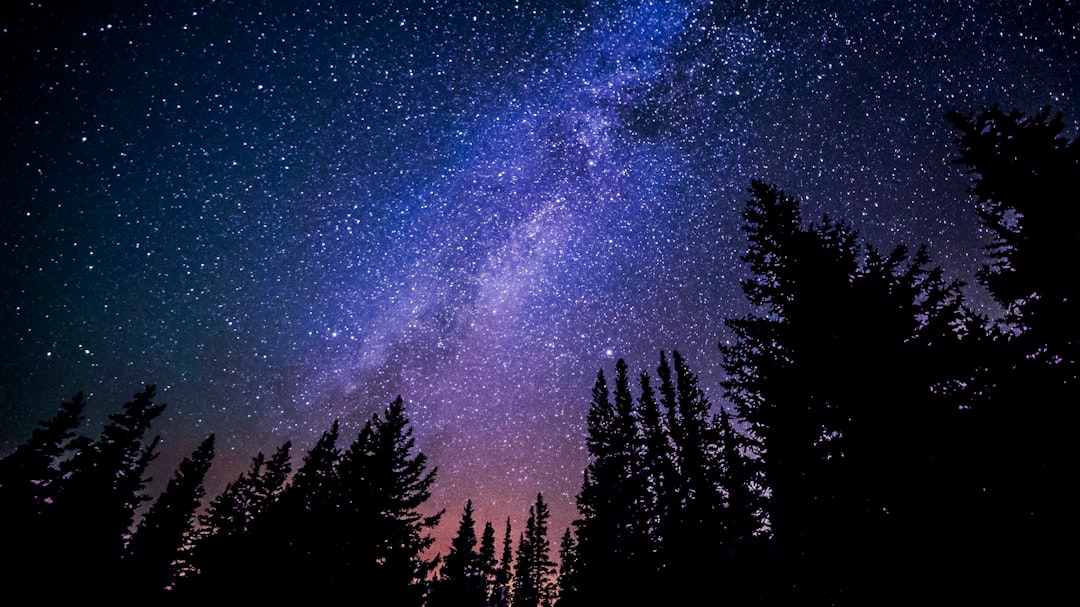
The panoramic tapestry of the night sky, a canvas often taken for granted in its ubiquitous presence, holds within its depths a profound narrative of cosmic history and intricate physical laws. For centuries, humanity has gazed upon this celestial expanse, first with primitive wonder, then with evolving scientific curiosity. This article endeavors to disentangle some of the complexities enshrouding the dark night sky, exploring its fundamental nature, the phenomena that govern its appearance, and the challenges to its preservation.
The human eye perceives the night sky as a vast, dark void punctuated by pinpricks of light. This perception, however, is a profound simplification of a truly dynamic and incredibly energetic environment. The apparent emptiness is, in fact, teeming with a multitude of astrophysical objects and phenomena, many of which only reveal themselves through specialized instrumentation.
The Interstellar Medium: A Cosmic Fog
Between the stars lies what is known as the interstellar medium (ISM), a diffuse mixture of gas and dust that pervades galaxies. Far from being a perfect vacuum, the ISM consists primarily of hydrogen and helium, along with trace amounts of heavier elements. Its density can vary dramatically, from extremely tenuous regions to dense molecular clouds where stars are born.
- Composition: The ISM is predominantly (approximately 99%) gaseous, with the remaining 1% consisting of tiny dust grains composed of silicates, graphite, and other refractory materials. These dust grains absorb and scatter starlight, contributing to the reddish appearance of some nebulae and the darkening of distant light.
- Phases: The ISM exists in various phases characterized by differing temperatures and densities. These include cold molecular clouds, cool neutral medium, warm neutral medium, warm ionized medium, and hot ionized medium, each playing a distinct role in galactic evolution.
- Cosmic Rays: High-energy particles, known as cosmic rays, also traverse the ISM. These particles, originating from supernovae and other extreme astrophysical events, contribute to the ionization of the gas and can influence star formation processes.
Beyond the Visible Spectrum: Unseen Radiance
The human eye is sensitive only to a narrow band of the electromagnetic spectrum, termed visible light. However, the universe radiates across the entire spectrum, from low-energy radio waves to high-energy gamma rays. To fully apprehend the night sky, one must look beyond what is immediately perceptible.
- Radio Astronomy: Radio telescopes detect long-wavelength radiation emitted by cold gas and dust, providing insights into the distribution of matter and the processes occurring in active galactic nuclei and star-forming regions.
- Infrared Astronomy: Infrared radiation penetrates dust clouds more effectively than visible light, allowing astronomers to observe obscured regions like the centers of galaxies and nascent star systems.
- X-ray and Gamma-ray Astronomy: These high-energy forms of radiation are produced by extremely hot and energetic phenomena, such as supernova remnants, black holes accreting matter, and colliding galaxy clusters. Such observations offer a window into the most violent and energetic events in the universe.
In exploring the mysteries of the cosmos, an intriguing article titled “The Truth About Why the Night Sky is Dark” delves into the reasons behind the darkness of the night sky, offering insights into cosmic expansion and the limits of human perception. For a deeper understanding of related astronomical phenomena, you can check out this informative piece on cosmic exploration and its implications at My Cosmic Ventures.
The Cosmic Symphony: Forces Shaping the Dark Sky
The apparent tranquility of the night sky belies a constant interplay of fundamental forces that sculpt its features and dictate the evolution of its components. Gravity, electromagnetism, and the strong and weak nuclear forces are the architects of the cosmos, orchestrating the grand dance of celestial bodies.
The Gravitational Embrace: Architects of Structure
Gravity is the dominant force on astronomical scales, responsible for the formation of stars, galaxies, and galaxy clusters. Without gravity, the universe would be a uniform, featureless gas.
- Star Formation: Within dense molecular clouds, regions of slightly higher density begin to collapse under their own gravity. As these protostars contract, their core temperatures and pressures increase until nuclear fusion ignites, marking the birth of a star.
- Galactic Dynamics: Galaxies are vast collections of stars, gas, dust, and dark matter, all bound together by gravity. The gravitational interactions between these components determine the galaxy’s morphology (e.g., spiral, elliptical, irregular) and its evolutionary trajectory.
- Cosmic Web: On the largest scales, galaxies are not uniformly distributed but are organized into a vast, filamentary network known as the cosmic web. This structure, a consequence of gravity acting on primordial density fluctuations, includes galaxy clusters, superclusters, and immense voids.
The Light of Distant Suns: A Time Capsule
When you observe a distant star or galaxy, you are not seeing it as it is in the present moment, but as it was when the light embarked on its journey across the vast expanse of space. Light travels at a finite speed, and the immense distances involved mean that starlight can take millions or even billions of years to reach Earth.
- Look-back Time: This phenomenon is termed “look-back time.” The further away an object is, the further back in time we are observing it. For example, observing objects at a distance of a billion light-years means we are seeing them as they appeared a billion years ago.
- Cosmological Redshift: As the universe expands, the wavelengths of light traveling through it are stretched, causing them to shift towards the red end of the spectrum. This “cosmological redshift” is a key piece of evidence for the expansion of the universe and allows astronomers to estimate the distances and ages of very distant objects.
The Veil of Light Pollution: A Dimming Legacy

Despite the inherent grandeur of the night sky, its pristine darkness is increasingly threatened by the pervasive encroachment of artificial light. Light pollution, an often-overlooked consequence of modern industrialization, represents a significant impediment to both scientific observation and the fundamental human experience of the cosmos.
Sources of Artificial Light: An Ever-Expanding Glow
The sources of light pollution are numerous and varied, stemming from virtually every aspect of human urbanization and infrastructure. Identifying and mitigating these sources is crucial for preserving the nocturnal environment.
- Streetlights: Inefficiently designed streetlights that scatter light upwards or horizontally are major contributors to skyglow. Many older fixtures employ mercury vapor or high-pressure sodium lamps, which produce broad spectrum light that scatters effectively in the atmosphere.
- Commercial and Residential Lighting: Poorly shielded building exterior lighting, illuminated billboards, sports stadiums, and even residential outdoor lighting all contribute to the cumulative effect of light pollution.
- Industrial and Transportation Lighting: Large industrial facilities, ports, airports, and highway lighting add to the overall light dome over populated areas.
Impact on Astronomy: Obscuring the Universe
For astronomers, light pollution is far more than an aesthetic nuisance; it is a direct hindrance to their scientific endeavors. The faint signals from distant celestial objects are easily overwhelmed by the scattered glare from terrestrial lights.
- Reduced Visibility: Skyglow brightens the night sky, making faint objects (like nebulae and distant galaxies) impossible to observe even with powerful telescopes. This limits the achievable depth of astronomical surveys.
- Spectroscopic Challenges: Light pollution introduces unwanted spectral lines into astronomical observations, complicating the analysis of light from celestial sources and making it difficult to detect subtle features.
- Site Selection: The increasing prevalence of light pollution forces astronomical observatories to be built in increasingly remote, high-altitude locations, adding to logistical challenges and costs.
Unraveling the Enigma: Dark Matter and Dark Energy
The current understanding of the universe suggests that the ordinary matter we observe (stars, planets, gas, dust) constitutes only a small fraction of its total mass-energy content. The vast majority – approximately 95% – is comprised of mysterious components known as dark matter and dark energy, which do not interact with light and thus remain invisible to direct observation.
The Elusive Dark Matter: A Gravitational Ghost
Dark matter does not absorb, reflect, or emit light, making it entirely undetectable by traditional astronomical instruments. Its existence is inferred solely through its gravitational effects on visible matter.
- Rotational Curves of Galaxies: Observations of galaxies reveal that their outer regions rotate much faster than expected based on the visible matter alone. This discrepancy strongly suggests the presence of a substantial halo of unseen mass – dark matter – extending beyond the visible galaxy.
- Gravitational Lensing: Massive galaxy clusters can bend the light from more distant objects, creating distorted images. The extent of this “gravitational lensing” indicates that these clusters contain far more mass than can be accounted for by their visible components, pointing to dark matter.
- Cosmic Microwave Background: The patterns observed in the Cosmic Microwave Background (CMB), the relic radiation from the Big Bang, also provide strong evidence for the existence of dark matter, influencing the early universe’s structure formation.
The Accelerating Universe: The Enigma of Dark Energy
Perhaps the most perplexing discovery in modern cosmology is the accelerating expansion of the universe. Rather than slowing down due to the gravitational pull of all the matter within it, the universe’s expansion is observed to be speeding up. This phenomenon is attributed to an unknown force or energy density dubbed “dark energy.”
- Supernovae Observations: Observations of distant Type Ia supernovae (standard candles) have shown that they are fainter than expected for a universe that is decelerating or expanding at a constant rate. This dimming implies that the universe’s expansion is accelerating, pushing these supernovae further away over time.
- Late-Time Acceleration: Models suggest that in the early universe, gravity was dominant, causing the expansion to decelerate. However, dark energy appears to have become dominant more recently, driving the observed acceleration.
- Nature of Dark Energy: The precise nature of dark energy remains one of the greatest mysteries in physics. Leading theories include a cosmological constant (a constant energy density inherent to space itself) or a dynamic field that changes over time (quintessence).
In exploring the mysteries of the universe, many people often wonder about the reasons behind the darkness of the night sky. A related article that delves deeper into this phenomenon can be found on My Cosmic Ventures. This piece not only explains the scientific principles behind the darkness but also discusses the implications for our understanding of the cosmos. For those interested in expanding their knowledge, you can read more about it in this insightful article on My Cosmic Ventures.
Preserving the Cosmic Vista: The Imperative for Dark Sky Initiatives
| Metric | Value | Description |
|---|---|---|
| Average Night Sky Brightness | 22 mag/arcsec² | Typical brightness of a dark, clear night sky measured in magnitudes per square arcsecond |
| Number of Visible Stars | ~2,500 | Approximate number of stars visible to the naked eye under ideal dark sky conditions |
| Cosmic Microwave Background Temperature | 2.7 K | Temperature of the residual radiation from the Big Bang, contributing to the faint glow of the night sky |
| Age of the Universe | ~13.8 billion years | Time since the Big Bang, relevant to the finite amount of light reaching Earth |
| Speed of Light | 299,792 km/s | Limits how far light can travel, affecting the visibility of distant stars and galaxies |
| Interstellar Dust Absorption | Varies | Dust absorbs and scatters light, reducing brightness and contributing to the darkness of the night sky |
| Olbers’ Paradox Explanation | Finite Universe & Expanding Space | The night sky is dark because the universe is not infinite, static, or eternal; it is expanding and has a finite age |
The loss of dark skies represents not only a scientific setback but also a profound cultural and environmental impoverishment. The night sky has inspired art, poetry, philosophy, and scientific inquiry for millennia. Protecting this natural heritage requires concerted global efforts.
International Dark-Sky Association: A Beacon of Advocacy
The International Dark-Sky Association (IDA) is a non-profit organization dedicated to preserving and protecting the night environment through environmentally responsible outdoor lighting. Their work encompasses education, advocacy, and the promotion of dark-sky friendly practices.
- Dark Sky Places Program: The IDA designates “International Dark Sky Places” – communities, parks, and reserves that have demonstrated exceptional commitment to preserving and protecting the night sky through quality lighting policies, dark sky education, and citizen support.
- Model Lighting Ordinances: The IDA develops and promotes model outdoor lighting ordinances that municipalities can adopt to reduce light pollution, encouraging the use of fully shielded fixtures, appropriate light levels, and warm color temperatures.
- Public Awareness Campaigns: Through various initiatives, the IDA raises public awareness about the negative impacts of light pollution on human health, wildlife, energy consumption, and our ability to view the stars.
Technologies for Responsible Lighting: Illuminating the Path Forward
Significant technological advancements offer viable solutions to mitigate light pollution without compromising safety or functionality. The key lies in adopting responsible lighting practices and embracing innovation.
- Full Cutoff Fixtures: These fixtures direct all light downwards, preventing light from escaping upwards or horizontally into the night sky.
- Warm-Color Temperature LEDs: LED technology offers significant energy efficiency. Choosing LEDs with warm color temperatures (e.g., 2700 Kelvin or lower) reduces the amount of blue light emitted, which scatters more effectively in the atmosphere and contributes more to skyglow.
- Adaptive Lighting Systems: Smart lighting systems that dim or turn off lights when not needed, or adjust intensity based on ambient conditions, can significantly reduce unnecessary light emissions. Motion sensors and timed controls are examples of such adaptive measures.
The dark night sky, far from being an empty void, is a profound cosmic archive, a dynamic arena of fundamental forces, and a fragile treasure facing contemporary threats. Its continued study not only expands our scientific understanding of the universe but also connects humanity to a primordial wellspring of wonder and inquiry. Preserving its darkness is not merely an act of scientific utility, but a guardianship of a shared planetary heritage.
FAQs
Why is the night sky dark instead of bright?
The night sky is dark because the universe is vast and mostly empty, and the light from distant stars and galaxies is not enough to illuminate the entire sky. Additionally, the finite age of the universe means that light from very distant objects has not had enough time to reach us.
What is Olbers’ Paradox and how does it relate to the dark night sky?
Olbers’ Paradox is the question of why the night sky is dark if the universe is infinite and filled with stars. The paradox is resolved by understanding that the universe is not infinite in age, is expanding, and that light from very distant stars is redshifted and diminished, preventing the sky from being uniformly bright.
Does the expansion of the universe affect the darkness of the night sky?
Yes, the expansion of the universe stretches the wavelength of light from distant galaxies, causing it to shift toward the red end of the spectrum (redshift). This reduces the energy and brightness of the light reaching us, contributing to the darkness of the night sky.
How does the finite age of the universe influence the night sky’s darkness?
Because the universe is about 13.8 billion years old, light from objects farther than 13.8 billion light-years away has not had time to reach Earth. This limits the number of visible stars and galaxies, resulting in a dark night sky.
Are there any other factors that contribute to the darkness of the night sky?
Yes, factors such as interstellar dust absorbing and scattering light, and the fact that stars are not uniformly distributed, also contribute to the darkness of the night sky. Additionally, the human eye’s sensitivity and atmospheric conditions affect how we perceive the night sky’s brightness.