The concept of a “vacuum” has long been understood in classical physics as the absence of matter, a state of absolute emptiness. However, modern physics, particularly quantum field theory, paints a far more dynamic and energetic picture. Far from being a void, the quantum vacuum is a churning sea of virtual particles, a fundamental aspect of the universe brimming with potential energy. This article aims to unveil the quantum vacuum, exploring its properties, implications, and the ongoing quest to understand this ubiquitous yet elusive energy.
Historically, the vacuum was envisioned as the ultimate emptiness. Philosophers and scientists alike grappled with the idea, defining it primarily by what it lacked.
Aristotelian Void
Newtonian Absolute Space
The Newtonian perspective viewed space as a rigid, absolute stage upon which physical events unfolded. Within this framework, a vacuum represented a perfectly empty arena, devoid of any influence or substance, a null set within the grand cosmic theater.
The Aether Hypothesis
The late 19th century saw the prevailing idea of a luminiferous aether, a hypothetical medium thought to permeate all of space and transmit light waves. This was an attempt to provide a material basis for an “empty” space, suggesting it was not truly empty but filled with this subtle substance. However, experiments like the Michelson-Morley experiment failed to detect the aether, paving the way for a more radical understanding of space.
The concept of quantum vacuum and the energy of empty space has intrigued physicists for decades, leading to numerous studies and discussions about its implications in modern physics. For a deeper understanding of this fascinating topic, you can explore a related article that delves into the nuances of quantum fluctuations and their potential impact on our understanding of the universe. To read more, visit this article.
The Dawn of Quantum Fields: From Emptiness to Energetic Soup
The advent of quantum mechanics and quantum field theory revolutionized our understanding of the vacuum. It is no longer seen as inert, but as a fundamental and active entity.
Quantum Field Theory: The Foundation
Quantum field theory (QFT) posits that the universe is fundamentally composed of fields, not particles. Particles, like electrons and photons, are viewed as excitations or ripples in these underlying fields. Think of these fields as vast, invisible oceans that permeate all of existence.
The Electron Field
The Photon Field
The Higgs Field
The Higgs field, responsible for giving mass to fundamental particles, also plays a role in the vacuum’s structure. Its pervasive presence and interactions contribute to the overall energy state of empty space.
Virtual Particles: The Fleeting Residents of the Vacuum
Within the quantum vacuum, a constant process of particle-antiparticle creation and annihilation occurs. These are not real, observable particles in the conventional sense, but “virtual” particles.
Heisenberg’s Uncertainty Principle and Particle Creation
The uncertainty principle, a cornerstone of quantum mechanics, dictates that certain pairs of physical properties, such as energy and time, cannot be simultaneously known with perfect accuracy. This principle allows for temporary fluctuations in energy, enabling the brief appearance and disappearance of virtual particle-antiparticle pairs from the vacuum. It’s like a cosmic game of peek-a-boo, where energy momentarily pops into existence as a particle and its antimatter twin, only to wink out of existence almost instantly.
The Nature of Virtual Particles
These virtual particles exist for incredibly short durations, dictated by the uncertainty principle. They mediate forces, acting as the messengers between real particles. For instance, the electromagnetic force between two charged particles is mediated by the exchange of virtual photons.
The Zero-Point Energy: Energy in Absolute Zero
Perhaps the most astounding implication of the quantum vacuum is its possession of energy, even at absolute zero temperature. This is known as zero-point energy.
The Ground State of Quantum Systems
In classical physics, a system at absolute zero would have no thermal energy. However, quantum mechanics dictates that even at its lowest energy state, a quantum system retains a minimum amount of energy, its zero-point energy.
Harmonic Oscillators
Consider a simple quantum harmonic oscillator, like a mass on a spring. Even when cooled to absolute zero, it will still vibrate due to quantum fluctuations. This irreducible vibration represents its zero-point energy. Imagine a perfectly still piano; even then, the atoms within the piano strings are in constant, albeit minuscule, motion due to quantum effects.
Field Theory and Zero-Point Energy
Extending this concept to quantum fields, the vacuum itself is the ground state of all quantum fields. This means that each field has an inherent zero-point energy. When summed across all the fields in the universe, this leads to a tremendous amount of vacuum energy.
Implications of Zero-Point Energy
The existence of zero-point energy has profound implications for our understanding of the universe and its fundamental forces.
Casimir Effect: Empirical Evidence
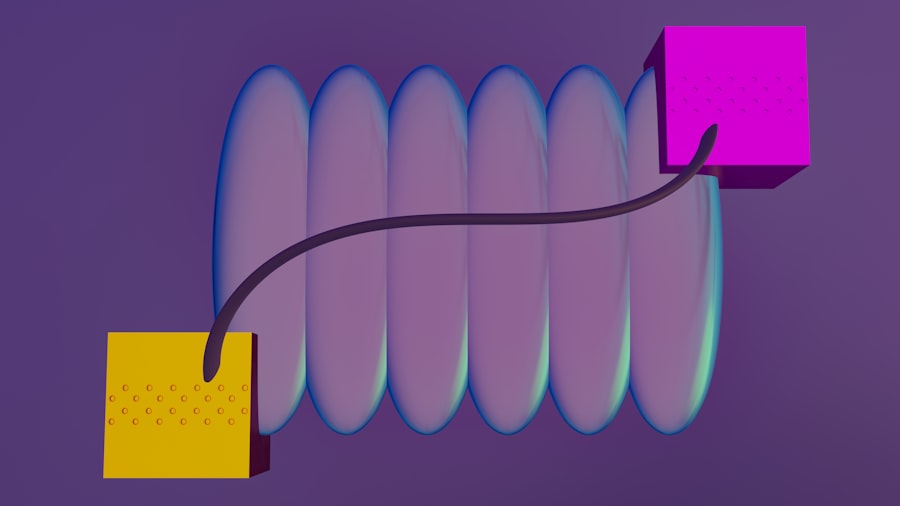
The Casimir effect provides compelling experimental evidence for the reality of vacuum energy. In this phenomenon, two uncharged, parallel conducting plates brought very close together in a vacuum experience an attractive force.
The Mechanism of the Casimir Effect
This force arises because the presence of the plates alters the allowed modes of virtual particle fluctuations within the vacuum. Between the plates, only virtual particles with wavelengths that are multiples of the plate separation can exist. Outside the plates, there are no such restrictions, leading to a higher energy density of virtual particles. This difference in energy density creates an outward pressure on the plates, which manifests as an inward attractive force. It’s akin to putting two perfectly smooth surfaces together; the slight imperfections, in this case quantum fluctuations, create a subtle but measurable force.
Measuring the Casimir Force
Numerous experiments have measured the Casimir force with remarkable precision, confirming its prediction based on the concept of vacuum energy.
Lamb Shift: A Subtle Quantum Effect
The Lamb shift, a tiny difference in energy between two energy levels of the hydrogen atom, is another phenomenon attributed to the interaction of electrons with vacuum fluctuations. These subtle shifts in atomic energy levels are a testament to the dynamic nature of the vacuum.
The Cosmological Constant Problem: A Staggering Discrepancy
While the existence of vacuum energy is experimentally supported, its magnitude presents one of the most significant unresolved problems in theoretical physics: the cosmological constant problem.
Predicting a Colossal Energy Density
When physicists attempt to calculate the total vacuum energy density based on quantum field theory, the result is astronomically large, far exceeding the observed value.
Summing Over All Modes
The theoretical calculation involves summing the zero-point energy of all possible modes (wavelengths) of all quantum fields. This summation, when performed naively, leads to an energy density so immense that it would have caused the universe to expand violently at its earliest moments, crushing any possibility of structure formation. Imagine trying to fill a bathtub with a firehose; the sheer volume of water would overwhelm the tub instantly.
The Fine-Tuning Problem
The discrepancy between the theoretical prediction and the observed cosmological constant implies that there must be an almost perfect cancellation of various contributions to the vacuum energy, a phenomenon known as the fine-tuning problem. This suggests that the universe is incredibly finely tuned to allow for its existence.
Potential Explanations and Ongoing Research
The cosmological constant problem has spurred immense theoretical investigation, with various proposals attempting to reconcile the theoretical predictions with observations.
Supersymmetry
String Theory
String theory, a candidate for a unified theory of everything, offers potential avenues for understanding the vacuum energy. It suggests that fundamental entities are not point-like particles but tiny vibrating strings, and its framework might naturally lead to a cancellation of vacuum energy contributions.
Modifications to Gravity
Some theories explore modifications to Einstein’s theory of general relativity, suggesting that gravity itself might behave differently at cosmic scales, influencing the effective vacuum energy.
Recent studies have delved into the intriguing concept of quantum vacuum and the energy of empty space, revealing how these phenomena could reshape our understanding of the universe. For a deeper exploration of this topic, you can read a related article that discusses the implications of vacuum energy on cosmology and particle physics. This insightful piece can be found here, offering a comprehensive overview of how the seemingly empty void of space is teeming with potential energy and activity.
Applications and Future Prospects: Harnessing the Vacuum
| Metric | Value/Description | Units | Notes |
|---|---|---|---|
| Vacuum Energy Density (Theoretical) | ~10^113 | J/m³ | Predicted by quantum field theory; vastly larger than observed cosmological constant |
| Observed Vacuum Energy Density (Dark Energy) | ~10^-9 | J/m³ | Inferred from cosmological observations; responsible for accelerated expansion of universe |
| Casimir Effect Force | ~10^-7 to 10^-3 | N/m² (Pascal) | Force per unit area between two uncharged plates due to vacuum fluctuations |
| Zero-Point Energy per Mode | ½ ħω | Joules | Energy of each quantum harmonic oscillator mode in vacuum |
| Planck Energy Density | ~10^113 | J/m³ | Energy density at Planck scale, often used as cutoff in vacuum energy calculations |
| Vacuum Fluctuation Frequency Range | 0 to ~10^43 | Hz | Up to Planck frequency, representing highest energy vacuum modes |
While the concept of vacuum energy might seem purely theoretical, it has garnered interest for its potential, albeit speculative, applications.
The Casimir Effect and Micro/Nano-Devices
The Casimir effect, though typically an attractive force, can be modified to become repulsive under certain geometric configurations. This has led to investigations into its potential use in micro- and nano-electromechanical systems (MEMS/NEMS).
Nanoscale Engineering
Researchers are exploring how to engineer Casimir forces to manipulate tiny objects, create new types of sensors, or even as a form of nanoscale propulsion.
Frictionless Bearings
The Casimir effect could, in theory, be harnessed to create frictionless bearings at the nanoscale, a significant technological advancement for precision engineering.
Exotic Energy Sources: A Distant Dream?
The sheer amount of energy contained within the quantum vacuum has fueled speculation about its potential as an energy source. However, extracting this energy presents immense theoretical and practical challenges.
Energy Extraction: The Challenge
The virtual particles of the vacuum are inherently fleeting and exist in a state of dynamic equilibrium. Disrupting this equilibrium to extract net energy requires a deep understanding and manipulation of quantum phenomena that are currently beyond our technological grasp. It’s like trying to drink from a waterfall; the water is abundant, but its chaotic nature makes it incredibly difficult to capture and utilize.
Theoretical Hurdles
Current theoretical frameworks do not offer a clear pathway to macroscopic energy extraction from the vacuum without violating fundamental laws of physics, such as conservation of energy. Any proposed method would require overcoming the inherent tendency of the vacuum to return to its lowest energy state.
The Vacuum and Dark Energy
The vacuum energy may be intrinsically linked to the mysterious phenomenon of dark energy, which is responsible for the accelerating expansion of the universe.
Dark Energy as Vacuum Energy
One of the leading explanations for dark energy is that it represents the energy density of the quantum vacuum itself. If this is the case, the extremely small but non-zero value of dark energy would be the observed manifestation of the vacuum energy, resolving the cosmological constant problem – though the reason for this specific value remains elusive.
Implications for Cosmology
Understanding the vacuum’s role in dark energy has profound implications for the future evolution of the universe, shaping its ultimate fate.
In conclusion, the quantum vacuum, far from being an empty void, is a fundamental and energetic component of the universe. From the subtle dance of virtual particles and the measurable forces they engender, to its potential connection with the mysteries of dark energy, the energy of empty space continues to be a fertile ground for scientific inquiry and a testament to the profound strangeness and beauty of the quantum realm. The ongoing quest to fully unveil its secrets promises to deepen our understanding of the cosmos and perhaps unlock unforeseen possibilities for future technologies.
FAQs
What is the quantum vacuum?
The quantum vacuum refers to the lowest energy state of a quantum field, often described as “empty space.” However, it is not truly empty but filled with fluctuating energy and virtual particles that spontaneously appear and disappear.
How does the quantum vacuum relate to empty space?
Empty space, in classical physics, is considered a void with no matter or energy. In quantum physics, the vacuum is the ground state of a field with inherent energy due to quantum fluctuations, meaning empty space has a measurable energy known as vacuum energy.
What is vacuum energy?
Vacuum energy is the baseline energy present in empty space due to quantum fluctuations. It arises from the temporary creation and annihilation of virtual particle pairs and contributes to phenomena such as the Casimir effect.
Can the energy of the quantum vacuum be measured?
Yes, vacuum energy effects can be indirectly measured through experiments like the Casimir effect, where two uncharged metal plates placed close together experience an attractive force due to changes in vacuum energy between them.
Why is the energy of empty space important in physics?
The energy of empty space plays a crucial role in cosmology and quantum field theory. It is linked to the cosmological constant, which affects the expansion of the universe, and helps explain phenomena such as dark energy and the stability of quantum fields.