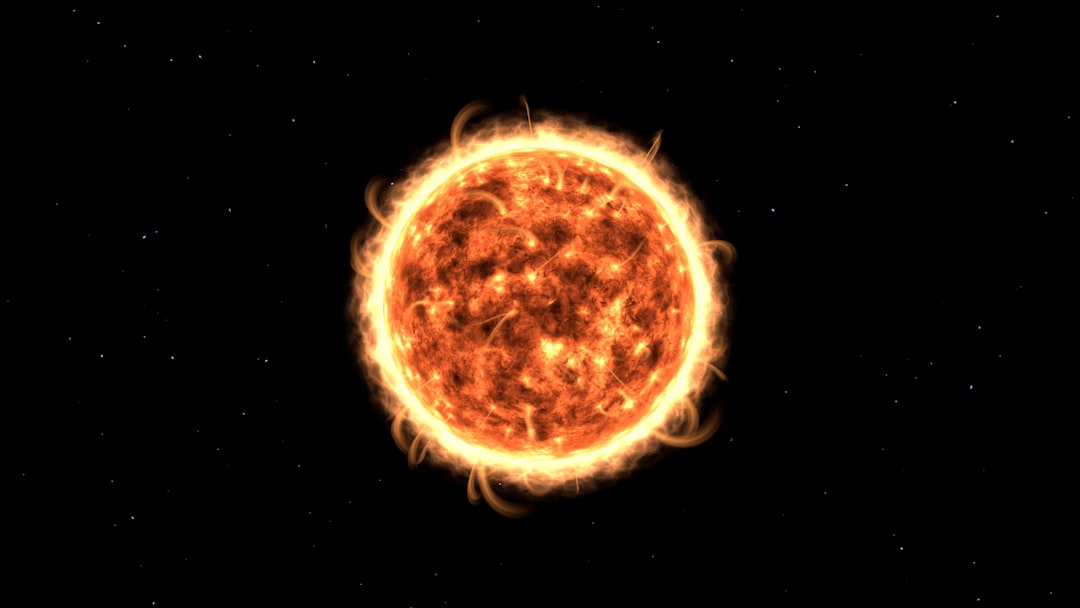
The sun, a celestial furnace that has nurtured life on Earth for billions of years, is not an eternal entity. Like all stars, it too will meet its demise, a process that will ultimately lead to the utter destruction of our planet. This article will explore the inexorable march of time towards this cosmic finale, detailing the stages of the Sun’s life cycle and the catastrophic consequences for Earth.
The Fusion Engine at Work
Currently, the Sun resides in its main sequence phase, a period of remarkable stability. At its core, a prodigious amount of hydrogen is undergoing nuclear fusion, transforming into helium. This process releases an immense amount of energy in the form of light and heat, a constant outpouring that bathes our solar system and facilitates life as we know it. Imagine the Sun as a colossal, ongoing nuclear reaction, a cosmic engine meticulously burning its fuel. Its output is so consistent that for billions of years, it has been an unwavering constant for Earth’s developing biosphere. This sustained energy output has been the bedrock upon which complex ecosystems have been built and civilizations have flourished. However, this stability is not infinite.
The Hydrogen Fuel Reservoir
The Sun’s lifespan is dictated by the amount of hydrogen fuel it possesses. As a star of its size, it has a considerable reserve, but it is not inexhaustible. The rate at which this hydrogen is consumed, while seemingly slow on human timescales, is nonetheless a continuous drain. This ongoing consumption is what powers the Sun’s luminosity and gravitational pull, the very forces that keep Earth in its orbit. Without the constant flux of energy from fusion, the Sun would simply cease to exist as we perceive it.
The Delicate Gravitational Balance
The Sun’s immense gravity is in a perpetual tug-of-war with the outward pressure generated by nuclear fusion. This equilibrium is what maintains the Sun’s spherical shape and its relatively constant size. Any significant disruption to this balance would have immediate and profound consequences. For now, this balance is precisely maintained, a cosmic dance of opposing forces that has allowed for the emergence and evolution of life on Earth.
In exploring the inevitable fate of our planet, it’s fascinating to consider the broader implications of solar evolution. For a deeper understanding of how the sun’s lifecycle will impact Earth and the solar system, you can read a related article titled “The Future of Earth: Solar Evolution and Its Consequences” available at this link. This article delves into the stages of the sun’s development and the eventual changes that will lead to the destruction of our planet, providing valuable insights into the cosmic timeline we face.
The Inevitable Transition: The Red Giant Phase
Running Out of Fuel
The primary driver of the Sun’s evolution is the depletion of hydrogen in its core. When the core’s hydrogen supply dwindles to a critical point, the fusion process there will begin to falter. This marks the end of the Sun’s main sequence life. It is akin to a meticulously managed refinery finally running out of its primary raw material. The meticulous production line of energy begins to sputter.
Core Contraction and Shell Burning
As fusion in the core ceases, gravity will begin to compress it, causing it to heat up. This increased temperature will ignite a shell of hydrogen surrounding the inert helium core, initiating hydrogen fusion in this new region. This “shell burning” phase is more energetic than core burning and will cause the Sun’s outer layers to expand dramatically. The Sun will start to swell, a gentle but inexorable bloating that will begin to encroach upon the inner solar system.
The Sun’s Transformation into a Red Giant
The expansion of the Sun’s outer layers will cause its surface temperature to decrease, giving it a reddish hue. This is the red giant phase. The Sun will become significantly larger, engulfing Mercury and Venus. Its luminosity will increase, and its habitable zone will shift outwards, scorching the inner planets. Earth, though not immediately engulfed, will experience devastating temperature increases. Imagine the Sun as a balloon being relentlessly inflated, its once bright, focused beam of light expanding and weakening, becoming a diffused, oppressive heat.
The Sun’s Lethal Embrace: Engulfment of Earth

The Escalating Expansion
As the Sun continues its expansion into a red giant, its radius will grow exponentially. Predictions suggest that its outer atmosphere will reach or exceed Earth’s current orbital distance. At this point, Earth will be drawn closer to the Sun, its orbital path becoming increasingly unstable. The familiar comfort of our planet’s orbit will unravel like a poorly woven tapestry.
The Fiery Kiss
Once Earth crosses the threshold of the Sun’s expanding atmosphere, it will be directly exposed to its superheated outer layers. The planet will experience an unprecedented and unimaginable increase in temperature. The oceans will boil away into space, the atmosphere will be stripped, and the very rock of the planet will begin to melt and vaporize. This is not a gradual warming; it is an apocalyptic vaporization, a swift and total erasure.
The Orbital Fate of Earth
The gravitational interaction between the expanding Sun and Earth, along with the sheer force of the Sun’s outer layers, will likely cause Earth’s orbit to decay rapidly. Instead of a gentle drift, Earth will be pulled inexorably towards the Sun’s core. Some models suggest Earth may be completely vaporized before it can truly be “swallowed” whole, its constituent atoms dispersing into the Sun’s immense plasma.
The Sun’s Later Stages: Helium Burning and Beyond

Helium Fusion Ignites
After the red giant phase, the Sun’s core will become hot and dense enough to begin fusing helium into carbon and oxygen. This helium fusion will provide a temporary respite, stabilizing the Sun for a period. However, this phase is significantly shorter than the main sequence hydrogen burning. This is like the furnace temporarily switching from burning coal to burning a smaller batch of wood – it provides heat, but for a limited time.
Further Expansion and Instability (Asymptotic Giant Branch)
Following the helium fusion phase, the Sun will enter the Asymptotic Giant Branch (AGB) phase. It will expand even further, becoming larger and more luminous than it was during its red giant phase. During this stage, the Sun will experience significant mass loss due to stellar winds, shedding its outer layers into space. This is a period of extreme instability, where the Sun’s output fluctuates wildly.
The Planetary Nebula
As the Sun sheds its outer layers, it will form a beautiful, glowing shell of gas and dust known as a planetary nebula. This nebula, illuminated by the hot core of the dying star, will be a spectacular but brief celestial phenomenon. It is the swan song of the Sun, a final, radiant display before its ultimate collapse. While visually stunning, it represents the final stages of its energetic life.
As scientists continue to study the long-term fate of our planet, a fascinating article discusses the various stages of the sun’s evolution and its eventual impact on Earth. This piece highlights how the sun will enter its red giant phase, leading to dramatic changes in our solar system. For more insights on this topic, you can read the article on cosmic phenomena and their implications for Earth at My Cosmic Ventures. Understanding these processes not only sheds light on our future but also emphasizes the importance of protecting our planet in the present.
The Sun’s Final Demise: A White Dwarf
| Event | Timeframe | Description | Impact on Earth |
|---|---|---|---|
| Sun’s Hydrogen Depletion | ~5 billion years from now | The Sun exhausts hydrogen in its core, ending the main sequence phase. | Gradual increase in solar luminosity, causing Earth’s temperature to rise. |
| Red Giant Phase | ~5 to 7 billion years from now | The Sun expands massively, becoming a red giant star. | Earth’s surface temperature rises drastically; oceans evaporate; atmosphere stripped. |
| Engulfment of Earth | ~7.5 billion years from now | The Sun’s outer layers expand beyond Earth’s orbit. | Earth is likely engulfed and vaporized by the Sun’s outer layers. |
| Planetary Nebula Formation | ~7.5 to 8 billion years from now | The Sun sheds its outer layers, creating a planetary nebula. | Earth no longer exists; only the Sun’s core remains as a white dwarf. |
| White Dwarf Stage | After ~8 billion years | The Sun becomes a dense, cooling white dwarf star. | No impact on Earth as it has been destroyed. |
The Core’s Collapse
After expelling its outer layers, the Sun’s core will collapse under its own gravity. It will become incredibly dense and hot, forming a white dwarf. A white dwarf is the remnant of a star that has exhausted its nuclear fuel. It is essentially a stellar ember, slowly cooling over billions of years. Imagine the incandescent coals left after a massive bonfire has burned out.
A Fading Ember in the Void
A white dwarf is no longer undergoing fusion. It shines due to its residual heat. Over immense timescales, it will continue to radiate away its energy, eventually becoming a cold, dark black dwarf. The Sun, in its white dwarf stage, will be a tiny, dense object, a mere memory of its former glory. Its gravitational influence will still be present, but its power to sustain life will be long gone.
The End of the Solar System as We Know It
With the Sun’s transformation into a white dwarf, the solar system will be a vastly different and inhospitable place. The planets that survived the red giant phase will be left in perpetual darkness, their surfaces frozen and desolate, orbiting a dim, cooling ember. The vibrant, dynamic solar system we inhabit will be reduced to a cold, silent graveyard of celestial bodies. The Sun’s ultimate destruction of Earth, therefore, is not a single cataclysmic event at a specific moment but a protracted process, a slow burn that culminates in the obliteration of our home world. The lessons from this cosmic narrative underscore the transient nature of even the most fundamental elements of our existence and the profound, albeit distant, cosmic forces that govern our destiny.
FAQs
1. How will the sun eventually destroy the Earth?
The sun will eventually destroy the Earth during its red giant phase, which is expected to occur in about 5 billion years. As the sun exhausts its hydrogen fuel, it will expand dramatically, potentially engulfing the inner planets, including Earth, and causing the planet to be incinerated or stripped of its atmosphere.
2. When will the sun enter its red giant phase?
The sun is predicted to enter its red giant phase in approximately 5 billion years. This phase marks the end of the sun’s stable hydrogen-burning period and the beginning of its expansion and increased luminosity.
3. What changes will occur on Earth as the sun expands?
As the sun expands, the increased heat and radiation will cause Earth’s surface temperatures to rise drastically, leading to the evaporation of oceans, loss of atmosphere, and the eventual sterilization or destruction of the planet’s surface.
4. Can Earth avoid destruction by the sun’s expansion?
Current scientific understanding suggests that Earth is unlikely to avoid destruction or severe alteration during the sun’s red giant phase. The planet may be engulfed or rendered uninhabitable due to extreme heat and solar activity.
5. What happens to the sun after the red giant phase?
After the red giant phase, the sun will shed its outer layers, creating a planetary nebula, and its core will collapse into a white dwarf. This white dwarf will gradually cool over billions of years, no longer supporting life on any nearby planets.