
The concept of the habitable zone, often referred to as the “Goldilocks Zone,” has captivated scientists and the public alike for decades. This region around a star is characterized by conditions that are just right for liquid water to exist on a planet’s surface, a crucial ingredient for life as we know it. The habitable zone is not merely a theoretical construct; it serves as a guiding principle in the search for extraterrestrial life.
As astronomers discover more exoplanets, understanding the parameters that define this zone becomes increasingly vital. The traditional view of the habitable zone has been shaped by our own solar system, particularly the conditions found on Earth and its neighboring planets. However, as research progresses, it becomes clear that the definition of the habitable zone is far more complex than initially thought.
Factors such as stellar type, planetary atmosphere, and even geological activity play significant roles in determining whether a planet can support life. This article will explore the traditional parameters that have defined the habitable zone, the limitations of these parameters, and the new factors that are emerging in the ongoing quest to understand where life might exist beyond Earth.
Key Takeaways
- The habitable zone is the region around a star where conditions may be right for liquid water to exist on the surface of an orbiting planet.
- Traditional parameters for life in the habitable zone include distance from the star, size and type of the star, and the planet’s atmosphere and composition.
- Limitations of traditional habitable zone parameters include the potential for habitable moons around gas giants and the impact of stellar activity on a planet’s habitability.
- New factors for redefining the habitable zone include the planet’s magnetic field, plate tectonics, and the presence of a stable climate.
- Stellar activity, such as flares and radiation, can impact a planet’s habitability and must be considered when defining the habitable zone.
Traditional Parameters for Life in the Habitable Zone
Traditionally, the habitable zone has been defined primarily by two key parameters: distance from a star and stellar luminosity. The distance from a star determines the amount of energy a planet receives, which in turn influences its surface temperature. For instance, Earth orbits within the habitable zone of the Sun, where temperatures allow for liquid water to exist.
The concept relies heavily on the idea that a planet must be at a specific distance from its star to maintain conditions conducive to life. Stellar luminosity is another critical factor in this equation. Different types of stars emit varying amounts of energy, which affects the habitable zone’s boundaries.
For example, a cooler star like a red dwarf will have a closer habitable zone compared to a hotter star like a blue giant. This understanding has led astronomers to categorize stars and their corresponding habitable zones, providing a framework for identifying potentially habitable exoplanets. However, while these parameters have served as a foundation for astrobiological studies, they do not encompass the full complexity of what makes a planet truly habitable.
Limitations of Traditional Habitable Zone Parameters
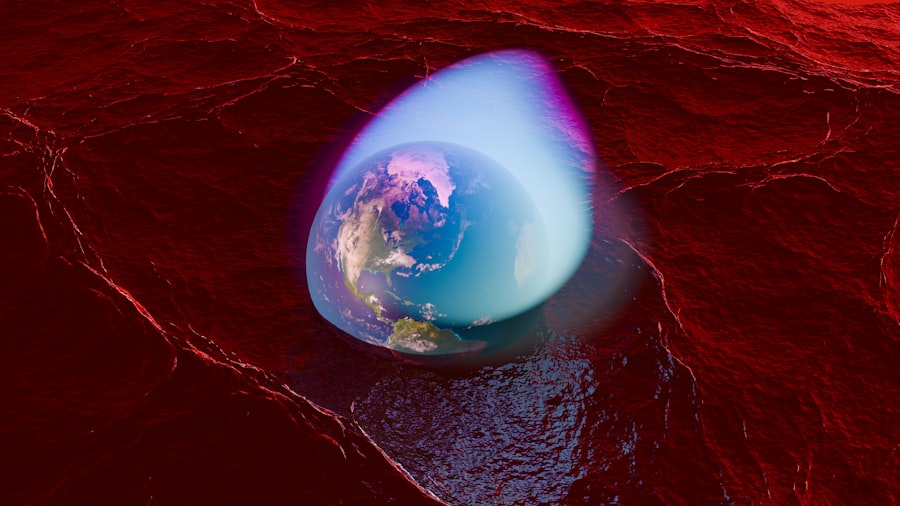
Despite their utility, traditional parameters for defining the habitable zone have significant limitations. One major drawback is that they often oversimplify the conditions necessary for life. For instance, while distance from a star is crucial, it does not account for other environmental factors such as atmospheric composition or geological activity.
A planet may lie within the habitable zone yet possess an atmosphere that is too thin or toxic to support life. Moreover, traditional models typically assume that all planets within the habitable zone will have similar conditions to Earth. This assumption can be misleading, as planets can exhibit vastly different climates and geological features even if they orbit at similar distances from their stars.
For example, Venus and Earth are both located within the Sun’s habitable zone, yet their environments are starkly different due to variations in atmospheric pressure and composition. Such discrepancies highlight the need for a more nuanced understanding of habitability that goes beyond mere distance and luminosity.
New Factors for Redefining the Habitable Zone
| Factor | Description |
|---|---|
| Distance from star | The distance at which a planet orbits its star, affecting its temperature and potential for liquid water. |
| Atmospheric composition | The gases present in a planet’s atmosphere, influencing its ability to support life. |
| Surface water availability | The presence of liquid water on the planet’s surface, a key factor for habitability. |
| Stellar radiation | The type and amount of radiation emitted by the planet’s star, impacting the planet’s climate and potential for life. |
As research into exoplanets advances, scientists are beginning to recognize additional factors that should be considered when redefining the habitable zone. One such factor is planetary atmosphere. The composition and thickness of an atmosphere can significantly influence surface conditions, including temperature and pressure.
A thick atmosphere rich in greenhouse gases can trap heat and create conditions suitable for liquid water, even if a planet is located at the outer edge of its star’s habitable zone. Another emerging factor is geological activity. Planets with active geology may have internal heat sources that can sustain liquid water beneath their surfaces, even in environments where surface temperatures would otherwise be too low for habitability.
This insight broadens the scope of potential habitats beyond those strictly defined by distance from a star. By incorporating these new factors into the definition of the habitable zone, researchers can better identify planets that may harbor life in diverse environments.
Impact of Stellar Activity on Habitable Zone Parameters
Stellar activity plays a crucial role in shaping the conditions within a star’s habitable zone. Variations in stellar output due to solar flares or magnetic activity can significantly impact a planet’s atmosphere and surface conditions. For instance, increased stellar activity can strip away a planet’s atmosphere over time, rendering it inhospitable to life.
Conversely, stable stellar environments may provide more favorable conditions for habitability. The type of star also influences how stellar activity affects habitability. For example, red dwarfs are known for their flares and variability, which can pose challenges for planets within their habitable zones.
Understanding these dynamics is essential for accurately assessing whether a planet can maintain conditions suitable for life over extended periods. As researchers delve deeper into stellar activity’s impact on habitability, they are uncovering new insights that could reshape our understanding of where life might thrive in the universe.
The Role of Planetary Atmosphere in Habitable Zone Definition

The atmosphere of a planet is one of the most critical components in determining its potential for habitability. A robust atmosphere can regulate temperature, protect against harmful radiation, and provide essential gases for life processes. For instance, Earth’s atmosphere contains nitrogen and oxygen, which are vital for sustaining life as we know it.
In contrast, planets with thin or toxic atmospheres may struggle to support any form of life. Moreover, atmospheric pressure plays a significant role in determining whether liquid water can exist on a planet’s surface. A higher atmospheric pressure can lower the boiling point of water, allowing it to remain liquid at higher temperatures.
This factor is particularly relevant when considering exoplanets that may orbit closer to their stars than Earth does to the Sun.
Importance of Planetary Composition in Habitable Zone Definition
Planetary composition is another crucial aspect that influences habitability within the context of the habitable zone. The materials that make up a planet can determine its geological activity, magnetic field strength, and ability to retain an atmosphere—all factors essential for supporting life. For example, rocky planets with sufficient mass may possess geological processes that recycle nutrients and maintain stable climates over geological timescales.
Additionally, the presence of essential elements such as carbon, hydrogen, nitrogen, oxygen, phosphorus, and sulfur is vital for forming complex organic molecules necessary for life. Understanding how these elements are distributed within a planet’s composition can provide insights into its potential for habitability. As researchers continue to explore exoplanets’ compositions through spectroscopy and other techniques, they are uncovering new possibilities for where life might exist beyond Earth.
The Search for Life Beyond the Traditional Habitable Zone
The ongoing search for extraterrestrial life has prompted scientists to look beyond traditional definitions of the habitable zone. As they discover exoplanets in diverse environments—some located far outside conventional habitable zones—researchers are beginning to consider alternative forms of life that may thrive under different conditions. For instance, some scientists speculate about the potential for life on icy moons like Europa or Enceladus, where subsurface oceans may harbor microbial ecosystems despite being located far from their parent stars.
This expanded perspective challenges preconceived notions about what constitutes a habitable environment and encourages researchers to explore unconventional habitats. By broadening their search criteria and considering planets with unique characteristics—such as those with thick atmospheres or active geology—scientists may uncover new avenues for discovering life beyond Earth.
Implications for Astrobiology and Exoplanet Research
The evolving understanding of the habitable zone has profound implications for astrobiology and exoplanet research. As scientists refine their definitions and criteria for habitability, they can develop more targeted strategies for identifying potentially life-supporting planets in distant star systems. This shift could lead to more efficient use of resources in future missions aimed at exploring exoplanets.
Furthermore, recognizing that life may exist in diverse forms and environments encourages interdisciplinary collaboration among researchers from various fields—such as geology, atmospheric science, and biology—to develop comprehensive models of habitability. By integrating knowledge from multiple disciplines, scientists can create more robust frameworks for understanding where life might thrive beyond Earth.
Challenges and Opportunities in Redefining the Habitable Zone
Redefining the habitable zone presents both challenges and opportunities for researchers in astrobiology and planetary science. One significant challenge lies in developing accurate models that incorporate new factors influencing habitability while still being applicable across various star systems and planetary environments. Balancing complexity with usability will be crucial as scientists strive to create frameworks that can guide future explorations.
On the other hand, this redefinition opens up exciting opportunities for discovery. By embracing a broader understanding of habitability, researchers can explore previously overlooked regions of space and investigate planets with unconventional characteristics. This shift could lead to groundbreaking discoveries about life’s potential diversity in the universe and reshape humanity’s understanding of its place within it.
Future Directions in the Study of Habitable Zone Parameters
Looking ahead, future research will likely focus on refining models of habitability by incorporating new data from ongoing exoplanet surveys and missions. As telescopes become more advanced and capable of characterizing distant worlds’ atmospheres and compositions, scientists will gain valuable insights into what makes these planets suitable—or unsuitable—for life. Additionally, interdisciplinary collaboration will play an increasingly important role in shaping future studies on habitability.
By bringing together experts from various fields—such as astrophysics, planetary geology, and biology—researchers can develop comprehensive models that account for multiple factors influencing habitability across diverse environments. In conclusion, redefining the habitable zone is an ongoing journey that reflects humanity’s quest to understand life’s potential beyond Earth. As scientists continue to explore new parameters and factors influencing habitability, they pave the way for exciting discoveries that could reshape our understanding of life in the universe.
In recent discussions about the redefinition of the habitable zone, a fascinating article titled “Exploring New Frontiers in Space” delves into the implications of this shift for future space exploration. The article, available on My Cosmic Ventures, provides insights into how the updated criteria for habitable zones could influence the search for extraterrestrial life and the selection of exoplanets for further study. For more detailed information, you can read the full article by visiting Exploring New Frontiers in Space.
WATCH THIS! The Secret Ocean of Europa: Why NASA is Hunting for Alien Life Beneath the Ice
FAQs
What is the habitable zone?
The habitable zone, also known as the Goldilocks zone, is the region around a star where conditions are just right for the existence of liquid water on the surface of a planet.
How has the habitable zone been redefined?
The habitable zone has been redefined to take into account factors such as the greenhouse effect and the presence of a planet’s atmosphere, which can affect its potential to support life.
Why is it important to redefine the habitable zone?
Redefining the habitable zone allows scientists to more accurately assess the potential for life on exoplanets and to broaden the search for habitable worlds beyond our solar system.
What are the implications of redefining the habitable zone?
By considering a wider range of factors, the redefined habitable zone may lead to the discovery of more exoplanets with the potential to support life, increasing our understanding of the prevalence of habitable worlds in the universe.