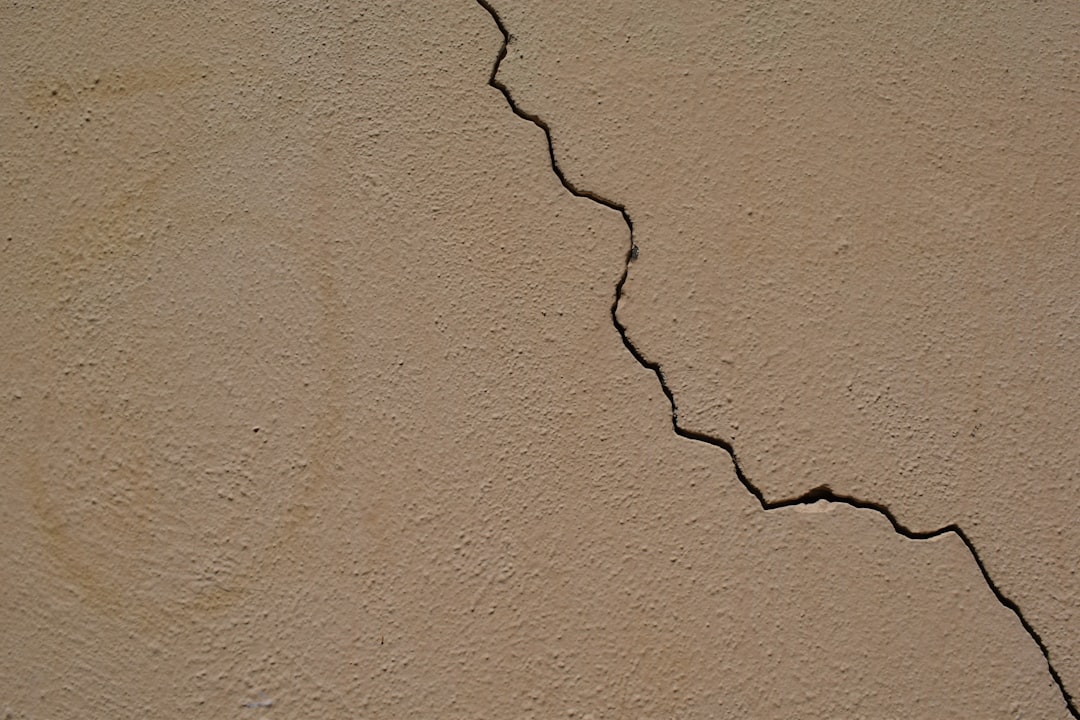
Europa, one of Jupiter’s most intriguing moons, has captivated scientists and astronomers alike with its enigmatic surface features. Among these features are the striking cracks that crisscross its icy exterior, hinting at the dynamic processes occurring beneath. These fissures, which can stretch for hundreds of kilometers, are not merely superficial; they suggest a complex interplay of geological forces that may reveal secrets about the moon’s history and its potential to harbor life.
As researchers delve deeper into the mysteries of Europa, the cracks serve as a focal point for understanding not only the moon itself but also the broader implications for astrobiology and planetary science. The allure of Europa’s cracks lies in their potential to unlock answers about the moon’s subsurface ocean, which is believed to exist beneath its thick icy shell. This ocean may contain more than twice the amount of water found on Earth, making Europa a prime candidate in the search for extraterrestrial life.
The cracks, with their intricate patterns and varying depths, provide a window into the processes that shape Europa’s surface and hint at the dynamic environment that could support life. As scientists continue to study these features, they are piecing together a narrative that could redefine humanity’s understanding of life beyond our planet.
Key Takeaways
- Europa’s mysterious cracks have fascinated scientists for decades, sparking curiosity about the potential for life beneath its icy surface.
- The discovery of Europa’s surface features, including its intricate network of cracks and ridges, has raised questions about the moon’s geological history and potential for habitability.
- Scientists believe that Europa’s icy crust may harbor a subsurface ocean, making it a prime candidate for hosting extraterrestrial life.
- Theories about the formation of Europa’s cracks range from geological processes to the influence of tidal forces from Jupiter.
- Tidal forces from Jupiter play a crucial role in shaping Europa’s surface, causing flexing and heating that may contribute to the formation of its cracks.
- The search for water beneath Europa’s surface is a key focus of future exploration missions, as it could provide valuable insights into the moon’s potential for hosting life.
- Europa’s cracks have significant implications for future exploration missions, as they may offer access to the moon’s subsurface ocean and the possibility of discovering extraterrestrial life.
- Exploring Europa’s icy surface presents numerous challenges, including the need for specialized technology to withstand its harsh environment and navigate its treacherous terrain.
- Future missions to explore Europa’s cracks hold great potential for advancing our understanding of the moon’s geology and potential for hosting life beyond Earth.
- Understanding Europa’s geology is crucial for astrobiology, as it provides valuable insights into the conditions necessary for life to exist beyond our planet.
- The ongoing mystery of Europa’s cracks continues to captivate scientists and space exploration enthusiasts, driving the pursuit of future missions to unlock the secrets of this enigmatic moon.
The discovery of Europa’s surface features
The first hints of Europa’s intriguing surface features emerged from observations made by the Galileo spacecraft during its mission in the late 1990s. High-resolution images revealed a landscape marked by a series of linear features and ridges, sparking interest in the moon’s geological history. These observations were groundbreaking, as they suggested that Europa was not a static body but rather one undergoing significant geological activity.
The discovery of these surface features prompted further investigation into their origins and implications for the moon’s potential habitability. Subsequent studies have revealed that Europa’s surface is not only characterized by its cracks but also by a variety of other features, including chaotic terrains and ridges. These formations indicate a complex interplay of tectonic processes and possibly even cryovolcanism.
The diversity of surface features suggests that Europa has experienced significant geological changes over time, raising questions about the moon’s internal structure and the nature of its subsurface ocean. As researchers continue to analyze data from past missions and prepare for future explorations, the understanding of Europa’s surface features remains a key area of focus.
The potential for life beneath Europa’s icy crust

One of the most compelling aspects of Europa is its potential to harbor life beneath its icy crust. The presence of a subsurface ocean, combined with the necessary chemical ingredients for life, makes this moon an exciting target for astrobiological research. Scientists speculate that if life exists on Europa, it could take forms vastly different from those found on Earth, adapted to the unique conditions of its oceanic environment.
The exploration of Europa’s cracks may provide vital clues about the chemical interactions occurring beneath the ice, which could support microbial life. The potential for life on Europa is further bolstered by the moon’s geophysical characteristics. The interaction between the ocean and the rocky mantle beneath could create a rich environment for chemical reactions, similar to those found in Earth’s deep-sea hydrothermal vents.
These vents are known to support diverse ecosystems, thriving in complete darkness and relying on chemosynthesis rather than photosynthesis. If similar processes occur on Europa, it could mean that life has not only emerged but also evolved in isolation for billions of years, offering a unique perspective on life’s resilience and adaptability in extreme environments.
Theories about the formation of Europa’s cracks
| Theories | Description |
|---|---|
| Tidal forces | The gravitational pull of Jupiter and other moons may cause flexing and heating of Europa’s interior, leading to the formation of cracks. |
| Subsurface ocean | It is believed that Europa has a subsurface ocean, and the movement of this ocean beneath the icy crust could contribute to the formation of cracks. |
| Impact events | Collisions with other celestial bodies could create fractures on Europa’s surface. |
| Geological activity | Internal geological processes, such as tectonic movements, may also play a role in the formation of cracks on Europa. |
The formation of Europa’s cracks has been a subject of intense study and debate among scientists. Several theories have been proposed to explain how these features came to be, each offering insights into the moon’s geological processes. One prevailing theory suggests that the cracks are formed as a result of tidal forces exerted by Jupiter’s immense gravitational pull.
As Europa orbits Jupiter, it experiences significant variations in gravitational stress, which can cause the icy surface to flex and crack. Another theory posits that thermal processes may play a role in crack formation. As heat generated from tidal flexing warms the ice shell, it could lead to melting and subsequent refreezing, creating fractures in the surface.
This process may be further influenced by the presence of liquid water beneath the ice, which could facilitate movement and contribute to the development of these fissures. Understanding the mechanisms behind crack formation is crucial for interpreting Europa’s geological history and assessing its potential for habitability.
The role of tidal forces in shaping Europa’s surface
Tidal forces are central to understanding Europa’s dynamic geology. The gravitational pull from Jupiter not only influences Europa’s orbit but also generates significant internal heat through tidal flexing. This heat is believed to be responsible for maintaining a subsurface ocean beneath the icy crust, as well as driving geological activity on the surface.
The constant tug-of-war between Jupiter and Europa creates an environment where ice can crack and shift, leading to the formation of the distinctive surface features observed today. The impact of tidal forces extends beyond mere crack formation; they also play a crucial role in shaping Europa’s overall landscape. As the moon undergoes continuous deformation due to these gravitational interactions, it experiences cycles of stretching and compressing that can lead to various geological phenomena.
By studying these tidal effects, scientists can gain valuable insights into the processes that govern not only Europa but also other icy bodies within our solar system.
The search for water beneath Europa’s surface
The quest to understand Europa’s potential for life hinges on the search for water beneath its icy surface. Scientists believe that a vast ocean exists beneath the thick layer of ice, possibly containing more water than all of Earth’s oceans combined. This subsurface ocean is thought to be in contact with Europa’s rocky mantle, creating an environment rich in chemical interactions that could support life.
The exploration of Europa’s cracks may provide critical access points to study this hidden ocean and its potential inhabitants. Recent missions have focused on developing technologies capable of penetrating Europa’s icy crust to confirm the presence of liquid water beneath. Instruments designed to analyze ice samples or detect plumes of water vapor ejected from the surface could offer direct evidence of subsurface water reservoirs.
Understanding the distribution and composition of this water is essential for assessing its habitability and determining whether it contains organic compounds necessary for life. As scientists refine their methods and prepare for future missions, the search for water remains a top priority in unraveling Europa’s mysteries.
The implications of Europa’s cracks for future exploration missions
The presence of cracks on Europa’s surface has significant implications for future exploration missions aimed at uncovering its secrets. These fissures may serve as natural pathways to access the subsurface ocean, providing scientists with opportunities to study its composition and potential habitability without having to drill through kilometers of ice. By targeting these cracks during future missions, researchers can maximize their chances of obtaining valuable data about what lies beneath.
Moreover, understanding the distribution and characteristics of these cracks can inform mission design and landing site selection. Identifying areas where cracks are more prevalent could lead to more efficient exploration strategies, allowing spacecraft to gather samples or conduct analyses in regions most likely to yield insights into Europa’s geology and potential for life. As plans for missions like NASA’s Europa Clipper take shape, the focus on these surface features will be crucial in guiding exploration efforts.
The challenges of exploring Europa’s icy surface
Despite the excitement surrounding exploration missions to Europa, significant challenges remain in studying its icy surface. The harsh environmental conditions present formidable obstacles for spacecraft and instruments designed to operate in such an extreme environment. The intense radiation from Jupiter poses risks to electronic systems, necessitating robust shielding and careful engineering to ensure mission success.
Additionally, landing on an icy surface presents unique difficulties compared to other celestial bodies like Mars or the Moon. The thickness and variability of Europa’s ice shell make it challenging to predict landing conditions accurately. Furthermore, any mission must account for potential hazards such as crevasses or unstable ice formations that could jeopardize lander operations.
Overcoming these challenges requires innovative engineering solutions and thorough planning to ensure that future missions can successfully navigate and explore this intriguing moon.
The potential for future missions to explore Europa’s cracks
The prospect of future missions dedicated to exploring Europa’s cracks is both exciting and promising. NASA’s upcoming Europa Clipper mission aims to conduct detailed reconnaissance of Europa’s ice shell and subsurface ocean from orbit, utilizing advanced instruments capable of analyzing surface composition and detecting signs of habitability. By focusing on areas with prominent cracks, scientists hope to gather critical data that could shed light on the moon’s geological history and potential for supporting life.
In addition to orbital missions like Clipper, there is growing interest in developing landers or even penetrators designed specifically to access Europa’s subsurface ocean through its cracks. Such missions would allow scientists to directly sample materials from beneath the ice, providing invaluable insights into the chemical makeup of this hidden environment. As technology advances and our understanding of Europa deepens, the potential for groundbreaking discoveries about this enigmatic moon continues to expand.
The importance of understanding Europa’s geology for astrobiology
Understanding Europa’s geology is paramount for astrobiology as it provides context for evaluating its potential habitability. The intricate relationship between geological processes and chemical interactions within its subsurface ocean can reveal whether conditions are suitable for life as we know it—or even forms we have yet to imagine. By studying features like cracks and ridges, scientists can infer how energy flows through this icy world and how it might sustain biological processes.
Moreover, insights gained from Europa’s geology can inform broader questions about life beyond Earth. By examining how geological activity influences habitability on other celestial bodies—such as Enceladus or Titan—scientists can develop models that predict where life might exist elsewhere in our solar system or beyond. Thus, exploring Europa’s geology not only enhances our understanding of this particular moon but also contributes significantly to our quest for extraterrestrial life across the cosmos.
the ongoing mystery of Europa’s cracks
The cracks on Europa’s surface remain one of the most captivating mysteries in planetary science today. They serve as both a testament to the moon’s dynamic geological history and a beacon guiding future exploration efforts aimed at uncovering its secrets. As scientists continue to investigate these fissures—unraveling their origins and implications—they inch closer to answering fundamental questions about life beyond Earth.
With upcoming missions poised to explore these enigmatic features more closely than ever before, there is hope that humanity will soon gain deeper insights into what lies beneath Europa’s icy crust. Whether or not life exists within its hidden ocean remains uncertain; however, each discovery brings researchers one step closer to understanding this extraordinary moon—and perhaps even our place within the universe itself.
Europa, one of Jupiter’s intriguing moons, has long fascinated scientists with its mysterious surface features, particularly its enigmatic cracks. These cracks are believed to be caused by the gravitational interactions with Jupiter, leading to tidal flexing that heats Europa’s interior and possibly maintains a subsurface ocean. For those interested in exploring more about the fascinating phenomena of Europa and other celestial bodies, you might find this com/’>article on cosmic ventures insightful.
It delves into the latest research and theories surrounding the icy moon and its potential to harbor life beneath its frozen crust.
WATCH THIS! The Secret Ocean of Europa: Why NASA is Hunting for Alien Life Beneath the Ice
FAQs
What are the mysterious cracks on Europa?
Europa, one of Jupiter’s moons, has a network of mysterious cracks on its surface. These cracks are believed to be caused by the tidal forces exerted by Jupiter, which cause the moon’s icy surface to stretch and crack.
How were the cracks on Europa discovered?
The cracks on Europa were first discovered in images taken by the Voyager spacecraft in the 1970s. Subsequent missions, such as the Galileo spacecraft, have provided more detailed images and data about these features.
What do scientists believe is the cause of the cracks on Europa?
Scientists believe that the cracks on Europa are caused by the gravitational forces exerted by Jupiter. These forces cause the moon’s icy surface to flex and crack, similar to the way tides on Earth cause the ocean to rise and fall.
What do the cracks on Europa indicate about its interior?
The presence of the cracks on Europa suggests that there is a subsurface ocean of liquid water beneath the moon’s icy crust. The tidal forces from Jupiter may be causing the ice to crack and shift, allowing glimpses of the liquid water below.
Could the cracks on Europa be a potential location for life?
The presence of a subsurface ocean on Europa, indicated by the cracks on its surface, has led scientists to speculate that the moon could potentially harbor life. The liquid water and the chemical energy from the interaction between the rocky core and the ocean could create a habitable environment for microbial life.