
Time dilation is a fascinating phenomenon that arises from the principles of relativity, fundamentally altering the way time is perceived under different conditions. At its core, time dilation suggests that time does not flow at a constant rate for all observers; rather, it can vary depending on relative speed and gravitational fields. This concept challenges the intuitive understanding of time as a uniform and absolute entity, revealing that it is, in fact, a malleable dimension influenced by the laws of physics.
The implications of time dilation extend far beyond theoretical physics; they touch upon the very fabric of reality as experienced by individuals. For instance, when an object moves at a significant fraction of the speed of light, time for that object slows down relative to a stationary observer. Similarly, the stronger the gravitational field an object is in, the slower time passes for it compared to an observer in a weaker gravitational field.
This means that astronauts traveling at high speeds or residing in strong gravitational fields would age more slowly than their counterparts on Earth, leading to profound questions about the nature of time and existence.
Key Takeaways
- Time dilation is the phenomenon where time passes at different rates in different conditions, as predicted by Einstein’s theory of relativity.
- The theory of time dilation is based on the concept that time is not absolute, but rather relative to the observer’s frame of reference.
- Understanding time dilation in space is crucial for space missions, as it can affect the synchronization of clocks and the aging of astronauts.
- Time dilation has significant implications for Mars missions, as the time difference between Earth and Mars can impact communication and coordination.
- Time dilation affects space travel by causing discrepancies in time between travelers and those on Earth, which can complicate mission planning and coordination.
The Theory of Time Dilation
The theory of time dilation is rooted in Albert Einstein’s groundbreaking work on relativity, which fundamentally reshaped the understanding of space and time. Einstein’s special theory of relativity, introduced in 1905, posits that the laws of physics are the same for all observers, regardless of their relative motion. One of the most striking consequences of this theory is that as an object approaches the speed of light, time for that object slows down relative to an observer at rest.
This effect has been confirmed through numerous experiments, including those involving atomic clocks flown on high-speed jets. Einstein’s general theory of relativity, published in 1915, further expanded on these ideas by incorporating gravity into the equation. It posits that massive objects warp the fabric of spacetime around them, causing time to pass more slowly in stronger gravitational fields.
This means that a clock situated near a massive body, such as a planet or star, will tick more slowly than a clock located far away from such influences. Together, these theories provide a comprehensive framework for understanding how time can be experienced differently based on speed and gravity.
Understanding Time Dilation in Space

In the context of space travel, time dilation becomes particularly significant due to the vast distances and extreme velocities involved. As spacecraft venture beyond Earth’s atmosphere and approach relativistic speeds—those close to the speed of light—time dilation effects become pronounced. For astronauts aboard such vessels, their experience of time would diverge dramatically from that of people remaining on Earth.
This divergence raises intriguing questions about aging and the passage of time during long-duration missions. For example, if a spacecraft were to travel to a distant star at near-light speed, the crew might experience only a few years of travel time while decades or even centuries could pass on Earth. This scenario illustrates not only the relativistic effects of speed but also highlights the potential for significant temporal discrepancies between travelers and those left behind.
Understanding these effects is crucial for planning future missions and ensuring that astronauts are prepared for the realities of time as they journey through space.
Implications for Mars Missions
| Challenges | Solutions |
|---|---|
| Radiation exposure | Developing better shielding technology |
| Long-duration space travel | Researching effects of microgravity on human body |
| Supply resupplies | Creating sustainable life support systems |
| Communication delays | Improving real-time communication technology |
As humanity sets its sights on Mars exploration, the implications of time dilation become increasingly relevant. A mission to Mars could involve travel times ranging from six months to over a year, depending on the alignment of Earth and Mars and the technology used for propulsion. While these durations may seem manageable from a human perspective, they also introduce complexities related to time dilation that must be considered in mission planning.
For instance, if astronauts were to travel at speeds approaching a significant fraction of light speed during their journey to Mars, they would experience less passage of time compared to people on Earth. This could lead to challenges in coordinating activities with mission control back home, as decisions made on Earth would be based on a different temporal framework than those experienced by the astronauts. Additionally, understanding how time dilation affects communication delays and mission timelines will be essential for ensuring successful operations on Mars.
How Time Dilation Affects Space Travel
Time dilation affects not only the astronauts’ experience but also the broader implications for space travel itself. As missions extend beyond Mars and into deeper space exploration—such as potential journeys to exoplanets—time dilation will play an increasingly critical role in mission design and execution. The longer the duration of travel and the higher the velocities achieved, the more pronounced these effects will become.
Moreover, time dilation raises questions about the psychological and physiological impacts on astronauts during extended missions. The knowledge that they are aging more slowly than their loved ones back on Earth could lead to feelings of isolation or disconnection from life back home. Addressing these psychological aspects will be vital for maintaining crew morale and ensuring successful long-term missions.
The Challenges of Time Dilation for Astronauts
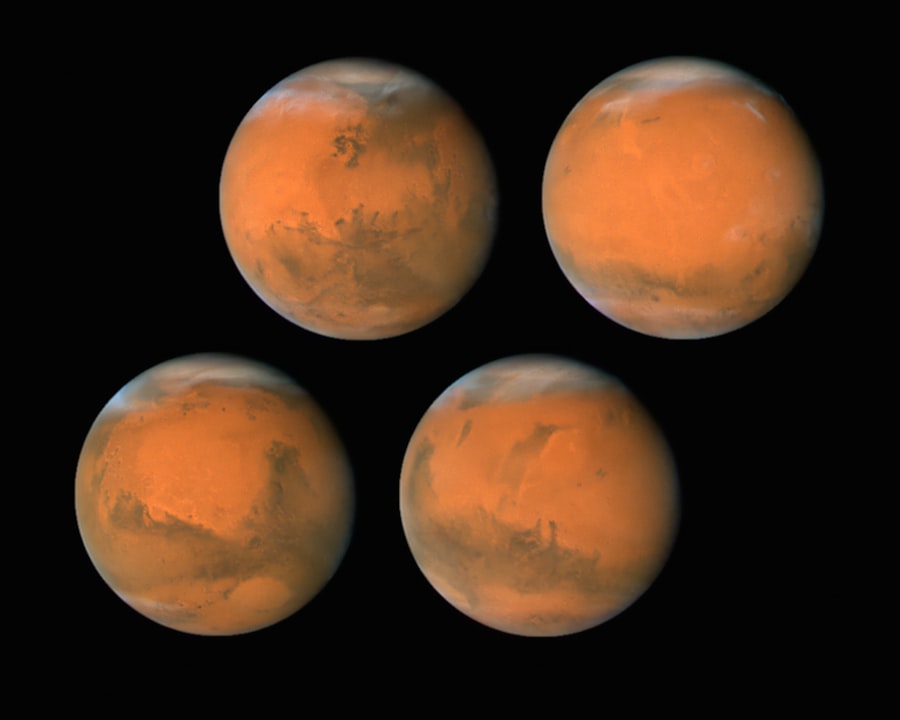
The challenges posed by time dilation extend beyond mere calculations; they encompass emotional and psychological dimensions as well. Astronauts embarking on long-duration missions may grapple with the reality that their experiences are not aligned with those of their families and friends back on Earth. The potential for significant age differences upon return could create complex emotional dynamics that need to be addressed before embarking on such journeys.
Additionally, there are practical challenges associated with managing mission timelines in light of time dilation effects. Coordinating scientific experiments, communication with mission control, and even scheduling recreational activities will require careful planning to account for discrepancies in perceived time between astronauts and those on Earth. These challenges necessitate innovative solutions and robust support systems to ensure that astronauts remain connected to their lives back home while navigating the complexities of space travel.
Mitigating the Effects of Time Dilation
To mitigate the effects of time dilation during space missions, researchers and engineers are exploring various strategies that could help synchronize experiences between astronauts and those on Earth. One approach involves optimizing spacecraft speeds to minimize relativistic effects while still achieving efficient travel times. By carefully balancing propulsion technologies and mission profiles, it may be possible to reduce the extent of time dilation experienced by astronauts.
Developing advanced algorithms that can predict and adjust for delays caused by relativistic effects could help maintain smoother interactions between astronauts and mission control. Furthermore, fostering strong psychological support systems will be essential in helping astronauts cope with any emotional challenges arising from their unique temporal experiences.
The Future of Mars Missions
As humanity prepares for future Mars missions, understanding and addressing time dilation will be paramount in ensuring success. With advancements in propulsion technology and mission planning strategies, it is possible to design missions that take into account both the physical realities of space travel and the psychological well-being of astronauts. By prioritizing research into time dilation effects, space agencies can better prepare crews for the challenges they will face during their journeys.
Moreover, as exploration extends beyond Mars to other celestial bodies or even interstellar destinations, the implications of time dilation will only grow more complex. Future missions may require innovative solutions that blend cutting-edge technology with a deep understanding of human psychology and experience in order to navigate the intricacies of time as it relates to space travel.
Time Dilation and Interplanetary Communication
Interplanetary communication presents its own set of challenges when considering time dilation effects. As spacecraft travel farther from Earth or move at high velocities, communication delays can become significant due to both distance and relativistic effects. For instance, messages sent from Earth to Mars can take anywhere from three to twenty minutes to arrive, depending on their relative positions in orbit.
When factoring in time dilation, these delays can become even more pronounced during high-speed travel or when operating within strong gravitational fields. This necessitates careful planning for communication protocols that account for these delays while ensuring that astronauts receive timely information and support from mission control. Developing robust communication systems capable of adapting to these challenges will be essential for maintaining effective collaboration between crews and ground teams.
Time Dilation and the Human Experience in Space
The human experience in space is profoundly shaped by the realities of time dilation. As astronauts embark on long-duration missions, they must grapple with not only the physical challenges posed by microgravity but also the psychological implications of experiencing time differently than those on Earth. The knowledge that they are aging more slowly can create feelings of disconnection from loved ones and life back home.
Moreover, this altered perception of time can influence how astronauts approach their work and leisure activities during missions. Understanding how individuals adapt to these changes will be crucial for designing effective support systems that promote mental well-being while fostering a sense of connection with Earthbound lives.
Ethical and Philosophical Considerations of Time Dilation
The ethical and philosophical implications of time dilation raise profound questions about identity, existence, and human relationships. As astronauts experience different rates of aging compared to those on Earth, issues surrounding personal identity may arise—how does one reconcile their own experience with that of loved ones who have aged at a different rate? These questions challenge traditional notions of continuity and connection within human relationships.
Furthermore, as humanity ventures further into space exploration, ethical considerations surrounding potential disparities in experiences between travelers and those remaining on Earth must be addressed.
In conclusion, time dilation is not merely an abstract concept confined to theoretical physics; it has tangible implications for space exploration and human experience.
As humanity embarks on ambitious missions to Mars and beyond, understanding this phenomenon will be crucial for navigating both the physical realities of space travel and the emotional complexities faced by astronauts as they journey through time and space.
In the context of future Mars missions, one intriguing aspect that scientists and engineers must consider is the effect of time dilation, a consequence of Einstein’s theory of relativity. As spacecraft travel at high speeds through space, time aboard the vessel can pass differently compared to time on Earth. This phenomenon could have significant implications for communication and mission planning. For a deeper understanding of how time dilation might impact interplanetary travel, you can explore a related article on the topic by visiting