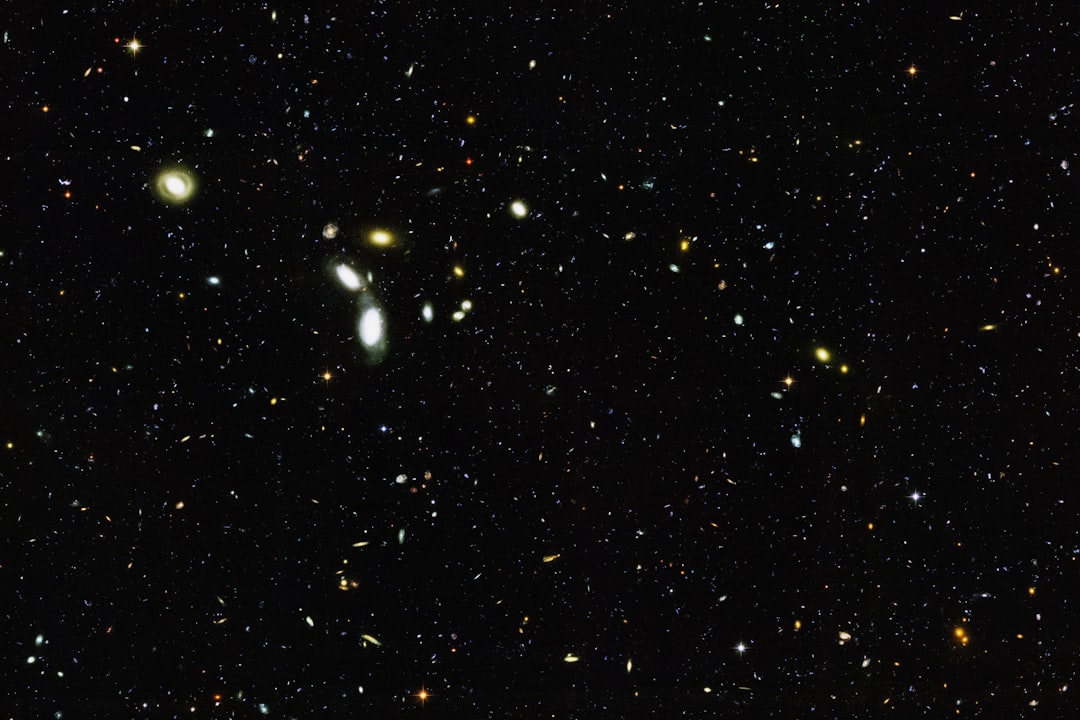
The universe, in its grand and enigmatic expanse, presents a cosmic conundrum that has perplexed scientists for decades: the observed gravitational effects that seem to defy the amount of visible matter. This discrepancy has given rise to two prominent, yet fundamentally different, theoretical frameworks attempting to explain these phenomena: the Cold Dark Matter (CDM) paradigm and modified gravity theories. Both endeavor to account for the rotational curves of galaxies, gravitational lensing, and the large-scale structure of the cosmos, but they diverge significantly in their proposed solutions. This article will delve into the intricacies of this ongoing scientific debate, exploring the foundations, evidence, and challenges faced by each theory.
The prevailing cosmological model, Lambda-CDM (ΛCDM), posits the existence of an invisible, non-baryonic form of matter that interacts only gravitationally. This “dark matter” is a cornerstone of the model, crucial for explaining a wide array of astrophysical and cosmological observations.
The Missing Mass Problem
For decades, astronomers have observed that galaxies rotate faster than expected based on the visible matter they contain. If the gravitational pull were solely from stars, gas, and dust, galaxies would spin apart. This led to the initial hypothesis of a substantial amount of unseen mass, later christened “dark matter.”
- Rotational Curves of Galaxies: Vera Rubin’s pioneering work in the 1970s revealed flat rotation curves for spiral galaxies, extending far beyond the region where visible matter dominates. This implies a halo of unseen mass surrounding these galaxies.
- Galaxy Clusters: Observations of galaxy clusters, such as the Bullet Cluster, show a clear separation between the gravitational potential (inferred from lensing) and the distribution of baryonic matter (hot gas emitting X-rays). This provides compelling evidence for a non-collisional, gravitationally interacting component.
- Cosmic Microwave Background (CMB): The anisotropies in the CMB, the faint afterglow of the Big Bang, are precisely predicted by the ΛCDM model, which includes a significant component of dark matter and dark energy. The peaks and troughs in the CMB power spectrum constrain the relative abundances of baryonic matter, dark matter, and dark energy.
Properties of Cold Dark Matter
Within the CDM framework, several key characteristics are attributed to this mysterious substance. “Cold” refers to its presumed low velocity, meaning it was non-relativistic when structure formation began.
- Non-Baryonic: Dark matter is not composed of protons and neutrons, the building blocks of ordinary matter. This is supported by Big Bang nucleosynthesis, which accurately predicts the abundance of light elements based on the amount of baryonic matter.
- Non-Interacting (except gravitationally): CDM is assumed to interact very weakly, if at all, with electromagnetic forces. This explains why it is “dark” and does not emit or absorb light.
- Collisionless: Dark matter particles are thought to rarely collide with each other or with ordinary matter, aside from gravitational interactions. This property is crucial for explaining the observed distribution of dark matter halos.
In the ongoing debate between cold dark matter and modified gravity theories, a fascinating article explores the implications of each approach on our understanding of the universe’s structure and evolution. This discussion is crucial for astrophysicists as they seek to explain phenomena such as galaxy formation and cosmic expansion. For a deeper insight into this topic, you can read more in the article available at My Cosmic Ventures.
The Modified Gravity Alternative
In contrast to the dark matter hypothesis, modified gravity theories propose that our understanding of gravity itself is incomplete. Instead of introducing a new, exotic form of matter, these theories suggest that Einstein’s theory of General Relativity needs to be altered or extended, particularly in regimes of low acceleration or large scales.
MOND: A Historical Precedent
One of the earliest and most well-known modified gravity theories is Modified Newtonian Dynamics (MOND), proposed by Mordehai Milgrom in 1983. MOND posits a deviation from Newtonian gravity at very low accelerations, typically below a characteristic acceleration scale, $a_0 \approx 1.2 \times 10^{-10} \text{ m/s}^2$.
- Milgrom’s Acceleration Scale: Below $a_0$, the gravitational force is enhanced, leading to stronger gravitational effects than predicted by Newtonian gravity for a given amount of visible mass. This naturally explains the flat rotation curves of galaxies without invoking dark matter.
- Empirical Successes: MOND has been remarkably successful in reproducing the observed rotation curves of a wide variety of galaxies, often with fewer free parameters than dark matter models. It provides a direct link between the baryonic mass of a galaxy and its rotation curve.
- Limitations of MOND: While successful at galactic scales, MOND faces challenges at larger scales, such as galaxy clusters, and has difficulty explaining phenomena like gravitational lensing and the cosmic microwave background without additional modifications or components.
Beyond MOND: Relativistic Extensions
The success of MOND at galactic scales spurred the development of relativistic versions of modified gravity that can be embedded within a cosmological framework, aiming to address the shortcomings of classical MOND.
- Tensor-Vector-Scalar (TeVeS) Gravity: TeVeS, proposed by Jacob Bekenstein, is a relativistic theory of modified gravity that reduces to MOND in the non-relativistic limit. It introduces scalar and vector fields in addition to the metric tensor, allowing it to account for gravitational lensing and reproduce the CMB spectrum.
- f(R) Gravity: These theories generalize Einstein’s General Relativity by replacing the Ricci scalar $R$ in the Einstein-Hilbert action with an arbitrary function of $R$, denoted as $f(R)$. This can lead to deviations from General Relativity at large scales or in weak gravitational fields.
- Emergent Gravity: Some theoretical approaches propose that gravity itself is an emergent phenomenon, arising from more fundamental microscopic degrees of freedom, rather than a fundamental force. This opens up entirely new avenues for modified gravity scenarios.
Evidence and Challenges for Cold Dark Matter

While the CDM model enjoys significant observational support, it is not without its own set of challenges and outstanding puzzles.
Triumphs of ΛCDM
The ΛCDM model has proven to be an incredibly robust framework, successfully explaining a vast array of cosmological observations.
- Large-Scale Structure Formation: Numerical simulations based on CDM accurately reproduce the observed distribution of galaxies and galaxy clusters on large scales, forming a “cosmic web” of filaments and voids.
- Cosmic Microwave Background (CMB): As mentioned previously, the anisotropies in the CMB are a strong pillar of the ΛCDM model, constraining the parameters of the universe with remarkable precision.
- Gravitational Lensing: The bending of light by massive objects (gravitational lensing) is consistent with the predictions of dark matter halos surrounding galaxies and galaxy clusters. The strength of the lensing effects often requires more mass than is visible.
The “Small-Scale Crisis”
Despite its triumphs, CDM faces several challenges, particularly on galactic and sub-galactic scales, often referred to as the “small-scale crisis.”
- Cusp-Halo Problem: CDM simulations predict that dark matter halos should have a dense, cuspy center, with a steeply rising density profile. However, observations of dwarf galaxies and low-surface-brightness galaxies seem to indicate shallower “cored” profiles.
- Missing Satellites Problem: CDM simulations predict a much larger number of small-scale dark matter subhalos around Milky Way-sized galaxies than the number of observed dwarf galaxies. This suggests either that many dark matter halos remain “dark” or that the CDM model overpredicts their abundance.
- Too Big To Fail Problem: Some of the most massive predicted dark matter subhalos around the Milky Way should host brightly observable galaxies according to CDM. However, observations show that the brightest observed satellite galaxies are often hosted by less massive subhalos than predicted.
Evidence and Challenges for Modified Gravity

Modified gravity theories, while offering an alternative to dark matter, also face their own hurdles and require careful scrutinization against observational data.
Explanatory Power at Galactic Scales
The primary motivation for modified gravity often stems from its ability to explain galactic dynamics without the need for dark matter.
- Baryonic Tully-Fisher Relation: MOND naturally explains the tight correlation between the luminosity (and thus baryonic mass) of a spiral galaxy and its rotational velocity, known as the Baryonic Tully-Fisher relation. This relation is a fundamental prediction of MOND.
- Radial Acceleration Relation (RAR): Observations show a clear and tight relationship between the observed centripetal acceleration in a galaxy and the acceleration predicted by its baryonic mass. This “Radial Acceleration Relation” is a direct prediction of MOND and has been verified across a wide range of galaxies.
Challenges for Modified Gravity
While MOND and its relativistic extensions demonstrate success at galactic scales, they struggle to provide a consistent explanation for all cosmological phenomena.
- Cosmic Microwave Background (CMB): Reproducing the observed anisotropies in the CMB spectrum without dark matter is a significant challenge for most modified gravity theories. While some relativistic MOND theories attempt this, it often requires additional exotic components or fine-tuning.
- Galaxy Clusters and Gravitational Lensing: The Bullet Cluster, where baryonic matter and gravitational potential are spatially separated, poses a significant problem for modified gravity. If gravity is simply altered, then the gravitational potential should track the baryonic mass more closely. Modified gravity theories often require some form of “phantom dark matter” or complex interactions to explain such observations.
- Formation of Large-Scale Structure: Simulating the formation of the cosmic web and the distribution of galaxy clusters within modified gravity theories often proves more challenging than within the CDM framework, which naturally produces such structures.
The ongoing debate between cold dark matter and modified gravity continues to capture the attention of physicists and cosmologists alike. Recent discussions have highlighted the implications of these theories on our understanding of the universe’s structure and evolution. For those interested in a deeper exploration of this topic, you can read a related article that delves into the nuances of these competing theories and their potential to explain cosmic phenomena. This insightful piece can be found here.
Direct Detection and the Future of Dark Matter
| Aspect | Cold Dark Matter (CDM) | Modified Gravity (MG) |
|---|---|---|
| Basic Concept | Postulates existence of non-luminous, non-baryonic matter that interacts gravitationally | Modifies the laws of gravity to explain observed phenomena without dark matter |
| Explanation of Galaxy Rotation Curves | Dark matter halo provides additional gravitational pull to explain flat rotation curves | Gravity laws altered at low accelerations to produce flat rotation curves without extra matter |
| Cosmic Microwave Background (CMB) Fit | Excellent fit with ΛCDM model, matching observed anisotropies | Generally poorer fit; requires additional assumptions or parameters |
| Large Scale Structure Formation | Simulations reproduce observed galaxy distribution and clustering | Challenges in reproducing observed large scale structure without dark matter |
| Bullet Cluster Observation | Supports CDM: separation of visible matter and gravitational lensing mass | Problematic: difficult to explain lensing without dark matter |
| Parameter Constraints | Dark matter density parameter ΩDM ≈ 0.27 (Planck 2018) | Modified gravity parameters vary; no consensus on universal values |
| Predictive Power | Strong predictive framework within ΛCDM cosmology | Less predictive; often phenomenological and model-dependent |
| Current Status | Standard cosmological model; widely accepted | Alternative theories under active research; not mainstream |
The ongoing search for direct evidence of dark matter particles is a crucial aspect of the CDM paradigm. If dark matter can be directly detected, it would provide undeniable evidence for its existence.
Experimental Searches
Numerous experiments worldwide are designed to detect dark matter particles through various mechanisms.
- Weakly Interacting Massive Particles (WIMPs): Historically, WIMPs have been the leading dark matter candidate. Experiments like XENONnT and LUX-ZEPLIN attempt to detect the faint recoil of nuclei caused by the scattering of WIMPs.
- Axions: Axions are another prominent candidate, hypothetical particles proposed to solve the strong CP problem in quantum chromodynamics. Experiments like ADMX search for axions converting into photons in strong magnetic fields.
- Other Candidates: The landscape of dark matter candidates is vast, including sterile neutrinos, primordial black holes, and feebly interacting massive particles (FIMPs), each with dedicated experimental programs.
The Null Results Problem
Despite decades of intense experimental effort, there has been no definitive direct detection of dark matter particles. This lack of direct evidence fuels skepticism and motivates continued exploration of alternative explanations, including modified gravity.
- Increasing Sensitivity: Experiments are continuously pushing the boundaries of sensitivity, probing smaller interaction cross-sections and wider mass ranges for dark matter candidates.
- Theoretical Reassessment: The absence of WIMP detections has led to a re-evaluation of WIMP parameter space and a renewed focus on alternative dark matter candidates that might interact even more weakly or have different detection signatures.
Towards a Unified Understanding
The debate between Cold Dark Matter and modified gravity is a vibrant and crucial one in modern astrophysics and cosmology. Both frameworks aim to solve the same cosmic mystery, but through fundamentally different lenses.
The Complementary Nature of the Debate
It is important to remember that science often progresses through such vigorous debates. The challenges faced by CDM spur ingenuity in proposing solutions (e.g., self-interacting dark matter or warm dark matter) or new detection strategies. Similarly, the difficulties encountered by modified gravity at larger scales motivate further refinement and development of these theories.
- Beyond the Dichotomy: It is also plausible that the ultimate solution might involve elements from both approaches. Perhaps dark matter exists, but gravity also exhibits modifications in certain regimes, or perhaps dark matter’s properties are slightly different than currently assumed.
- The Power of Observation: Ultimately, future astronomical observations and meticulous experimental results will be the arbiters of this ongoing debate. New telescopes, more precise measurements of the CMB, and continued efforts in direct and indirect dark matter detection will provide crucial data points to guide theoretical development. The universe, in its intricate workings, holds the answers, and it is up to the scientific community to patiently and rigorously unravel its secrets.

WARNING: NASA’s Dark Matter Secret Revealed
FAQs
What is cold dark matter?
Cold dark matter (CDM) is a form of matter that does not emit, absorb, or reflect light, making it invisible to current electromagnetic observations. It is called “cold” because its particles move slowly compared to the speed of light. CDM is hypothesized to make up about 27% of the universe’s total mass-energy content and plays a crucial role in the formation of galaxies and large-scale structures.
What is modified gravity?
Modified gravity refers to a set of theories that propose changes or extensions to Einstein’s General Relativity to explain cosmic phenomena without invoking dark matter. These theories attempt to modify the laws of gravity at large scales to account for observed gravitational effects, such as galaxy rotation curves and gravitational lensing, that cannot be fully explained by visible matter alone.
How do cold dark matter and modified gravity differ in explaining galaxy rotation curves?
Cold dark matter explains galaxy rotation curves by positing an unseen halo of dark matter surrounding galaxies, providing the additional gravitational pull needed to keep stars moving at observed speeds. Modified gravity theories, on the other hand, suggest that the laws of gravity themselves change at galactic scales, eliminating the need for dark matter to explain these rotation curves.
What observational evidence supports cold dark matter over modified gravity?
Observations such as the cosmic microwave background radiation, large-scale structure formation, and gravitational lensing patterns generally support the cold dark matter model. For example, the distribution of galaxies and the anisotropies in the cosmic microwave background align well with predictions from CDM simulations. While modified gravity can explain some galactic phenomena, it struggles to account for these cosmological observations comprehensively.
Are cold dark matter and modified gravity mutually exclusive theories?
Not necessarily. While traditionally viewed as competing explanations, some researchers explore hybrid models that incorporate aspects of both cold dark matter and modified gravity. These approaches aim to address limitations in each theory and provide a more complete understanding of gravitational phenomena across different scales.