
The scientific community has long been captivated by black holes, not merely for their enigmatic nature and gravitational dominance, but for their potential as unparalleled engines of compression. While currently residing in the realm of theoretical physics and speculative engineering, the sheer density and gravitational forces within a black hole offer an intriguing framework for discussing hyper-efficient data storage and material compaction. This article explores the conceptual underpinnings of harnessing black holes for such purposes, examining both the scientific principles involved and the formidable challenges to their practical application.
Black holes represent the ultimate manifestation of gravity’s power. Their defining characteristic is a region of spacetime from which nothing, not even light, can escape. This phenomenon arises from the immense concentration of mass into an incredibly small volume, creating an extraordinarily intense gravitational field.
Event Horizon and Singularity
The event horizon marks the boundary of no return, a sphere around the black hole where the escape velocity exceeds the speed of light. Any information or matter crossing this boundary is, for all practical purposes, lost to the external universe. Deeper within, the singularity is predicted by general relativity as a point of infinite density and curvature, where the laws of physics as currently understood break down. While the nature of the singularity remains a subject of intense debate, its conceptual existence underscores the extreme compression at play.
Spacetime Distortion
The presence of a black hole significantly distorts the fabric of spacetime. Imagine spacetime as a stretched rubber sheet; a black hole would be a heavy bowling ball placed upon it, creating a deep well. This distortion is not merely theoretical; it is precisely what causes the immense gravitational pull. This extreme warping of spacetime is a fundamental aspect of its compressive power, literally shrinking the dimensions around it.
Recent studies have proposed intriguing theories about black holes functioning as cosmic compression engines, where they may play a crucial role in the formation and evolution of galaxies. For a deeper understanding of this fascinating concept, you can explore the article titled “Black Holes: The Universe’s Compression Engines” available at this link. This article delves into how the immense gravitational forces of black holes could influence the surrounding matter, potentially leading to the creation of new stars and the recycling of cosmic material.
Theoretical Foundations of Black Hole Compression
The idea of a black hole as a compression engine stems directly from its fundamental properties. The capacity to condense vast amounts of mass, energy, or information into a minuscule volume is inherent to its very existence.
Data Storage at the Planck Scale
One of the most radical applications conceived is data storage. Current digital data relies on physical bits, often magnetic domains or electronic states. A black hole, particularly a microscopic one, could theoretically store an astonishing amount of information. The Bekenstein-Hawking entropy formula connects a black hole’s entropy (a measure of disorder or information content) to its surface area. This suggests that the event horizon acts as a kind of information “skin,” holding data at a fundamental, quantum level.
Material Compaction to Unprecedented Densities
Beyond data, the concept extends to material compaction. Imagine taking a large volume of matter and subjecting it to gravitational forces so intense that its constituent atoms are crushed beyond recognition, not into a different phase of matter, but into a state where quantum gravity effects dominate. This goes beyond the neutron degeneracy pressure found in neutron stars, pushing towards densities where atomic structures completely collapse. The challenge, of course, lies in controlling such a process without forming an actual, uncontrollable black hole.
Challenges and Limitations: The Unyielding Power

While the theoretical allure is strong, the practical implementation of a black hole compression engine faces insurmountable challenges given current technological capabilities and fundamental physical laws.
Creating and Controlling Micro Black Holes
The most plausible (though still highly speculative) scenario involves micro black holes. These are hypothetical black holes with masses significantly smaller than stellar black holes, potentially on the scale of a mountain or even an asteroid. Creating such objects artificially would require energy levels far beyond anything currently achievable, perhaps requiring particle accelerators of astronomical scales. Even if created, their stability and control pose immense problems.
Hawking Radiation and Evaporation
Hawking radiation is a theoretical phenomenon where black holes emit particles due to quantum effects near the event horizon. For micro black holes, this radiation would be significant, leading to their rapid evaporation and release of immense energy. This would make them inherently unstable and difficult to maintain as a long-term storage or compression mechanism. The smaller the black hole, the faster it evaporates. This acts as a severe impediment to long-term data storage applications, as the “compressed” information would quickly be radiated away.
Tidal Forces and Spaghettification
Any object approaching a black hole experiences extreme tidal forces. The differential gravitational pull across the object would be so immense that it would be stretched and torn apart, a process vividly termed “spaghettification.” This makes controlled insertion of material or data into a black hole for compression a non-trivial, if not impossible, task without the destruction of the very thing being compressed. The integrity of the object or data structure would be compromised long before reaching critical compression levels.
Energy Demands for Manipulating Spacetime
To manipulate spacetime and control a black hole’s properties for compression purposes would require an understanding and mastery of gravity far beyond our current capabilities. The energy demands would be staggering, akin to attempting to reshape the universe itself. This transcends conventional engineering and delves into the realm of advanced theoretical physics, possibly requiring technologies that harness quantum gravitational effects.
Conceptual Frameworks for Utilization
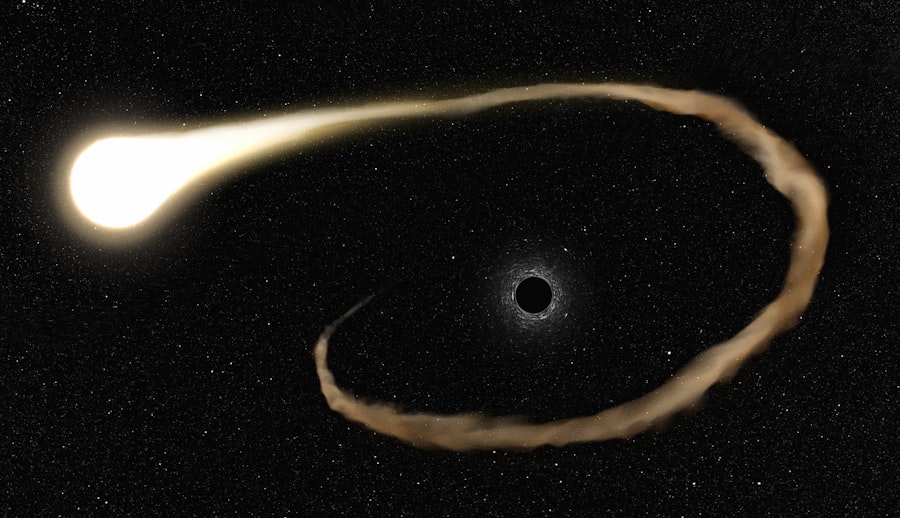
Despite the immense challenges, theoretical physicists continue to explore conceptual frameworks for how such an engine might operate, should the impossible become possible.
Information Encoding at the Event Horizon
One idea revolves around encoding information directly onto the event horizon. If the Bekenstein-Hawking entropy formula holds true for information, then the information isn’t “inside” the black hole in the conventional sense, but is imprinted on its boundary. This perspective shifts the focus from destroying matter within the singularity to manipulating the informational properties of spacetime itself at its most extreme threshold. This could involve manipulating the quantum states of the event horizon, a highly abstract concept.
Stabilized Micro Black Hole Engines
For material compression, a hypothetical stabilized micro black hole engine might involve an elaborate containment system that constantly “feeds” the black hole while simultaneously drawing off its output (perhaps exotic matter, energy, or controlled radiation) in a way that bypasses total destruction. This would require an unparalleled understanding of extreme physics and energy manipulation, effectively building a mini-universe within a controlled environment. The energy input would need to precisely balance the Hawking radiation output to maintain a stable size.
Gravitational Wave Manipulation
Another highly speculative concept involves using focused gravitational waves to create transient, localized regions of extreme compression without forming a full-fledged black hole. Imagine generating intense ripples in spacetime that momentarily squeeze matter to incredible densities, then release it. This would be like a cosmic hydraulic press, powered by gravity itself. The energy required to generate such powerful, focused gravitational waves remains a major hurdle.
Recent research has suggested that black holes may function as natural compression engines, significantly influencing the structure of the universe. This fascinating concept is explored in detail in an article on cosmic phenomena, which delves into the implications of black holes on space-time and matter. For those interested in learning more about this intriguing topic, you can read the full article here. The idea that these enigmatic entities could play a role in compressing information and matter opens up new avenues for understanding the fundamental workings of our universe.
Ethical and Philosophical Implications
| Metric | Value | Unit | Description |
|---|---|---|---|
| Mass of Black Hole | 10 | Solar Masses | Typical stellar black hole mass used in compression engine models |
| Event Horizon Radius | 30 | Kilometers | Radius of the event horizon for a 10 solar mass black hole |
| Compression Ratio | 10^15 | Dimensionless | Estimated matter density increase due to black hole compression |
| Energy Extraction Efficiency | 0.42 | Fraction | Maximum theoretical efficiency of energy extraction from a rotating black hole |
| Hawking Radiation Temperature | 6.17 x 10^-9 | Kelvin | Temperature of Hawking radiation for a 10 solar mass black hole |
| Accretion Disk Temperature | 10^7 | Kelvin | Typical temperature of matter in the accretion disk around a black hole |
| Power Output | 10^39 | Watts | Estimated power output from accretion processes in a black hole compression engine |
The pursuit of black hole compression raises profound ethical and philosophical questions, extending beyond the mere technical feasibility.
The Problem of Information Retrieval
Should information ever be successfully “compressed” into a black hole, the question of retrieval emerges as a formidable barrier. The very nature of the event horizon dictates that information cannot pass back outwards. This implies a one-way trip, rendering any stored information inaccessible. While theoretical physicists debate the “information paradox” and potential non-destructive retrieval mechanisms, no clear solution exists.
Unforeseen Consequences and Existential Risks
The power involved in creating and manipulating black holes, even micro ones, carries the potential for catastrophic unforeseen consequences. A失控 micro black hole could grow rapidly, consuming its surroundings and posing an existential threat to planets or even star systems. The risks associated with such technology would necessitate an unprecedented level of control and understanding before any practical application could even be contemplated. The sheer scale of energy involved implies that even minor miscalculations could have profound, irreversible impacts.
The Nature of Reality and Information
The profound implications of black hole compression challenge our very understanding of information and the nature of reality. If information can be encoded onto the event horizon and potentially lost from our universe, it forces a re-evaluation of fundamental principles like conservation of information. This delves into the deepest questions of theoretical physics, blurring the lines between information, energy, and the fabric of spacetime itself.
Conclusion: A Frontier of Unattainable Promise
The concept of harnessing black holes as ultimate compression engines remains firmly within the realm of theoretical physics and speculative engineering. While the intrinsic properties of black holes – their extraordinary density, gravitational prowess, and spacetime distortion – offer a tantalizing vision of unparalleled compression capabilities for both data and matter, the scientific and technological hurdles are immense, if not insurmountable, given our current understanding of the universe. From the colossal energy requirements for their creation and control to the fundamental challenges of information retrieval and the existential risks they pose, black holes serve as a powerful reminder of the extreme limits of physics. They represent a frontier of exploration where the promise of ultimate efficiency is inextricably linked with an equally ultimate challenge, pushing the boundaries of what is conceivable in the grand tapestry of cosmic phenomena.
FAQs
What is a black hole?
A black hole is a region in space where gravity is so strong that nothing, not even light, can escape from it. It forms when a massive star collapses under its own gravity at the end of its life cycle.
How can a black hole act as a compression engine?
A black hole acts as a compression engine by pulling in matter and compressing it into an extremely small and dense point called a singularity. The intense gravitational forces compress the matter to densities far beyond those found in normal stars.
What happens to matter when it falls into a black hole?
When matter falls into a black hole, it is pulled toward the singularity and compressed to extremely high densities. Before crossing the event horizon, matter heats up and emits radiation, but once inside, it is trapped and contributes to the black hole’s mass.
Can energy be extracted from a black hole’s compression process?
Yes, energy can be extracted from the area around a black hole, particularly from the accretion disk where matter is heated and accelerated before falling in. Processes like the Penrose mechanism theoretically allow extraction of rotational energy from spinning black holes.
Why are black holes important for understanding physics?
Black holes are important because they represent extreme conditions where gravity, quantum mechanics, and relativity intersect. Studying them helps scientists understand fundamental physics, including the behavior of matter under extreme compression and the nature of spacetime.