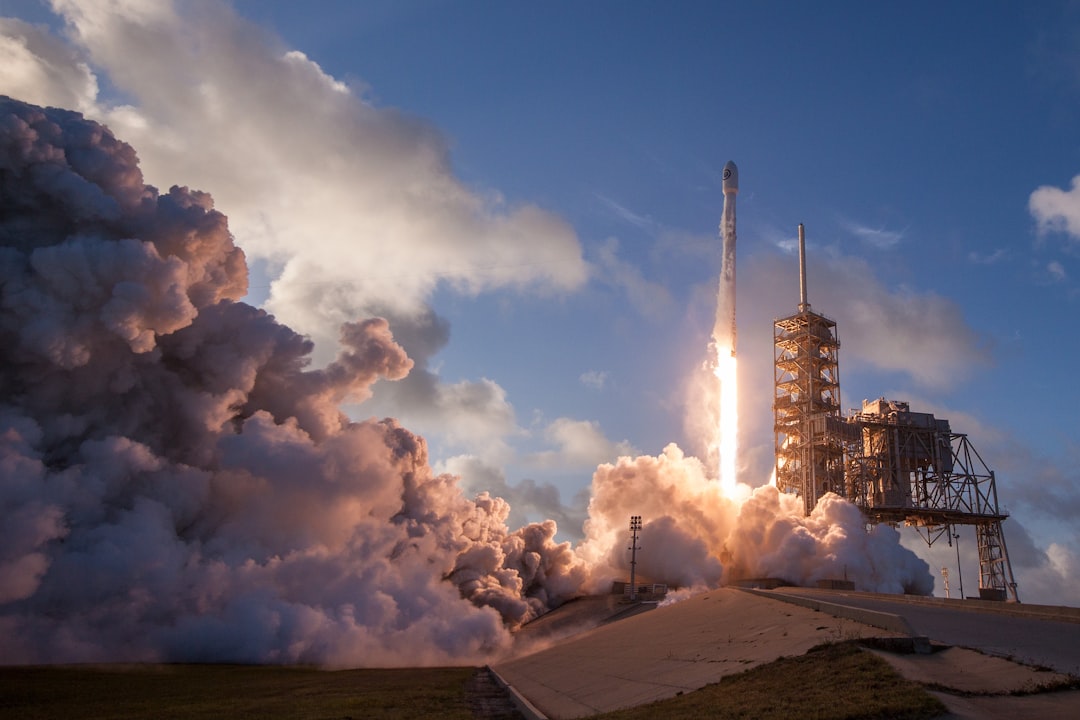
The new space race has emerged as a defining feature of the 21st century, characterized by a fierce competition among nations and private entities to establish dominance in outer space. Unlike the Cold War-era race to the moon, which was primarily a contest between the United States and the Soviet Union, today’s landscape is far more complex. Multiple countries, including China, India, and members of the European Union, are investing heavily in their space programs.
Meanwhile, private companies like SpaceX, Blue Origin, and Virgin Galactic are pushing the boundaries of what is possible, often at a pace that outstrips governmental efforts. This multifaceted competition raises questions about who will ultimately lead the way in space exploration and what that leadership will entail. As nations and corporations vie for supremacy, the implications extend beyond mere technological advancements.
The quest for leadership in space is intertwined with national security, economic interests, and even cultural identity. Countries are increasingly recognizing that space capabilities can enhance their geopolitical standing. For instance, China’s ambitious plans for lunar bases and Mars missions are not just scientific endeavors; they are also strategic moves to assert its influence on the global stage.
In this context, the new space race is not merely about reaching celestial bodies but also about establishing a framework for international cooperation and competition that will shape humanity’s future in space.
Key Takeaways
- The New Space Race: Competition between countries like the US, China, and Russia is heating up as they vie for leadership in space exploration.
- The Role of Private Companies in Space Exploration: Companies like SpaceX and Blue Origin are playing a significant role in advancing space technology and driving innovation.
- The Implications of Space Tourism: The rise of space tourism could open up new opportunities for commercial space travel and potentially transform the way we view space exploration.
- The Potential for Mining Resources in Space: Mining resources in space, such as water and rare minerals, could have significant economic and scientific implications for future space missions.
- The Advancements in Space Technology: Breakthroughs in space technology, such as reusable rockets and advanced propulsion systems, are revolutionizing the way we explore and utilize space.
The Role of Private Companies in Space Exploration
Private companies have become pivotal players in the realm of space exploration, fundamentally altering the dynamics of how missions are conceived, funded, and executed. Historically, space exploration was the exclusive domain of government agencies like NASA and Roscosmos. However, the advent of private enterprises has introduced a new paradigm where innovation can flourish outside traditional bureaucratic constraints.
Companies such as SpaceX have demonstrated that they can deliver payloads to orbit at a fraction of the cost of government-run programs, thereby democratizing access to space. Moreover, private companies are not just launching satellites; they are also developing technologies for human spaceflight, lunar landers, and even interplanetary missions. The collaboration between public and private sectors has led to groundbreaking initiatives like NASA’s Commercial Crew Program, which relies on private spacecraft to transport astronauts to the International Space Station.
This partnership model not only accelerates technological advancements but also fosters a competitive environment that drives down costs and enhances efficiency. As private companies continue to innovate and expand their capabilities, they are likely to play an increasingly central role in humanity’s quest to explore and inhabit outer space.
The Implications of Space Tourism

Space tourism has transitioned from a distant dream to an emerging industry poised to reshape public perceptions of space travel. With companies like Virgin Galactic and Blue Origin successfully conducting suborbital flights, the prospect of ordinary citizens experiencing weightlessness and viewing Earth from above is becoming a reality. This burgeoning sector holds significant implications for both the economy and society at large.
As ticket prices gradually decrease and technology becomes more accessible, space tourism could evolve from an exclusive experience for the wealthy into a more mainstream activity. However, the rise of space tourism also raises critical questions about sustainability and safety. The environmental impact of frequent rocket launches is a growing concern among scientists and environmentalists alike.
The carbon footprint associated with these flights could contribute to atmospheric changes that may have unforeseen consequences. Additionally, ensuring the safety of non-professional astronauts presents its own set of challenges. As this industry develops, it will be essential for stakeholders to address these issues proactively to ensure that space tourism can thrive without compromising the integrity of Earth’s environment or the safety of its participants.
The Potential for Mining Resources in Space
| Resource | Potential |
|---|---|
| Water | Abundant in form of ice on asteroids and moons, can be used for life support and fuel |
| Platinum Group Metals | Found in asteroids, valuable for electronics and industry |
| Helium-3 | Abundant on the moon, potential fuel for fusion reactors |
| Rare Earth Elements | Found in asteroids, essential for high-tech applications |
The potential for mining resources in space represents one of the most exciting frontiers in contemporary exploration. Asteroids and celestial bodies are believed to harbor vast quantities of valuable materials such as platinum, gold, and rare earth elements. As terrestrial resources become increasingly scarce and geopolitical tensions over resource allocation intensify, the allure of extraterrestrial mining grows stronger.
Companies like Planetary Resources and Deep Space Industries have already begun laying the groundwork for what could become a lucrative industry. However, the legal and ethical implications of space mining are complex and largely uncharted territory.
As private companies venture into this domain, international cooperation will be crucial to establish guidelines that govern resource extraction while ensuring that it benefits all of humanity rather than just a select few. The development of technologies for sustainable mining practices will also be essential to minimize environmental impacts on celestial bodies.
The Advancements in Space Technology
Advancements in space technology have accelerated at an unprecedented pace over recent years, driven by both governmental agencies and private enterprises. Innovations in propulsion systems, satellite design, and robotics have transformed how missions are planned and executed. For instance, reusable rocket technology pioneered by SpaceX has revolutionized launch economics by significantly reducing costs associated with sending payloads into orbit.
This breakthrough has opened up new possibilities for frequent launches and expanded access to space. In addition to launch technologies, developments in artificial intelligence (AI) and machine learning are enhancing mission planning and data analysis capabilities. AI algorithms can process vast amounts of data collected from space missions more efficiently than human analysts, enabling quicker decision-making during critical operations.
Furthermore, advancements in materials science have led to lighter and more durable spacecraft components, improving overall mission performance. As these technologies continue to evolve, they will play a crucial role in enabling more ambitious missions to distant planets and beyond.
The Search for Extraterrestrial Life
The search for extraterrestrial life remains one of humanity’s most profound quests, captivating scientists and enthusiasts alike. With advancements in telescopes and robotic exploration missions, researchers are now able to investigate celestial bodies that may harbor conditions suitable for life. Mars has long been a focal point due to its similarities to Earth; missions like NASA’s Perseverance rover aim to uncover signs of past microbial life on the Red Planet.
Additionally, moons such as Europa and Enceladus are considered prime candidates for hosting subsurface oceans that could support life. The implications of discovering extraterrestrial life would be monumental, challenging our understanding of biology, evolution, and our place in the universe. It would prompt philosophical inquiries about what it means to be human and how we relate to other forms of life.
However, this search is fraught with challenges; detecting life beyond Earth requires sophisticated technology and often involves interpreting ambiguous data. As scientists continue their explorations, they must remain vigilant about the ethical considerations surrounding potential contact with extraterrestrial organisms.
The Challenges of Deep Space Exploration
Deep space exploration presents formidable challenges that test the limits of human ingenuity and resilience. Missions beyond low Earth orbit require advanced technologies capable of sustaining human life over extended periods while navigating harsh environments characterized by radiation exposure, microgravity effects, and extreme temperatures. The journey to Mars or beyond necessitates not only robust spacecraft but also life support systems that can function autonomously for months or years at a time.
Moreover, psychological factors play a significant role in deep space missions. Astronauts must cope with isolation and confinement far from Earth, which can lead to mental health challenges over prolonged periods. Addressing these psychological aspects is crucial for mission success; researchers are exploring ways to support crew well-being through social interactions, recreational activities, and virtual reality experiences that simulate Earth-like environments.
As humanity sets its sights on deeper exploration of our solar system and beyond, overcoming these challenges will be essential for ensuring safe and successful missions.
The Importance of International Collaboration in Space Missions
International collaboration has become increasingly vital in the realm of space exploration as nations recognize that many challenges transcend borders. Joint missions like the International Space Station (ISS) exemplify how countries can pool resources, expertise, and technology to achieve common goals. Such partnerships not only enhance scientific research but also foster diplomatic relations among nations that may otherwise be at odds.
As humanity embarks on more ambitious projects—such as returning humans to the Moon or sending crewed missions to Mars—the need for collaboration will only intensify. Sharing knowledge about best practices in mission planning, safety protocols, and technological innovations can lead to more efficient outcomes while reducing costs associated with individual national programs. Furthermore, international cooperation can help establish norms for responsible behavior in space, ensuring that exploration efforts benefit all of humanity rather than being driven solely by nationalistic ambitions.
The Environmental Impact of Space Exploration
While space exploration offers numerous benefits—such as advancing scientific knowledge and fostering technological innovation—it also carries environmental implications that warrant careful consideration. Rocket launches contribute greenhouse gases and other pollutants to the atmosphere; as commercial spaceflight becomes more prevalent, these emissions could accumulate significantly over time. Additionally, debris from defunct satellites poses risks not only to operational spacecraft but also to Earth’s environment if it re-enters the atmosphere uncontrollably.
Addressing these environmental concerns requires proactive measures from both governmental agencies and private companies involved in space activities. Developing cleaner propulsion technologies that minimize emissions is one avenue being explored; researchers are investigating alternatives such as electric propulsion systems or biofuels derived from sustainable sources. Moreover, implementing robust policies for debris mitigation—such as guidelines for deorbiting defunct satellites—will be essential for preserving the orbital environment while ensuring safe access to space for future generations.
The Ethical Considerations of Space Colonization
As discussions around colonizing other planets gain traction, ethical considerations come to the forefront of this complex issue. The prospect of establishing human settlements on celestial bodies raises questions about our responsibilities toward those environments and any potential indigenous life forms that may exist there. Ethical frameworks must be developed to guide decision-making processes regarding resource utilization, habitat construction, and interactions with extraterrestrial ecosystems.
Furthermore, considerations around equity must be addressed; who gets to participate in colonization efforts? Will access be limited to wealthy individuals or nations? Ensuring that opportunities for exploration benefit all of humanity rather than exacerbating existing inequalities is crucial as plans for colonization unfold.
Engaging diverse voices—including ethicists, scientists, policymakers, and representatives from marginalized communities—will be essential in shaping a just approach toward humanity’s expansion into outer space.
The Future of Space Exploration: What Lies Ahead?
The future of space exploration is poised for remarkable developments as humanity stands on the brink of unprecedented discoveries and advancements. With ongoing investments from both public agencies and private enterprises, new missions targeting Mars colonization, lunar bases, and asteroid mining are already being planned or executed. As technology continues to evolve rapidly—enabling more ambitious endeavors—the possibilities seem limitless.
However, navigating this future will require careful consideration of ethical implications, environmental impacts, and international cooperation frameworks that ensure equitable access to opportunities in space exploration. As humanity ventures further into the cosmos—seeking answers about our origins while striving toward new frontiers—the collective responsibility lies not only in what we discover but also how we choose to engage with these newfound realms responsibly and sustainably. Ultimately, the journey ahead promises not just scientific breakthroughs but also profound reflections on what it means to be part of an interconnected universe.
The future of space exploration is a topic that continues to captivate scientists, engineers, and enthusiasts alike. As we look towards the next frontier, the possibilities seem endless, from establishing colonies on Mars to mining asteroids for resources. A related article that delves into these exciting prospects can be found on My Cosmic Ventures. This article explores the technological advancements and international collaborations that are paving the way for humanity’s next giant leap. For more insights, you can read the full article by visiting My Cosmic Ventures.
FAQs
What is the future of space exploration?
The future of space exploration involves continued advancements in technology, international collaboration, and the potential for human missions to Mars and beyond.
What are some upcoming space exploration missions?
Upcoming space exploration missions include the Artemis program to return humans to the Moon, the James Webb Space Telescope to study the universe, and various Mars missions by NASA, ESA, and other space agencies.
How will space exploration impact life on Earth?
Space exploration has the potential to impact life on Earth through technological advancements, scientific discoveries, and the potential for resource utilization from space.
What are the challenges of future space exploration?
Challenges of future space exploration include radiation exposure for astronauts, long-duration space travel, the development of sustainable habitats, and the ethical considerations of space exploration.
What role will private companies play in the future of space exploration?
Private companies, such as SpaceX, Blue Origin, and others, are expected to play a significant role in the future of space exploration through the development of new technologies, commercial space travel, and partnerships with government space agencies.